Nepal Flash Floods Highlights: The Ministry of External Affairs (MEA) said on Friday that three more Indian nationals, including a five-year-old, were rescued from Trishuli Bazaar in Nepal, since a day before after the Himalayan nation was hit by devastating floods last week.
169 Indian nationals have been rescued so far.
"Update on Indian nationals impacted by the floods in Nepal. As of 8:30 p.m. on Friday, total Indians rescued so far: 169. Three more Indian nationals have been rescued from Trishuli Bazaar since yesterday. These include: Abhijit Suresh Pawar, Dipika Abhijit Pawar, Samarth Abhijit Pawar (five-year-old). Our Embassy in Nepal is assisting in their return to India by air," the MEA said on social media platform X.
Nepal Flash Floods Highlights:
Three Indians, Including 5-Year-Old, Rescued In Flood-Hit Nepal: MEA
Update on Indian nationals impacted by the floods in Nepal
— Randhir Jaiswal (@MEAIndia) September 4, 2026
🕣 As of 2030 hrs, 4 Sept 2026
Total Indians rescued so far : 169
Three more Indian nationals were rescued from Trishuli Bazaar since yesterday. These include :
1. Abhijit Suresh Pawar
2. Dipika Abhijit Pawar
3.…
India Rescues 166 Nationals In Flood-Hit Nepal, 275 Remain Missing
In addition to sending emergency relief materials, India has deployed 54 personnel to support relief and rescue efforts in flood-hit Nepal. The deployed team includes 30 tunnel rescue experts, 19 forensic experts, and a five-member medical team working directly on the ground.
Missing Nationals: According to current official information, 275 Indian nationals remain missing. The Ministry of External Affairs (MEA) is working in close coordination with the Nepali government, the Ministry of Home Affairs, and state governments in India. Names of rescued individuals are being released regularly.
Rescues in Nepal: A total of 166 Indian nationals have been safely rescued from Nepal so far.
Crossings from China: 1,907 Indian nationals have safely crossed into Nepal from China.
Nepal Flood Death Count Rises To 1,287, With 5,083 Missing
Devastating floods on the China-Nepal border have killed at least 1,287 people in Nepal, the disaster authority said Friday, with the number of missing at 5,083. Chinese state media reported 21 people killed in Tibet and 541 missing, taking the total toll from the August 26 glacial and mountain collapse to 1,308 dead and 5,624 missing.
More than 800 foreigners remain unaccounted for, including trekkers in the Himalaya mountains and pilgrims who had come to visit Mount Kailash in Tibet, sacred to Hindus and Buddhists.
At least 17 bodies have also been pulled from rivers in India, which officials presume to have floated downstream from Nepal. They are not included in the count.
Why Finding Missing Workers From Nepal’s Hydropower Tunnels Is Proving To Be Difficult
Rescuers in Nepal have been combing through dark, debris-filled tunnels at hydropower plants, looking for hundreds of missing workers feared trapped in the Aug. 26 floods.
At least 900 workers are missing from a dozen hydropower projects, with about 500 believed to be inside tunnels, according to officials and industry representatives. But access to the tunnels has been hampered by thick mud, debris and damaged infrastructure, making it difficult for rescue teams to reach workers.
Two workers were rescued Friday, nine days after the disaster that has killed more than 1,200 people across Nepal and China.
Mohan Kumar Dangi, president of the Independent Power Producers Association of Nepal, said floods damaged at least 12 hydropower projects in Rasuwa and Nuwakot districts, with a combined capacity of 670 MW. Four were under construction, seven operational and one in testing phase, he said.
Hydropower projects undergo risk assessments and other studies before construction, but the Aug. 26 flooding was “something unimaginable,” Dangi said.
The biggest challenge for rescuers is reaching those trapped.
Many of Nepal’s hydropower projects are in remote, mountainous areas where steep terrain and narrow roads can make access difficult. Flooding has worsened conditions, damaging roads and limiting routes to some sites.
Rescuers are also facing tunnels that are blocked or damaged.
(Associated Press)
'Never-Before-Seen' Nepal Tunnel Rescue Op
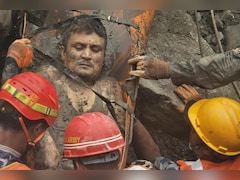
Video: How 2 Men Were Rescued From Nepal Hydropower Tunnel After 9 Days
१० दिनको कठिन संघर्षपछि—दुई जीवनको पुनर्जन्म, आशाको अद्भुत विजय#Trishuli3A सुरुङबाट दुई जनाको जिवितै उद्धार#NepaliArmy#नेपालीसेना#BhotekoshiFlood pic.twitter.com/MTnY9UlOG5
— Nepali Army (@NepaliArmyHQ) September 4, 2026
The Men Who Survived Blocked Nepal Tunnel For Nine Days
It is nothing short of a miracle.
For more than a week, Nepal Army personnel worked relentlessly to rescue workers trapped inside the tunnel of the Trishuli-3 'A' Hydropower Project after devastating floods in the Bhote Koshi River in Rasuwa.
Nine days after the workers were trapped, just as hopes of finding survivors were beginning to fade, came the breakthrough.
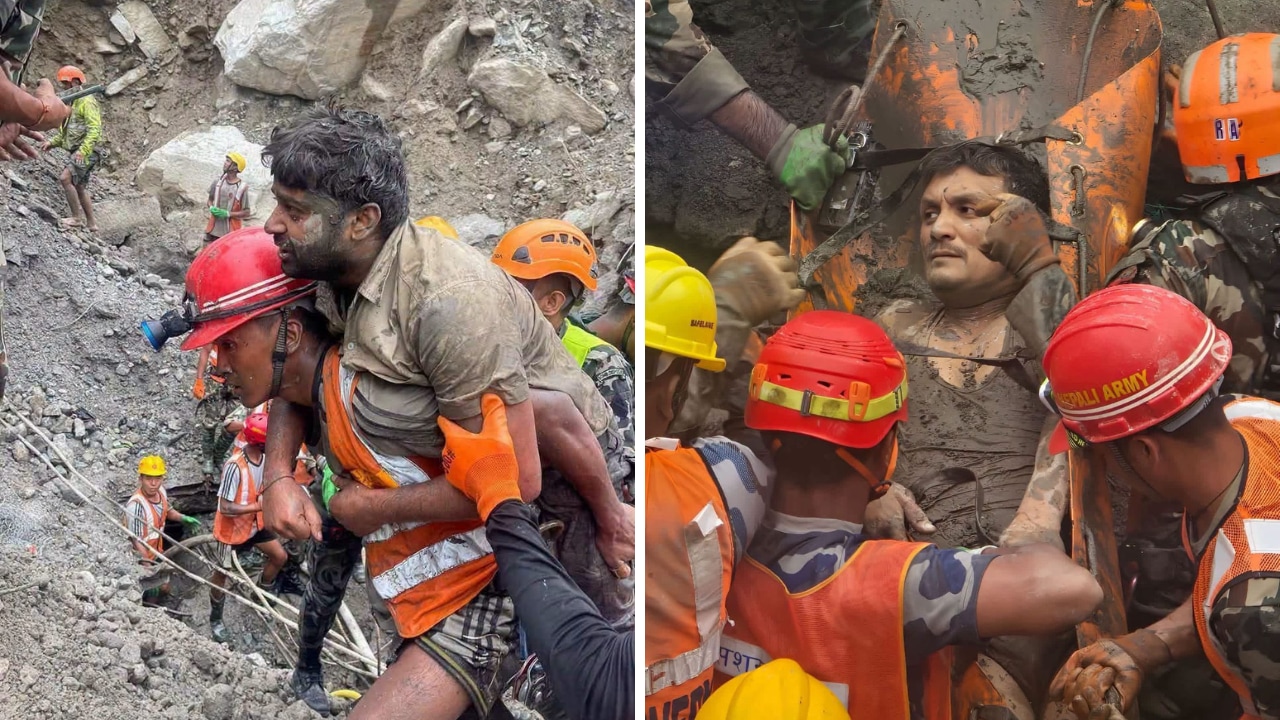
Rescuers emerged from underground carrying the first survivor on their shoulders.
Sanjay Sah was the first worker to be rescued. He was taken to the Nepal Army barracks in Trishuli for medical attention. Another worker, identified as Kabir Maharjan, was subsequently rescued from the tunnel.
The two men were found about 170 metres inside the tunnel, according to reports quoting officials.
After Dramatic Rescue, Identities Of Two Survivors Revealed
The two people who have been rescued are identified as Kabir Maharajan and Sanjay Shah.
Shah, 30, is a mechanical foreman with the Nepal Electricity Authority (NEA), while Maharjan, 45, is a supervisor at the Trishuli-3 'A' Hydropower Project.
"I am so happy, my heart is lighter," Amir Maharjan, the brother of rescued worker Kabir Maharjan, told news agency AFP.
Local media reports claimed that voices of more people were heard from the tunnels as rescue efforts continued at the Trishul 3A tunnel.
Video: India Intensifies Nepal Relief Mission
#TheBreakfastShow with @ParmeshwarBawa | India Intensifies Nepal Relief Mission As Rescue, Search Operations Continue pic.twitter.com/ob6hbEa3nE
— NDTV (@ndtv) September 4, 2026
Video: Workers Rescue Man From Hydropower Tunnel
#WATCH | Nepal | Rescue workers rescue one person from inside the tunnel of the Trishuli 3A hydel project
— ANI (@ANI) September 4, 2026
Video source: Secretariat of the Ministry of Energy, Water Resources and Irrigation, Govt of Nepal pic.twitter.com/tNZTMoWgIp
Nepal Flash Floods Live: 2 Rescued Alive From Nepal Tunnel
Rescuers in Nepal pulled a second worker alive from a tunnel Friday, Nepal lawmaker Shri Ram Neupane said.
He posted the rescue on his Facebook shortly after army spokesperson Brig. Gen. Raja Ram Basnet confirmed the first rescue during the operation at the Trishul 3A tunnel.
About 900 workers are missing from 12 hydropower projects in Nepal, with roughly 500 believed to be trapped in tunnels, according to local authorities.
The two people who have been rescued are identified as Kabir Maharajan and Sanjay Shah. Shah is a mechanical foreman with the Nepal Electricity Authority (NEA), while Maharajan is a supervisor at the Trishuli-3 ‘A' Hydropower Project.
Nepal Rescue Operation Live Updates: How Engineers Are Using Whatsapp To Guide Nepal's Flood Rescue Efforts
An army of experts in a WhatsApp group is guiding rescue workers scouring a Nepali valley after a huge flash flood more than a week ago as they desperately search for anyone who may be alive inside tunnels of devastated hydropower plants.
The messaging group was set up by engineers before the wall of water, mud and rock crashed down the Trishuli valley in Nepal on August 26. It has since become a valuable tool alongside helicopters and heavy machinery in the race to find survivors.
The authorities hope some of the about 900 people reported missing from six hydropower plants - at least three of which were under construction - may have escaped the deluge because they worked in or fled into the tunnels.
Even finding entrances to some of the tunnels, which were designed to channel water or used to access hydropower facilities, is tough now after the flood deposited 2.2 million tonnes of mud and debris down the valley.
Nepal Flood Death Count At 1,259, Missing Figure Jumps To 5,083
Devastating floods on the China-Nepal border have killed at least 1,259 people in Nepal, the disaster authority said Thursday, reporting a sharp rise in the number of missing, at 5,083.
Chinese state media reported 21 people killed in Tibet and 541 missing, taking the total toll from the August 26 disaster to 1,280 dead and 5,624 missing.
Delivering Aid To Nepal Flood Survivors 'Very, Very Difficult', Says UN
Reaching survivors of Nepal's devastating floods is an immense challenge hampering the delivery of basic aid supplies, the United Nations warned Thursday, considering the use of cargo drones and porters in addition to destroyed roads.
More than 1,200 people have been killed and nearly 5,000 are missing on both sides of the China-Nepal border since the catastrophic glacial mountain collapse on August 26, according to tolls by both nations on Thursday.
(AFP)
Trading Food For Medicine, Crossing River By Zip Line Part Of Life In Nepal Flood Zone
Some survivors sheltering in relief camps after deadly floods in Nepal were struggling Thursday to obtain essential medicines and cash, even as authorities provided food and other basic supplies to thousands of displaced people.
For families who lost homes and relatives, the shortages are adding to the hardship of relying on temporary shelters for their basic needs.
Suresh Kumar Karanjit, who has been staying at a relief center in Devighat, in Nuwakot district, lost his younger brother in the floods last week. He said the medicine available at the camp did not match his prescriptions for his heart condition.
Not Just Fish, Nepal's Floodwater May Endanger Safe Food Supply In Bihar: What Doctors Say

Schoolchildren Turn Pocket Money Into Gesture Of Solidarity For Flood Victims
Even as international and domestic assistance continues to pour in, for some schoolchildren in Nepal, helping victims of the devastating floods has meant giving up a snack, emptying a small savings box or parting with a few rupees from their pocket money.
As images of homes swept away, families separated, and schools damaged by the Bhotekoshi flood in Rasuwa continue to appear on television round the clock, children far from the disaster zone have found their own way to respond -- by sharing whatever little they have.
At Shodasha Secondary School in Mangalsen Municipality-5 of Achham, the idea came from ninth-grader Yunik KC, The Kathmandu Post news portal reported. When members of the student-led child club, which represents around 1,500 students, met on Monday to discuss the farewell of a retired head teacher, Yunik suggested that they do something for children affected by the floods.
They decided to collect donations for children who had lost their homes, relatives or access to education.
Chicago Woman Among Missing In Nepal Floods, Family "Determined To Find" Her
Owner Of 'Green House' Shares Survival Story, Says "We Got A Second Life"
100 Nepalese Nationals Missing In Tibet After Flash Floods
Around 100 Nepalese nationals have been missing following the devastating flash floods that originated on the Nepal-Tibet border, Nepal’s Foreign Ministry spokesperson Lok Bahadur Chhetri has said.
More than 1,200 people have been killed while over 4,875 people remain missing a week after the flash floods devastated several towns and villages in the country.
At least 19 bodies, swept away in the Bhotekoshi River of Rasuwa district, were recovered in India, Chhetri said in a press briefing on Wednesday.
The bodies were swept away all the way from Bhotekoshi River through Trishuli and Narayani into India, he said.
Nepal PM Balendra Shah Thanks India, China For Flood Relief Efforts

A Desperate Search For Missing Loved Ones In Flood-Hit Nepal

Nepal Floods LIVE Updates: India Sends More Relief Supplies To Nepal
India on Wednesday delivered a fifth tranche of over five tonnes of essential medicines to flood-ravaged Nepal, alongside an 11-member rescue team.
The death count from last week's flash floods in Nepal has risen to over 1,000 after rescue workers recovered more bodies from affected areas, according to Nepalese authorities.
While emergency teams have rescued more than 12,000 people, roughly 4,000 remain missing as search and rescue operations continue.
"A fifth Indian Air Force flight carrying humanitarian assistance reached Kathmandu today. It carried about 5.5 tonnes of medical supplies, including antibiotics, analgesics, surgical items and other essential medicines," the Ministry of External Affairs (MEA) said.
It said the flight also carried an 11-member specialised team with more than six tonnes of rescue equipment.
Nepal Floods LIVE Updates: Nepal Flood Death Count Rises To 1,204, Over 4,200 Still Missing
The death count from the devastating flash floods in Nepal has climbed to 1,204 after emergency teams recovered more bodies across the affected regions, according to Nepal's National Disaster Risk Reduction and Management Authority (NDRRMA).
The disaster authority added that 4,216 people remain unaccounted for as search, rescue, and relief operations continue in the hardest-hit districts along the Bhote Koshi and Trishuli river corridors. Temporary burials and identification efforts for retrieved bodies are currently underway.
Nepal Floods LIVE Updates: Nepal PM Links Floods To Climate Change
Nepal Prime Minister Balendra Shah told Parliament on Wednesday that the catastrophic Bhotekoshi River flood of August 26, which has left nearly 4,000 people missing, stands as a stark warning of escalating climate risks in the Himalayan region and called on the international community to share responsibility for mitigating its impacts.
In a detailed address to the House, the prime minister said experts have identified the disaster- one of the largest in the region- as resulting from an avalanche of snow and rock in the high Himalayas.
"This is a serious signal that, alongside climate change, the risks we must bear in the Himalayan region are increasing. We must be aware of this, and the time has also come for us to present, forcefully, before the international community, the disasters we are suffering because of climate change. Climate change is a product of the whole world's contribution; mitigating and managing its effects is the shared responsibility of the global community," Prime Minister Shah said.
(ANI)
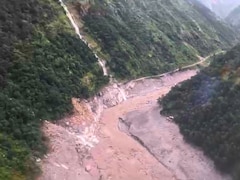
Worse Than War: An Aerial View Of Nepal's Trishuli River Valley Tragedy
'Compensation, Not Charity': Nepal Wants India, China, US To 'Pay' For Floods
Nepal is seeking "climate-related compensation" from the United States, India, and China -- which the Himalayan nation named as the major greenhouse emitters -- for deadly flash floods in the Bhotkoshi River that swept away villages across at least three districts in the country a week ago. So far, emergency teams have recovered more than 1,100 bodies, but nearly 4,500 people still remain missing after the gigantic wave of freezing water, rocks, and debris triggered by a high-altitude glacial collapse roared down the Tibet-Nepal border last week.
Launching a diplomatic pitch to seek international monetary assistance, Nepal Foreign Minister Shisir Khanal asserted that post-disaster aid should be treated as a matter of "moral liability," "not charity."
The minister said in Nepali during an interview with Kantipur TV, the excerpts of which were published by The Kathmandu Post newspaper and news agency PTI.
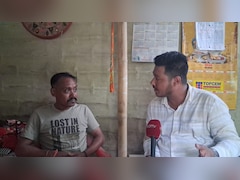
"Bhaago, Bhaago": Assam Man Was Stuck On Hill For 4 Days After Nepal Flood
Nepal Flood Deaths Cross 1,100, Nearly 4,000 Still Missing
Nepal Floods Live Updates: The scale of the devastation from last week's floods continues to become clearer. Nepal's disaster authority on Wednesday said the death count has risen to 1,114, while 3,916 people remain missing, a week after the disaster struck.
Rain May Hamper Relief Efforts In Nepal Flood-Hit Areas Today
Rasuwa Floods Live Updates: According to Nepal's Department of Hydrology and Meteorology, moderate rainfall is likely this afternoon in Rasuwa, Nuwakot, Dhading and surrounding areas affected by the Bhote Koshi flood. The rain could hamper ongoing relief and rescue operations today.
Waiting for Wings: Hours Pass at Dunche Helipad
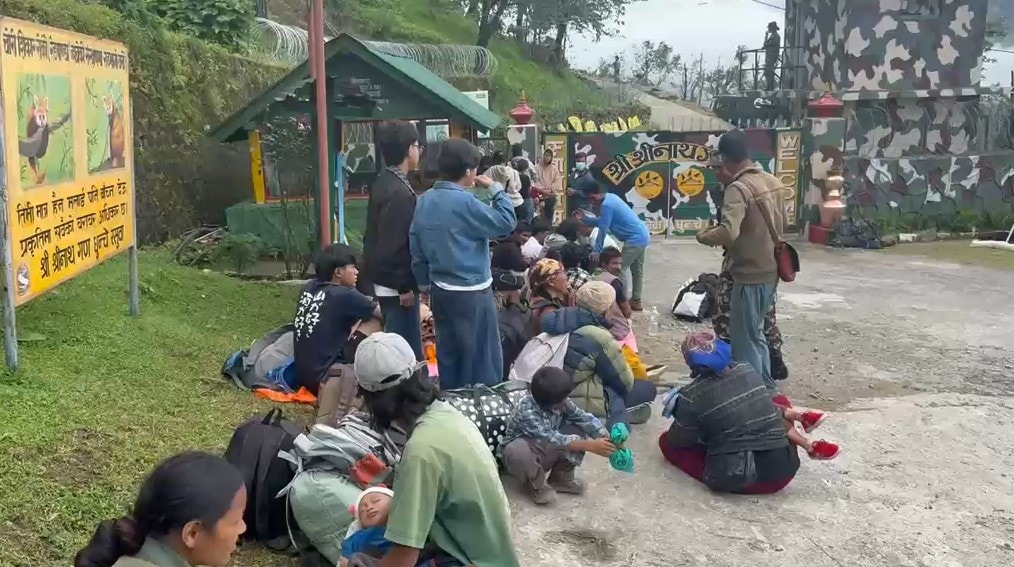
The line at Dunche Helipad seems to stretch a little farther with every passing hour. Travellers, trekkers and locals wait patiently, eyes fixed on the sky, hoping the next helicopter will be theirs. As the queue grows longer, so does the anticipation. In the mountains, time moves differently. Every distant whir of rotor blades brings a fresh wave of hope that the long wait for Kathmandu for flood victims may finally be coming to an end.
Video: NDTV's Aerial Report From Worst-Hit Areas In Flooded Nepal
#TheBreakfastShow with @ParmeshwarBawa | NDTV's Aerial Report From The Worst-Hit Areas In Flooded Nepal#NepalFloods @VishnuNDTV pic.twitter.com/FQyVUISnZb
— NDTV (@ndtv) September 2, 2026
Why Nepal Wants Tourists To Visit Despite Devastating Floods
Deadly Nepal Floods Expose Threats To Hydropower In Roof Of The World
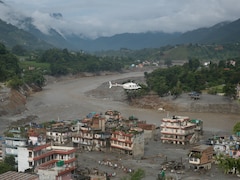
The devastating deluge that swept through the mountain valleys on the border between Nepal and Tibet in China is a potent reminder of a growing green-energy risk in one of the world's most hazard-prone areas.
Hydropower dams high in the Himalayas seem to be a ready solution for an energy-starved region. Governments see mountain rivers as an answer to rising electricity demand, fossil-fuel dependence and economic underdevelopment. But a changing climate is bringing with it unstable glaciers and unpredictable rain, creating new risks for existing projects and raising the potential cost of those that are still on the drawing board.
Week After Deadly Floods, Funerals In Nepal For Missing
Nepali families were holding symbolic funeral ceremonies to "liberate the souls" of loved ones missing since deadly flash floods swept away their villages and homes in the Himalayan region a week ago.
Emergency teams have recovered more than 1,000 bodies, and nearly 4,500 people are missing after the gigantic wave of freezing water, rocks and debris triggered by a high-altitude glacial collapse roared down the China-Nepal border on August 26.
After days of searching shelters and mortuaries, relatives of some of the missing lost hope and began conducting last rites.
"We had to do this to set his soul free, so that he is at peace and happy wherever he is," said Dolma Newar Tamang, flanked by her sobbing son, at a funeral for her husband.
India Steps Up Nepal Relief Mission, Dispatches 5th Shipment Of Aid
The fifth Indian aircraft has departed for Nepal.
— Dr. S. Jaishankar (@DrSJaishankar) September 2, 2026
It is carrying an 11-member rescue team with specialised equipment, and 5.5 tonnes of essential medicines.
🇮🇳 🤝🇳🇵 pic.twitter.com/g7f4FqgPk8
Indian Envoy Meets Principal Who Saved 1600 Children From Nepal Floods
Met Rajendra Dawadi, Principal, Tribhuvan Trishuli Secondary School, Bidur, Nuwakot. His timely action saved lives of more than 1600 school children just before the school was swept away in #Rasuwa flash flood. This school was set up in 1950s; Designed by Indian engineer,… pic.twitter.com/XoVkKRvR8x
— Naveen Srivastava, Ambassador of India in Nepal (@navsri6619) September 1, 2026


