

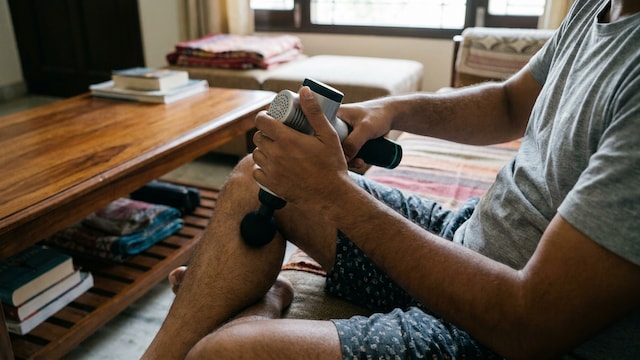
Massage guns have become a popular tool among fitness enthusiasts, athletes and people who experience muscle soreness. These handheld devices give rapid pulses to muscles which helps relieve tightness, making the body feel more relaxed. These devices are usually marketed as a way to improve flexibility, reduce pain and speed up muscle recovery after an intense workout. However, while they may offer some benefits, their effects may not be as extensive.
According to Dr Tapish Ravindra Shukla, Consultant Orthopaedics and Sports Medicine, Fortis Escorts Hospital, Amritsar, massage guns can provide temporary relief from muscle soreness and stiffness, but there is limited evidence that they speed up the body's natural muscle repair process. Recovery depends on several factors, including adequate sleep, proper nutrition, hydration and an increase in exercise intensity. Understanding what these devices can and cannot do is important to use them safely and get the most out of them.
What Do Massage Guns Actually Do?
Massage guns use rapid, repeated pulses to apply pressure to soft tissues, including muscles. This stimulation can increase local blood flow, temporarily reduce muscle stiffness and change how the brain perceives pain. The sensation may help muscles feel looser and more comfortable after exercise. The repeated pulses stimulate sensory nerves, which can influence the transmission and perception of pain signals. This is why a person may experience relief shortly after using the device. Dr Shukla said, "In simple terms, the stimulation competes with pain signals travelling to the brain, which is why muscles often feel looser and more comfortable straight afterwards."
However, it is important to note that massage guns do not physically 'break down' scar tissue or fascia. Claims that these devices break up adhesions or permanently release tight tissues are not supported by strong evidence. "These structures are far too dense to be physically altered by a handheld device, and any change in feel is neurological rather than structural," added Dr Shukla.
Do Massage Guns Help With Muscle Recovery?
Massage guns may help with certain aspects of recovery, but their benefits are generally modest. Research suggests they can reduce perceived muscle soreness, particularly delayed-onset muscle soreness (DOMS), which develops hours after unfamiliar or intense physical activity. They may also improve the range of motion of a joint for a short period. This can make movements feel easier, especially when muscles feel tight after exercise. However, feeling less sore does not necessarily mean that the muscles have repaired themselves faster.
True muscle recovery involves repairing exercise-related damage and adapting to physical stress. There is limited evidence that massage guns directly accelerate these processes or consistently improve long-term athletic performance. Dr Shukla highlights that sleep, nutrition, hydration and progressive loading remain the main pillars of recovery. "A massage gun is a tool for comfort that helps in the recovery process, not the other way around," added Dr Shukla.
What Are The Benefits Of Using A Massage Gun?
When used correctly, massage guns may offer several practical benefits.
- Temporary relief from soreness: They may reduce the discomfort associated with tight or tired muscles after a workout.
- Improved flexibility: Short-term improvements in range of motion can make it easier to move a joint through its normal range.
- Reduced perceived fatigue: Muscles may feel more relaxed after exercise, making it easier to carry out everyday activities.
- Convenient self-care: They allow people to massage certain muscle groups at home or between physiotherapy sessions.
Can You Use A Massage Gun Before A Workout?
Massage guns can be used before exercise as part of a warm-up. Their short-term effects on flexibility may help people feel more comfortable before physical activity. However, they should not replace a warm-up. Walking, light jogging, stretches and movements related to the planned activity helps prepare the body for exercise.
Use the device gently and briefly on the muscles you intend to work. Avoid applying intense pressure in an attempt to loosen muscles quickly. If the device causes pain or discomfort, stop using it.
What Are The Side Effects Of Massage Guns?
Massage guns are generally safe when used appropriately, but excessive pressure, prolonged use or incorrect placement can cause problems. Possible side effects include:
- Bruising: Repeated pressure on the same area can damage small blood vessels beneath the skin.
- Nerve irritation: Applying pressure over superficial nerves may cause tingling, numbness or discomfort.
- Increased soreness: Aggressive use can leave muscles more painful instead of relieving tightness.
- Muscle injury: Rare cases of serious muscle damage, including rhabdomyolysis, have been reported after excessively aggressive use. Rhabdomyolysis involves the breakdown of muscle tissue and can damage the kidneys.
A massage gun should never be used to push through sharp pain or treat an unexplained injury.
Who Should Avoid Using Massage Guns?
Avoid using massage guns over bony areas, the front of the neck, open wounds, acute injuries or suspected fractures. Direct pressure over these areas can cause harm rather than provide relief. Dr Shukla also said that people with deep vein thrombosis, bleeding disorders or those taking blood-thinning medicines should seek medical advice before using these devices. Extra caution is also necessary during pregnancy, particularly when deciding which areas can be treated safely.
How To Use A Massage Gun Safely
Dr Shukla recommends using low to moderate intensity for around one to two minutes per muscle group, without applying painful pressure. Keep the device moving gently over the muscle instead of holding it on one spot for too long. Stop immediately if you experience numbness, tingling or sharp pain. Avoid using higher settings simply because a muscle feels tight.
Ultimately, massage guns can be a useful addition to a recovery routine when the goal is temporary relief from soreness and stiffness. "Massage guns are a helpful adjunct, but they are not a substitute for proper rehabilitation," said Dr Shukla.
Disclaimer: This content including advice provides generic information only. It is in no way a substitute for a qualified medical opinion. Always consult a specialist or your own doctor for more information. NDTV does not claim responsibility for this information.