

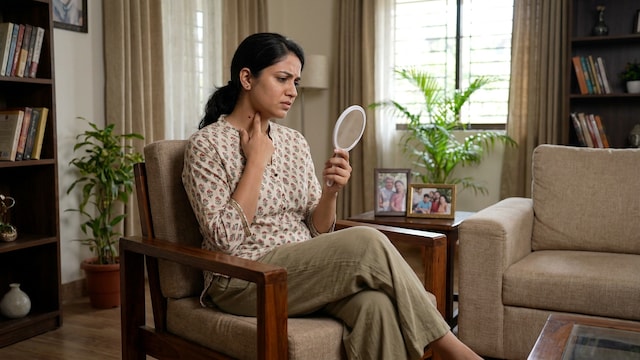
Your skin cools you by sweating. When it is very hot and humid, you sweat far more, but the sweat cannot evaporate because the air is already saturated with moisture. The sweat ducts get blocked, and the trapped sweat leaks into the surrounding skin. This is miliaria, what most people call prickly heat. It shows up as tiny itchy or prickly bumps, often on the back, chest, neck and skin folds. Infants are especially prone because their sweat ducts are still immature, which is why a baby can break out in a heat rash in a single warm afternoon.
Humidity also keeps the skin surface damp for long stretches, particularly in the underarms, under the breasts, the groin and between the toes. This constant moisture softens and breaks down the skin barrier, a process called maceration, and creates the perfect environment for fungal infections and for intertrigo, the raw, inflamed redness that develops in skin folds. Tinea, the common ringworm infection, surges every monsoon for exactly this reason, and it is now one of the most stubborn problems we treat because of widespread misuse of steroid creams.
Heat and humidity are hard on acne-prone skin. Oil production rises in the heat, sweat mixes with that oil and with sunscreen and makeup, and the mix sits on the skin and blocks pores. Add friction from masks, helmets and bag straps, and you get what we call tropical acne and sweat-related folliculitis, those tender red bumps along the hairline, jaw and back. People often respond by scrubbing harder and layering on more products, which only inflames the skin further.
This is the part most people underestimate. Air pollution is not just a lung problem. Fine particulate matter, the PM2.5 you hear about in air quality reports, is small enough to settle on the skin and even penetrate it. These particles, along with ozone and traffic-related pollutants, generate what we call oxidative stress. In simple terms, they create unstable molecules that damage skin cells, break down collagen and switch on inflammation.
The visible results build up quietly. Pollution worsens pigmentation and melasma, which is already common in Indian skin and notoriously difficult to treat. It dulls the complexion, accelerates fine lines and premature ageing, and it is a genuine trigger for inflammatory conditions. I see eczema and atopic dermatitis flare in polluted, dry-wind conditions, and I see more urticaria, the sudden itchy welts, when the air quality is poor. For anyone with sensitive or barrier-compromised skin, pollution is like throwing petrol on a small fire.
Heat also drives rosacea and facial flushing, and sweat itself acts as an irritant on eczema-prone skin, which is why so many of my eczema patients tell me they are worse in summer, not better.
Our climate is changing, and our skin is on the front line of it. A little understanding, and a few consistent habits, go a long way toward keeping it calm through the hardest months Cleanse gently, but do not over-wash. Use a mild, soap-free cleanser twice a day. At night, I strongly recommend removing the day's pollution and sweat properly, because particles left sitting on the skin overnight continue to cause damage. This does not need an elaborate routine. A gentle cleanse is enough.
Repair and protect the barrier. A lightweight, non-greasy moisturiser keeps the skin barrier intact, which is your first defence against both irritants and infection. For pollution specifically, an antioxidant serum such as vitamin C in the morning helps neutralise some of that oxidative damage. And sunscreen is non-negotiable. Heat and sun worsen pigmentation together, so a broad-spectrum SPF, ideally a tinted mineral one, protects against both ultraviolet and the visible light that darkens Indian skin.
Support the skin from within. Stay well hydrated, eat plenty of colourful fruit and vegetables for their natural antioxidants, and protect your sleep. Skin repairs itself at night, and chronic stress and poor sleep make every inflammatory condition worse.
(By Dr Sonali Kohli, Senior Consultant, Dermatology, Sir HN Reliance Foundation Hospital, Mumbai)
Disclaimer: The opinions expressed within this article are the personal opinions of the author. NDTV is not responsible for the accuracy, completeness, suitability, or validity of any information on this article. All information is provided on an as-is basis. The information, facts or opinions appearing in the article do not reflect the views of NDTV and NDTV does not assume any responsibility or liability for the same.