

)
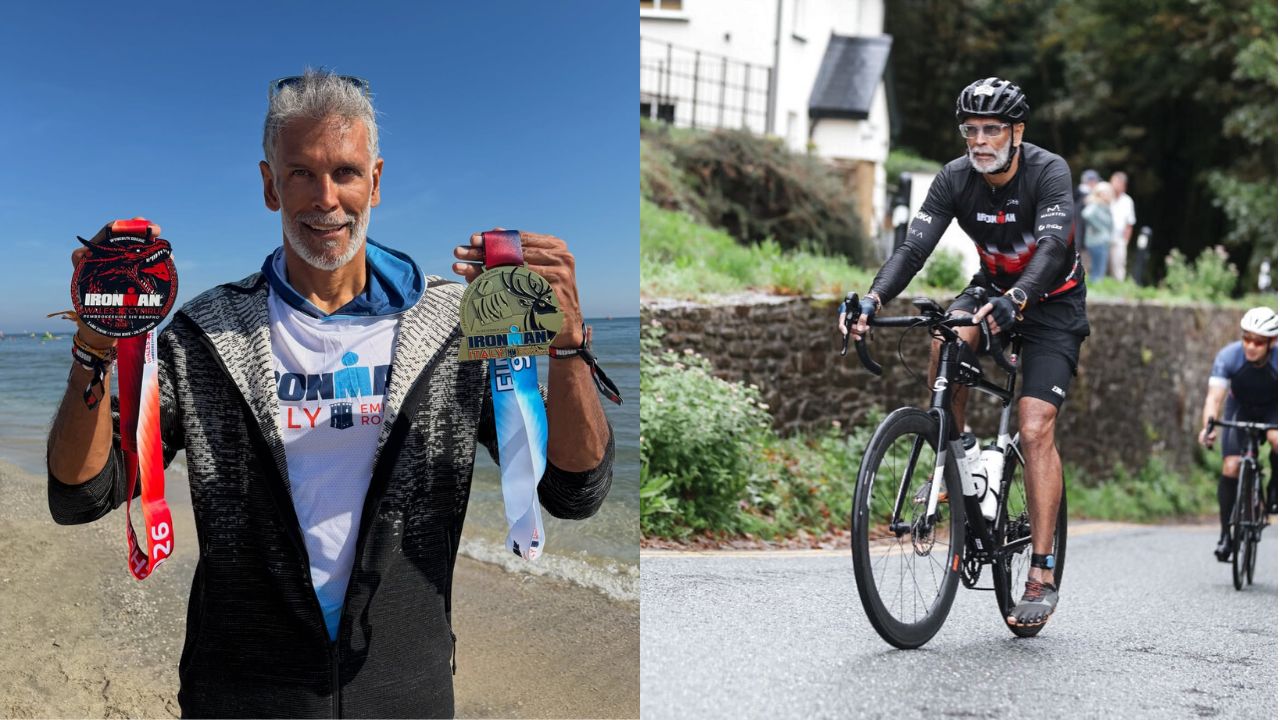
At 60, actor and fitness enthusiast Milind Soman has completed not one but two full-distance Ironman triathlons within just six days. He finished Ironman Wales on September 13, followed by Ironman Italy on September 19. Each Ironman involved a 3.8-kilometre swim, 180-kilometre cycling leg and a 42.2-kilometre run. Across the two events, Soman covered 7.6 kilometres of swimming, 360 kilometres of cycling and 84.4 kilometres of running.
According to Soman, what made the feat particularly notable was the short recovery window between the two races. Soman said the second Ironman was an opportunity to understand recovery and his individual fitness level. Ironman Wales itself was a demanding event, with Soman describing its rough swim, steep cycling climbs and hilly running route as extremely challenging. His experience also highlights an important part of fitness that can become increasingly relevant with age: giving the body enough time and support to repair after physical stress.
After finishing his second Ironman, he shared a series of pictures on Instagram. The caption read, "Did it AGAIN !!!! Six days later one more Ironman. Doing Ironman Wales on the 13th of September and Ironman Italy on 19th September was a great experience!! This one was to learn new lessons on recovery, which is important to understand individual levels of fitness. One aspect of fitness is the time required to recover from a particular stress, to be able to do it again with the same level of comfort."
Tips To Recover Faster As You Age
1. Prioritise good-quality sleep
Sleep is one of the most important parts of physical recovery. During sleep, the body gets time to repair tissues, support muscle recovery and restore energy. Adults generally need around seven to nine hours of sleep each night. As people age, sleep patterns can change, making it even more important to maintain a regular sleep schedule. Going to bed and waking up at similar times, keeping the bedroom comfortable and avoiding excessive screen use before bedtime may help support better sleep.
For people who exercise regularly, reducing sleep to fit in another workout can work against recovery. Adequate rest allows the body to adapt to training.
2. Do not ignore protein
Exercise adds stress on muscles, while protein gives amino acids that are needed for muscle repair and maintenance. Getting enough protein through foods such as eggs, dairy products, pulses, soy, fish, chicken or other sources can help in recovery. After demanding exercises, including a good source of protein in a meal or snack can help provide the amino acids required for muscle repair. Protein needs vary depending on factors such as age, body weight, health and activity levels.
3. Replace fluids and electrolytes
Long workouts, particularly endurance activities, can lead to substantial fluid loss through sweating. Dehydration can cause fatigue, headaches, dizziness and reduced exercise performance. Water is important for everyday hydration, but people doing prolonged or intense exercise may also need to replace electrolytes. Sodium and other electrolytes help maintain fluid balance and normal muscle and nerve function. Hydration needs are different for every person and can depend on the weather, exercise intensity, duration and amount of sweating.
4. Choose active recovery
Recovery does not always mean remaining completely inactive. Gentle movement such as an easy walk, light cycling or relaxed swimming can help keep the body moving without adding extreme physical stress. The key is to keep the intensity low. After a demanding workout, another hard session may add to fatigue rather than helping the body recover. Active recovery should feel comfortable and should not worsen muscle pain or exhaustion.
5. Watch out for signs of excessive fatigue
One of the most important recovery skills is recognising when the body needs a break. Persistent tiredness, declining performance, unusual muscle soreness, poor sleep or a higher-than-usual resting heart rate can indicate that the body has not fully recovered. Trying to exercise through persistent fatigue can increase the risk of overuse injuries. Instead of increasing exercise intensity or duration, it can be useful to reduce the workload and allow more recovery time.
6. Give your nervous system a break
Recovery is not only about muscles. Very demanding exercise can also add stress to the nervous system. Constant high-intensity workouts without sufficient rest can leave a person feeling exhausted even when the muscles themselves do not appear severely sore. Relaxation practices such as deep breathing, meditation or simply taking time away from intense activities can help create a better balance between exercise and rest.
Disclaimer: This content including advice provides generic information only. It is in no way a substitute for a qualified medical opinion. Always consult a specialist or your own doctor for more information. NDTV does not claim responsibility for this information.