

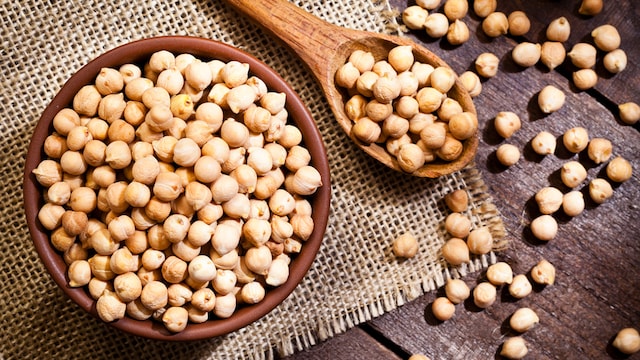
What if adding a small portion of chickpeas in your meals can help your gut, weight and overall health? Chickpeas, also known as chana, are an affordable food that can be used in many dishes. From salads and curries to snacks and chaats, they are easy to include in your diet.
Eating them regularly can be beneficial for your digestion, keep your stomach full for a longer time and lower the risk of several health problems. But have you ever wondered what happens when you eat them every single day?
Dr. Saurabh Sethi popularly known as the gut doctor, a gastroenterologist trained at AIIMS, Harvard, and Stanford Universities shared some of the changes people might notice when they make chickpeas a regular part of their meals.
On Instagram, the health expert shared, “Number one, your heart. Chickpeas contain soluble fibre that can help lower LDL, which is the bad cholesterol. Number two, your gut. Chickpeas contain prebiotic fibres that feed your beneficial gut bacteria. Number three, your blood sugar. Their fibre and protein slow digestion, helping reduce blood sugar spikes.”
“Number four, your appetite. Chickpeas are rich in fibre and plant protein, helping you feel fuller for longer. And number five, your bowel movements. These contain soluble and insoluble fibres that can help with your bowel movements and stool passage.”
Dietary fibre is important for keeping your stomach healthy. If you want to add more fibre in your meals, Saurabh Sethi had earlier shared a list of 10 high fibre foods which are not vegetables. These include chia seeds, black seeds, lentils and chickpeas. He also recommends fruits like raspberries, blackberries and pears. Eating pears with their skin gives you more fibre. Other good choices are oats, quinoa and black beans.
According to the doctor, two tablespoons of chia seeds gives you 10 grams of fibre, while the same amount of black seeds gives 5 to 6 grams. Half cup of cooked lentils has 8 grams and chickpeas provide 6 grams. One cup of raspberries offers 8 grams of fibre, while blackberries give 7.5 grams.
A medium sized pear with skin contains 5 to 6 grams. Half cup of dry oats and one cup of cooked quinoa provide 5 grams. Half a cup of cooked black beans gives 7.5 grams.
Also Read: Should You Eat Eggs, Chicken For Protein During A Bird Flu Outbreak?
Disclaimer: This content including advice provides generic information only. It is in no way a substitute for a qualified medical opinion. Always consult a specialist or your own doctor for more information. NDTV does not claim responsibility for this information.