

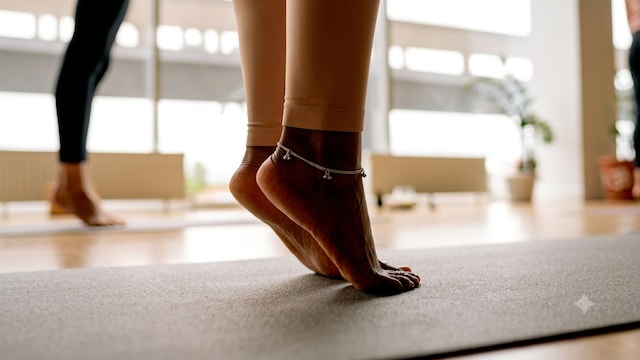
While the world is familiar with Japanese Interval Walking, another fitness trend worth your attention is Japanese heel raises. Also known as the ballerina exercise or standing soleus push-ups, this exercise targets the calf muscles, particularly the soleus and gastrocnemius. It involves standing on your toes and raising your heels off the ground while keeping your knees straight. This movement is typically performed in a controlled manner to maximise engagement of the calf muscles and improve overall stability. While it is fundamentally a standard calf raise, the Japanese approach emphasises strict alignment, controlled pacing, and the integration of this exercise into daily life as a "movement snack" rather than just a gym workout.
Japanese heel raises have gained global attention for several reasons. Mika Takishima, Japan's oldest fitness instructor, became a sensation due to her incredible health and longevity at over 90 years old. She advocates for walking on tiptoes and doing heel raises while performing daily household chores, such as cooking and cleaning.
Moreover, the importance of the soleus muscle has come into the spotlight. This muscle serves as a "second heart" by helping pump blood back up to the upper body, making heel raises particularly beneficial for sedentary office workers.
What are the benefits of Japanese heel raises?
-
Regulates blood sugar and metabolism
The soleus muscle is unique because it doesn't rely on stored glycogen. Instead, it burns glucose and fats directly from the bloodstream. Activating this muscle can drastically help control post-meal blood sugar spikes.
-
Acts as a natural muscle pump
When the calf contracts, it compresses the veins in the lower leg, pushing blood back up to the heart, which boosts circulation and reduces the risk of varicose veins or leg swelling.
-
Improves longevity and balance
The exercise primarily targets the calf muscles, improving strength and endurance. It further reduces the risk of falls.
-
Prevents lower-body injuries
It strengthens the calves and Achilles tendon, safeguarding you against common running injuries, ankle sprains, and plantar fasciitis. Engaging the core and lower body enhances overall balance and proprioception.
-
Aids in rehabilitation
Its low-impact nature makes it suitable for rehabilitation, especially for ankle and foot injuries.
READ | This Japanese Walking Technique Is Better Than 10,000 Steps: Doctor Explains How
How to perform
- Starting position: Stand with your feet hip-width apart, with your weight evenly distributed.
- Raise heels: Slowly lift your heels off the ground, rising onto your toes. Keep your legs straight and engage your core.
- Hold and lower: Hold the elevated position for a moment, then lower your heels back down to the ground. Focus on controlling the movement to maximise the workout.
- The descent: Slowly lower your heels back to the floor in a controlled motion. Do not let your heels slam down or bounce off the floor.
- Repetitions: Aim for 10-15 repetitions for a set, and you can gradually increase the number of sets as you become more comfortable.
READ | Nordic Walking vs Japanese Interval Walking: Which Can Help You Burn More Calories?
Tips for beginners:
1. If new to the exercise, begin with fewer repetitions and gradually increase as your strength improves.
2. If balance is an issue, hold onto a wall or a sturdy surface for support while you perform the exercise.
3. Prioritise proper posture; keep your shoulders relaxed and engage your core throughout the movement. Avoid the temptation to bounce quickly. Think 3 seconds up and 3 seconds down for every single repetition.
4. Once comfortable, you can explore variations, such as performing the exercise on an elevated surface for a greater range of motion.
5. Pay attention to any discomfort. If you experience pain beyond mild muscle soreness, stop and consult a fitness professional or healthcare provider.
You do not need to block out a workout session for this. Do 30 raises while waiting for your morning coffee to brew, or while standing at your desk during a long call.
Disclaimer: This content including advice provides generic information only. It is in no way a substitute for a qualified medical opinion. Always consult a specialist or your own doctor for more information. NDTV does not claim responsibility for this information.