

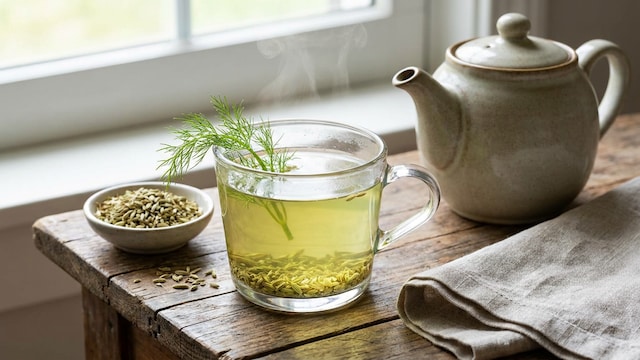
Fennel tea is made by steeping fennel seeds in hot water and has long been used as a traditional drink for digestive discomfort. The seeds have several plant compounds, including anethole, which gives fennel its characteristic sweet, slightly licorice-like flavour. Since the drink is caffeine-free, some people also choose it as a morning alternative to tea or coffee. But does drinking fennel tea every morning actually give you any noticeable health benefits?
Research suggests that fennel may have digestive, antioxidant and potentially anti-inflammatory properties, although the evidence varies depending on the benefit being studied. Some clinical research has also examined fennel for menstrual discomfort. However, it is important not to assume that drinking fennel tea daily will automatically improve digestion, help with weight loss or treat a medical condition. Here is what may happen in the body if you drink fennel tea every morning.
1. Digestion
One of the most commonly known benefits of fennel is digestive comfort. Traditionally, fennel has been used for bloating, gas and indigestion. Emerging research also provides some support for this use. A study published in Neurogastroenterology & Motility in 2025 found that fennel tea affected stomach muscle activity in different regions. It relaxed muscles in the upper parts of the stomach while aiding in movement in the lower stomach. The researchers suggested that these effects may help explain fennel's use for gastrointestinal symptoms.
2. Bloating And Gas
Fennel's traditional use for bloating and gas may partly be linked to its effects on smooth muscle in the digestive tract. When intestinal muscles relax, trapped gas may potentially move more easily through the digestive system. However, there is a difference between traditional use and proven treatment. There is not enough evidence to say that one cup of fennel tea every morning will prevent bloating in everyone.
3. Antioxidants
Fennel seeds have bioactive plant compounds such as phenolic compounds and volatile oils. These compounds have shown antioxidant activity in laboratory and experimental research. Antioxidants help protect cells from oxidative stress caused by free radicals. But, only drinking fennel tea should not be seen as a way to "detox" the body. The body already has effective organs like the liver and kidneys to detoxify itself.
4. Menstrual Cramps
Fennel has been studied for menstrual discomfort. Several clinical trials have investigated fennel preparations for primary dysmenorrhoea, or period pain. A systematic review and meta-analysis of 12 studies found that fennel seeds significantly reduced the intensity of menstrual pain compared with placebo. However, the researchers also noted limitations in the available studies. It is important to note that these studies generally used fennel extracts or capsules rather than a simple cup of fennel tea every morning.
5. Weight Management
Some people drink fennel tea hoping it will help with weight loss. The evidence does not support calling fennel tea a weight-loss drink. A small randomised crossover study involving nine overweight women examined fennel and fenugreek teas and found changes in subjective appetite measures, but it did not find a major difference in the amount of food consumed at the subsequent meal. So, while a warm, unsweetened drink may be a good addition to a healthy and balanced diet, fennel tea itself cannot help in weight loss.
6. Caffeine-Free Morning Drink
Replacing a sugary beverage or a high-calorie morning drink with plain fennel tea can reduce overall calorie intake. Since fennel tea is naturally caffeine-free, it can also be a good option for people who want to reduce their caffeine consumption.
Drinking fennel tea every morning can be a simple and caffeine-free addition to the diet and may support digestive comfort. Some studies also suggest potential benefits for menstrual pain, but much of the clinical evidence has concentrated fennel preparations rather than ordinary tea. Therefore, fennel tea should be considered as a supportive beverage, and not a treatment.
Disclaimer: This content including advice provides generic information only. It is in no way a substitute for a qualified medical opinion. Always consult a specialist or your own doctor for more information. NDTV does not claim responsibility for this information.