

)
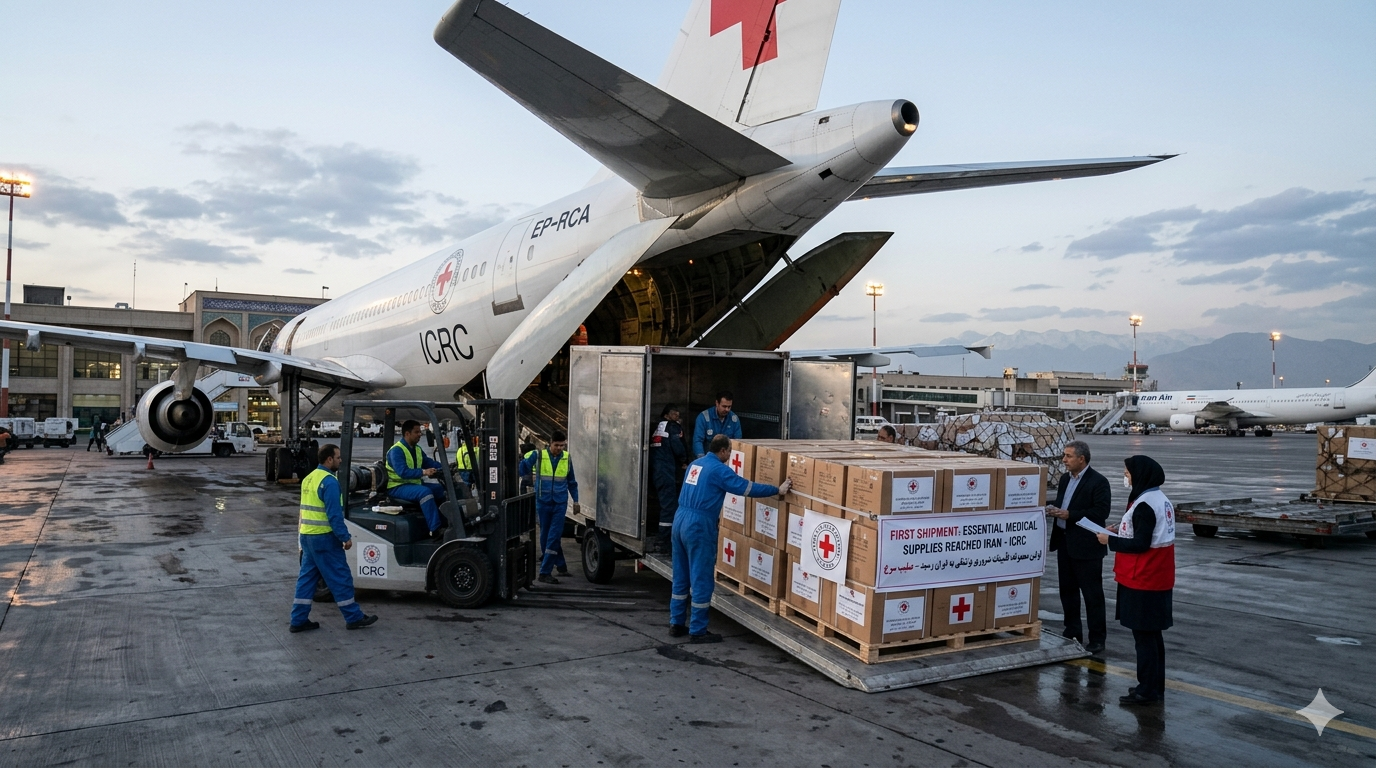
The Red Cross has confirmed that the first aid shipments have finally reached Iran since the start of the ongoing war, marking a crucial step in addressing the country's growing medical crisis. The deliveries come after weeks of severe disruption, during which air and sea routes were largely blocked due to escalating conflict, leaving vital medical supplies stranded and inaccessible. For weeks, humanitarian agencies had struggled to get aid into Iran as the conflict intensified. Supplies were stuck in regional hubs like Dubai, unable to move due to security risks and transport disruptions. The convoy of medical supplies consisted of 14 trucks carrying 171 metric tonnes of essential relief supplies from its warehouse in Jordan. According to the organisation, the shipment included blankets, mattresses, jerrycans, kitchen sets, tarpaulins, and solar lamps enough to support the immediate needs of nearly 25,090 people.
A Long-Awaited Lifeline
The International Federation of Red Cross and Red Crescent Societies (IFRC) delivered trauma kits, tents and blankets via trucks from Turkey. Also, the International Committee of the Red Cross (ICRC) sent additional supplies through Jordan. These shipments are expected to support tens of thousands of people affected by the conflict.
Also read: Air Strikes Near Iran Nuclear Sites Pose Major Health Risks, Warns WHO
Why Aid Was Delayed
The delay in aid delivery highlights the scale of disruption caused by the war.
- Airspace closures and security concerns halted flights
- Maritime routes were affected by tensions around the Strait of Hormuz
- Land routes were initially unsafe or inaccessible
As a result, even basic medical supplies such as trauma kits and emergency equipment were unable to reach those in need for weeks.
Growing Humanitarian Crisis
The arrival of aid comes amid a worsening humanitarian situation. According to humanitarian organisations, thousands of people have been killed since the conflict began, millions have been displaced from their homes. Medical needs are rising rapidly, especially for trauma care and emergency treatment. Healthcare systems are under strain, with some facilities damaged and others overwhelmed by the number of injured patients.
Role of the Iranian Red Crescent
Inside the country, the Iranian Red Crescent Society has been at the forefront of relief efforts. The organisation has been, providing emergency medical care, assisting in rescue operations. Offering psychological support to affected communities. Aid agencies say the new shipments will strengthen these efforts, helping local teams cope with the rising demand for care.
Challenges Still Remain
Despite this breakthrough, aid organisations caution that the situation remains fragile. Supply routes are still limited and vulnerable. Funding for humanitarian operations is insufficient and access to some affected areas remains difficult
The Red Cross has emphasised the need to scale up deliveries quickly to meet the growing needs on the ground. Encouragingly, aid agencies say this first successful delivery could open the door for more shipments. The establishment of new land corridors is seen as a turning point, potentially allowing a steady flow of humanitarian assistance in the coming weeks. The delivery of aid also highlights the broader impact of the conflict, which has disrupted not just lives but also global supply chains and humanitarian systems.
While the deliveries bring much-needed relief, they also signify the the scale of the crisis and the challenges that remain. For now, the focus is clear that getting more aid in, faster, and ensuring it reaches those who need it most.
Disclaimer: This content, including advice, provides generic information only. It is in no way a substitute for a qualified medical opinion. Always consult a specialist or your own doctor for more information. NDTV does not claim responsibility for this information.