

)
Diabetes is a chronic disease that affects people worldwide, and it is not expected to increase. When the worldwide diabetes caseload is looked at closely, about 589 million adults in the age range of 20-79 years are living with diabetes. According to the International Diabetes Federation, this number is based on a data set that predicts the number could skyrocket to 853 million. While this is constant research in the field of diabetes prevention, researchers have developed a new tool that goes beyond just detecting whether you have diabetes or not.
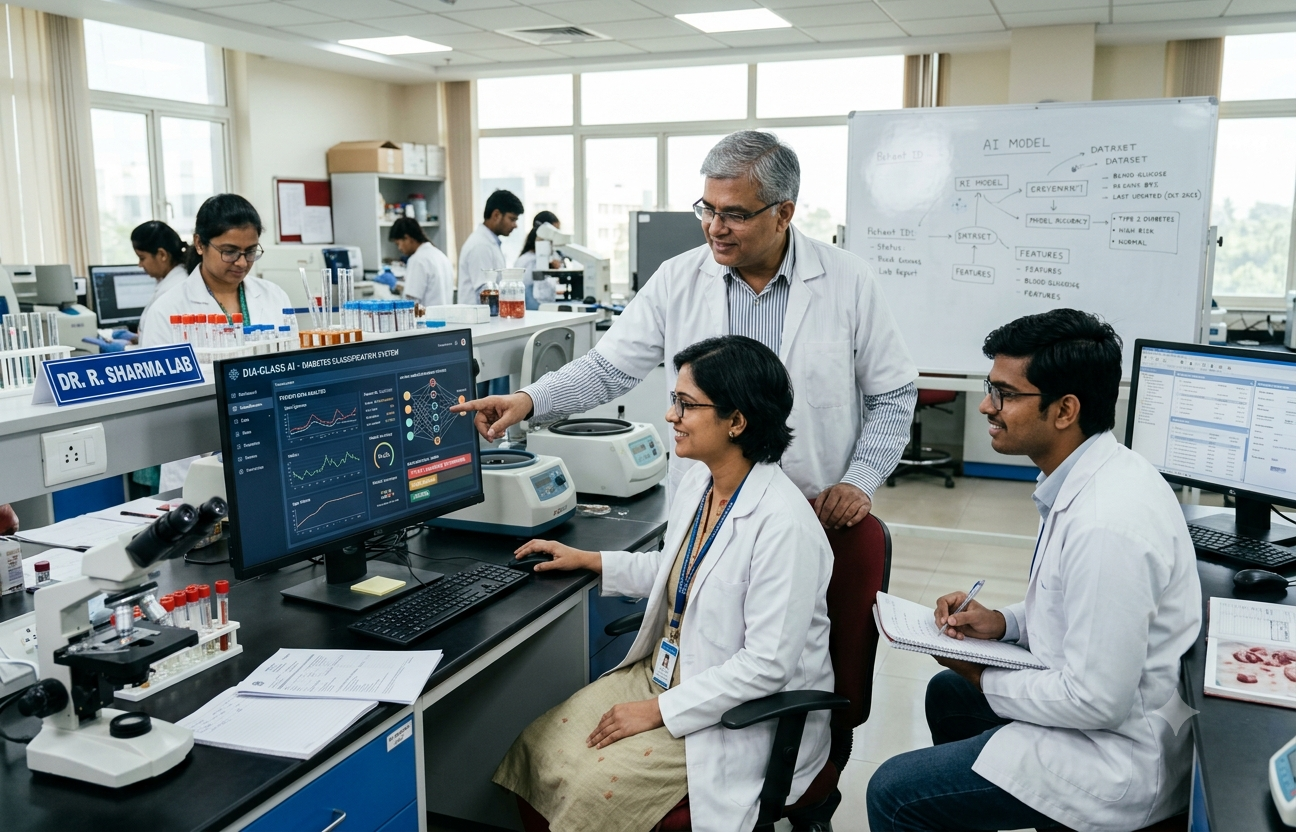
As per new research published in the Scientific Reports Journal, an AI-powered tool that could classify patients into the exact type of diabetes they have has been created. This can prove beneficial to help doctors and medical researchers come up with better and more personalised treatment options for diabetics.
Why Identifying The Type Of Diabetes Matters
There are different types of diabetes, but only type-1 and type-2 are known. If diabetes is classified into different types, then it can influence how the disease is treated. If the diagnosis is flawed, then the medication and its impact on the body can also cause delays in effective treatment.
As of 2026, multiple types of diabetes require different patient outcomes. Besides the most commonly known types, type-1 and type-2, and type 3 and 4 gestational diabetes, as well as prediabetes, can affect people with varied types of insulin responses.
How The New AI Tool Works
The new AI tool has been designed based on datasets by feeding clinical and patient health data. The technologically advanced system can identify diabetes and assign a specific diagnostic label.
These machine learning patterns are often missed by routine personal assessment. The AI tool for diabetes can improve patient outcomes with accuracy, but the model is still in its learning stages.
What Are The Four Diagnostic Categories?
Currently, there are four categorisations available for diabetes diagnosis by the AI tool. Namely, these are prediabetes (PD), type 1 diabetes (T1D), type 2 diabetes (T2D), and diabetes from pancreatic disease (pancreatogenic or type 3c diabetes, T3cD) groups.
The Pima Indians Diabetes Database, maintained by the National Institute of Diabetes and Digestive and Kidney Diseases (NIDDK), is used for the classification of patient records.
They then cross-referenced with a dataset from the Kaggle repository to identify diabetes classes.
The curated multiclass dataset comprised 21,539 samples, with 60% and 40% used for training and testing, respectively.
The art of precision medicine is being practised due to the diverse nature of diabetes. For diabetes classification, AI could be used, as it has been created for processing information at a rapid rate.
Why the Technology Could Improve Patient Care
The integration of AI could be used as a way to improve patient care by making the diagnosis of diabetes more rapid and accurate.
If classification is accurate, then so is the treatment and medication usage, which increases patient outcomes.
Diabetes is a chronic disease with multiple complications that could benefit from personalised diabetes treatment.
Could This AI Help Detect Diabetes Earlier?
AI healthcare technology could be used as a way to detect diabetes much earlier than actually experiencing symptoms and then going to the doctor. Once a blood panel is performed, it can be loaded in the AI tool immediately for classification.
If subtle changes in AI classification could be detected with accuracy. The use is even greater in primary care and large-scale screening programmes.
Benefits And Challenges Of AI In Diabetes Care
There are benefits as well as challenges associated with ground-level implementation of the diabetes diagnostic AI tool. About speed, scalability, and consistency, it can prove beneficial, but on the flipside, the privacy of patient medical data, clinical validation by specialists, and the integration of the tool into healthcare systems, as well as the algorithm-based results, are major concern areas.
What This Means For The Future Of Diabetes Diagnosis
The future of diabetes diagnosis in India could benefit from careful and targeted integration. It could be used to manage a complex disease such as diabetes in a better manner. Diabetes management currently is challenging, as health complications occur as people advance with age, and if an AI tool could be used to shorten their diagnosis time, then patient outcomes could be much better.
Also Read: How Many Steps Should You Walk To Lose 1 Kg In A Week
Disclaimer: This content including advice provides generic information only. It is in no way a substitute for a qualified medical opinion. Always consult a specialist or your own doctor for more information. NDTV does not claim responsibility for this information.