

)
Eating a full morning meal only to find your stomach rumbling an hour later is a surprisingly common, yet frustrating, experience. While it is easy to assume you simply didn't consume enough calories, early post-breakfast hunger is rarely about food volume alone. Instead, it often points to rapid blood sugar fluctuations, a lack of essential macronutrients, or underlying lifestyle factors like poor sleep, stress, and dehydration. Understanding how your digestive tract and brain register satiety and what your morning plate might be missing is essential for sustaining stable energy levels throughout the day.
How Your Body Registers Fullness
Fullness is controlled by a delicate neurochemical communication loop between your gut and your brain, governed primarily by two opposing hormones known as ghrelin that is often termed the "hunger hormone", ghrelin is released when the stomach is empty, signalling to the brain that it is time to seek food. Whereas leptin that is produced by fat cells, acts as the "satiety hormone", signalling to the brain that the body has received sufficient fuel.
When a meal lacks key nutrients like protein and dietary fibre, food passes through the digestive tract too quickly. This prevents satiety signals from registering effectively, causing ghrelin levels to remain elevated despite recent calorie consumption.
"When a meal consists primarily of refined carbohydrates without adequate protein or fats, glucose is absorbed almost immediately into the bloodstream," explains Dr Ruchika Jain, Chief Clinical Dietitian at Fortis Hospital, Vasant Kunj. "This causes a rapid spike in blood sugar, followed by a sharp insulin response that drives glucose levels down. That sudden drop is what triggers intense, premature hunger signals within 60 to 90 minutes of eating."
8 Reasons You Feel Hungry Soon After Eating Breakfast
1. Your Breakfast Lacks Adequate Protein
Protein is the most satiating macronutrient because it slows down gastric emptying and suppresses ghrelin production. Research consistently shows that breakfasts containing 20 to 30 grams of protein significantly enhance fullness and reduce mid-morning snacking. A low-protein breakfast such as toast with butter or plain fruit digests rapidly, leaving you hungry shortly after.
2. You Are Eating Too Many Refined Carbohydrates
Morning staples like white bread, sugary breakfast cereals, bakery pastries, and sweetened coffees trigger sharp blood sugar spikes. Because these items lack complex structure, your pancreas secretes extra insulin to process the sugar, leading to a blood sugar "crash" that your brain interprets as a demand for fast energy.
"People often mistake a high-calorie breakfast for a filling one," notes Dr Priyanka Rohatgi, Chief Clinical Dietitian at Apollo Hospital. "A large bowl of sweetened cereal or bakery goods may carry substantial calories, but without structural fibre and protein to buffer digestion, your metabolic system processes it in under an hour, sending you right back to the pantry."
3. Your Meal Is Low In Dietary Fibre
Fibre acts as a natural digestion buffer. Soluble fibre absorbs water and forms a gel-like substance in the gut, which delays stomach emptying and keeps you feeling full. Without adequate fibre from whole grains, fruits, or seeds, digestive transit time speeds up significantly.
4. You Are Eating Too Quickly
It takes roughly 20 minutes for satiety signals from the gut to reach the brain. Rushing through your breakfast on a busy morning disrupts this brain-gut communication, causing you to finish your plate before your brain realizes that nourishment has arrived.
5. Poor Sleep Quality is Disrupting Hormones
Sleep deprivation drastically impacts appetite regulation. Studies in the Obesity Journal shows that getting less than seven hours of quality sleep increases ghrelin (hunger) levels while suppressing leptin (fullness). This hormonal shift creates strong morning cravings for quick-acting, carbohydrate-dense foods.
6. Mild Dehydration Mimics Hunger
The hypothalamus in the brain regulates both thirst and hunger, making it easy to misinterpret thirst cues for hunger pangs. Because the body loses fluid overnight through respiration and sweat, morning lightheadedness or stomach emptiness is frequently just a sign of dehydration.
7. Elevated Stress Levels
When stress levels are high, the body produces excess cortisol. Cortisol stimulates appetite and drives emotional eating, creating a metabolic environment that favours rapid energy storage and persistent food cravings.
8. Overall Caloric Deficit Or High Activity
If your overall daily intake is too restrictive, or if you engage in intense morning workouts without adequate refuelling, your baseline energy demand will remain unmet. Active individuals require a higher macronutrient threshold in the morning to support muscle recovery and glycogen replenishment.
Building A Balanced, High-Satiety Breakfast
To stabilise blood glucose and keep hunger hormones satisfied until lunch, aim to combine all three core macronutrients on your breakfast plate:
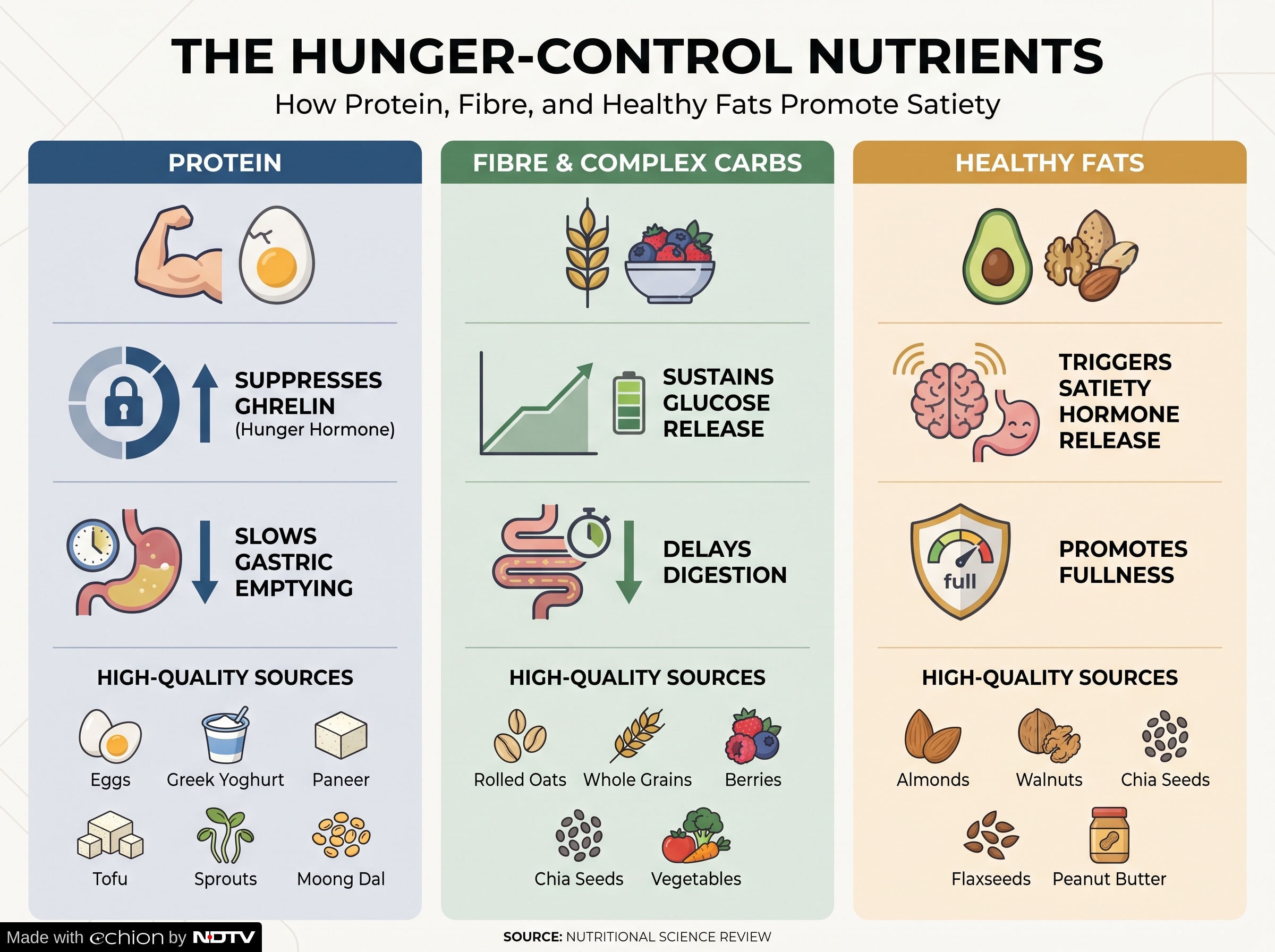
5 High-Protein Breakfast Combinations
- Vegetable Omelette: 2 eggs (or tofu scramble) cooked with spinach, tomatoes, and mushrooms, served with 1 slice of whole-grain toast.
- Protein-Rich Oats: Steel-cut or rolled oats cooked in milk or soy milk, topped with 1 tablespoon of chia seeds, sliced almonds, and fresh berries.
- Paneer and Whole Grain Toast: Grated or grilled paneer served on toasted whole-wheat or sourdough bread with sliced cucumber.
- Moong Dal Chilla with Curd: High-protein savoury lentil pancakes served with fresh, plain curd or mint yoghurt dip.
- Greek Yoghurt Parfait: Unsweetened Greek yoghurt layered with walnuts, pumpkin seeds, and a handful of fresh fruit.
Practical Tips To Stay Full Until Lunch
- Hydrate First: Drink a large glass of plain water upon waking, before your morning tea, coffee, or meal.
- Anchor with Protein: Ensure every breakfast contains at least 15-20 grams of high-quality plant or animal protein.
- Ditch Sugary Drinks: Avoid fruit juices, flavoured syrups, and sweet coffees that spike blood sugar without providing fullness.
- Eat Mindfully: Take at least 15 minutes to sit and chew your food thoroughly to give satiety hormones time to engage.
When To Consult A Medical Professional
While modifying your meal composition resolves early hunger for most people, sudden or unmanageable hunger (polyphagia) can occasionally point to an underlying medical issue.
"If persistent hunger is accompanied by rapid weight changes, excessive thirst, frequent urination, or heat intolerance, it warrants clinical evaluation," advises Dt Chanda Malik, Clinical Nutritionist at Max Super Speciality Hospital. "Conditions like early-onset type 2 diabetes, hyperthyroidism, or specific medication side effects can significantly disrupt appetite signals and require targeted metabolic testing."
If you are hungry within an hour of eating breakfast, your body is usually reacting to a rapid blood sugar drop or a lack of satiety-inducing nutrients. By pairing lean protein and healthy fats with fiber-rich complex carbohydrates, you can smooth out your glucose response, support hormone balance, and keep your energy stable through the morning.
Also Read: Does Raw Paneer Contain More Protein Than Cooked?
Disclaimer: This content including advice provides generic information only. It is in no way a substitute for a qualified medical opinion. Always consult a specialist or your own doctor for more information. NDTV does not claim responsibility for this information.