

Delhi's worsening air quality is not just an environmental concern; it is a public health problem that affects millions of people who breathe polluted air every day. With the Commission for Air Quality Management (CAQM) invoking Stage II of the Graded Response Action Plan (GRAP) across Delhi-NCR as air quality enters the 'Very Poor' category, attention has turned to what these restrictions can actually achieve.
GRAP is an emergency response framework that introduces progressively stricter measures as pollution levels rise. Stage II focuses on curbing emissions from vehicles, controlling road dust, improving public transport and tightening monitoring of pollution-generating activities. The objective is to reduce the pollutants entering the air before conditions deteriorate further.
But can these restrictions make a meaningful difference to people's health? Fine particulate matter, particularly PM2.5, can penetrate deep into the lungs and is associated with respiratory and cardiovascular problems. Dr Navneet Sood, Associate Director and Senior Consultant - Pulmonology, Dharamshila Narayana Superspeciality Hospital, Delhi, explains what GRAP II means, how it may help and why individual precautions remain important.
What Is GRAP II And When Is It Invoked?
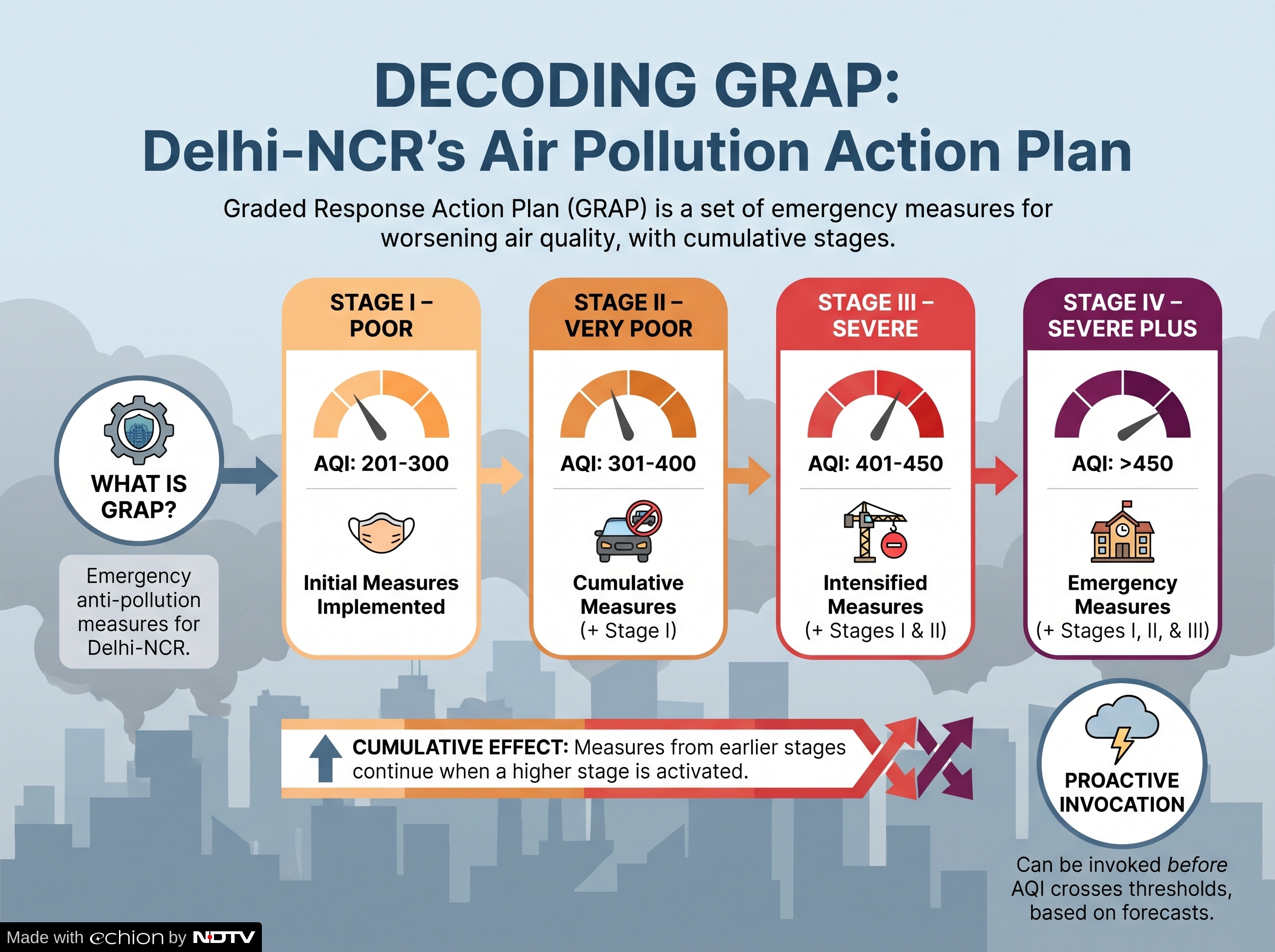
The Graded Response Action Plan is a set of emergency measures designed to tackle worsening air pollution in Delhi-NCR. It has four stages, each corresponding to a higher AQI category:
- Stage I - Poor: AQI between 201 and 300
- Stage II - Very Poor: AQI between 301 and 400
- Stage III - Severe: AQI between 401 and 450
- Stage IV - Severe Plus: AQI above 450
The measures are cumulative, which means actions introduced under earlier stages continue when a higher stage is activated. GRAP can also be invoked in anticipation of worsening conditions, based on air-quality forecasts and meteorological predictions, rather than waiting for the AQI to cross a threshold.
What Restrictions Come Into Effect Under GRAP II?
Stage II is intended to intensify efforts to control pollution from road dust, vehicles, diesel generator sets and other sources. Some of the key measures under the revised GRAP framework include:
- More frequent road cleaning and dust control: Authorities are required to intensify mechanical and vacuum sweeping, along with water sprinkling and the use of dust suppressants on identified roads, particularly at pollution hotspots and busy traffic corridors. The collected dust must also be disposed of appropriately.
- Higher parking charges: Differential or increased parking fees are intended to discourage unnecessary use of private vehicles and encourage commuters to consider public transport.
- More public transport services: Metro services and CNG and electric buses are to be augmented, including through additional fleets and increased frequency. Differential fares may also be used to encourage travel outside peak hours.
- Restrictions on diesel generator sets: Their operation is regulated, with specified emission-control requirements and exemptions for essential services. This is intended to reduce emissions from power backup systems.
- Changes in government office timings: Staggered timings for government offices and municipal bodies are among the measures intended to reduce congestion during peak commuting hours.
- Preventing open burning: Resident Welfare Associations are required to provide electric heaters to security, sanitation and other outdoor staff so that biomass or municipal waste is not burnt for warmth.
- Restrictions on certain inter-state buses: Buses entering Delhi from NCR states must meet specified cleaner-vehicle norms, with exemptions for permitted categories such as electric and CNG buses and eligible BS-VI diesel vehicles.
These measures build on restrictions already in force under Stage I, including action against open waste burning and dust-generating activities. Their impact depends on how consistently agencies enforce them.
READ | Delhi Air Quality Dips Further: How Smog Can Trigger Redness, Dryness And Itching In Your Eyes
Can GRAP II Curbs Actually Improve Your Health?
The answer is yes, potentially, but the benefits depend on whether the measures lead to a meaningful reduction in pollution exposure.
Air pollution is a complex mixture of particles and gases. Among these, PM2.5 is particularly concerning because these fine particles can travel deep into the respiratory tract and, under certain conditions, enter the bloodstream. Exposure is associated with respiratory and cardiovascular diseases, including asthma, chronic obstructive pulmonary disease, heart disease and stroke.
Dr Sood explains that prolonged exposure to polluted air can affect multiple parts of the body. "Fine particulate matter (PM2.5) can be inhaled and deposited deeply in the lungs, and even in the blood." He adds that long-term exposure is associated with "asthma, respiratory infections, reduced lung function and an increased risk of cardiovascular diseases."
Measures that reduce road dust, vehicle emissions and other sources of pollution can therefore help lower people's exposure. Better dust management may reduce particulate matter being resuspended from roads, while cleaner public transport can help limit emissions from individual vehicles. If implemented effectively, these interventions may also reduce irritation of the eyes, nose and throat, coughing and breathing difficulties.
However, GRAP II should not be mistaken for an immediate solution to Delhi's air pollution problem. Weather conditions such as low wind speeds and temperature inversions can trap pollutants close to the ground, making it difficult for them to disperse. Moreover, a temporary improvement in AQI does not undo the effects of years of exposure.
As Dr Sood points out, "GRAP II does not provide a quick fix." The health risks associated with prolonged exposure cannot be fully addressed through temporary restrictions alone.
What Should Delhi-NCR Residents Do To Protect Themselves?
Government restrictions can help reduce pollution at its sources, but residents should also take precautions to limit their exposure, particularly during periods of very poor air quality.
Dr Sood recommends the following steps:
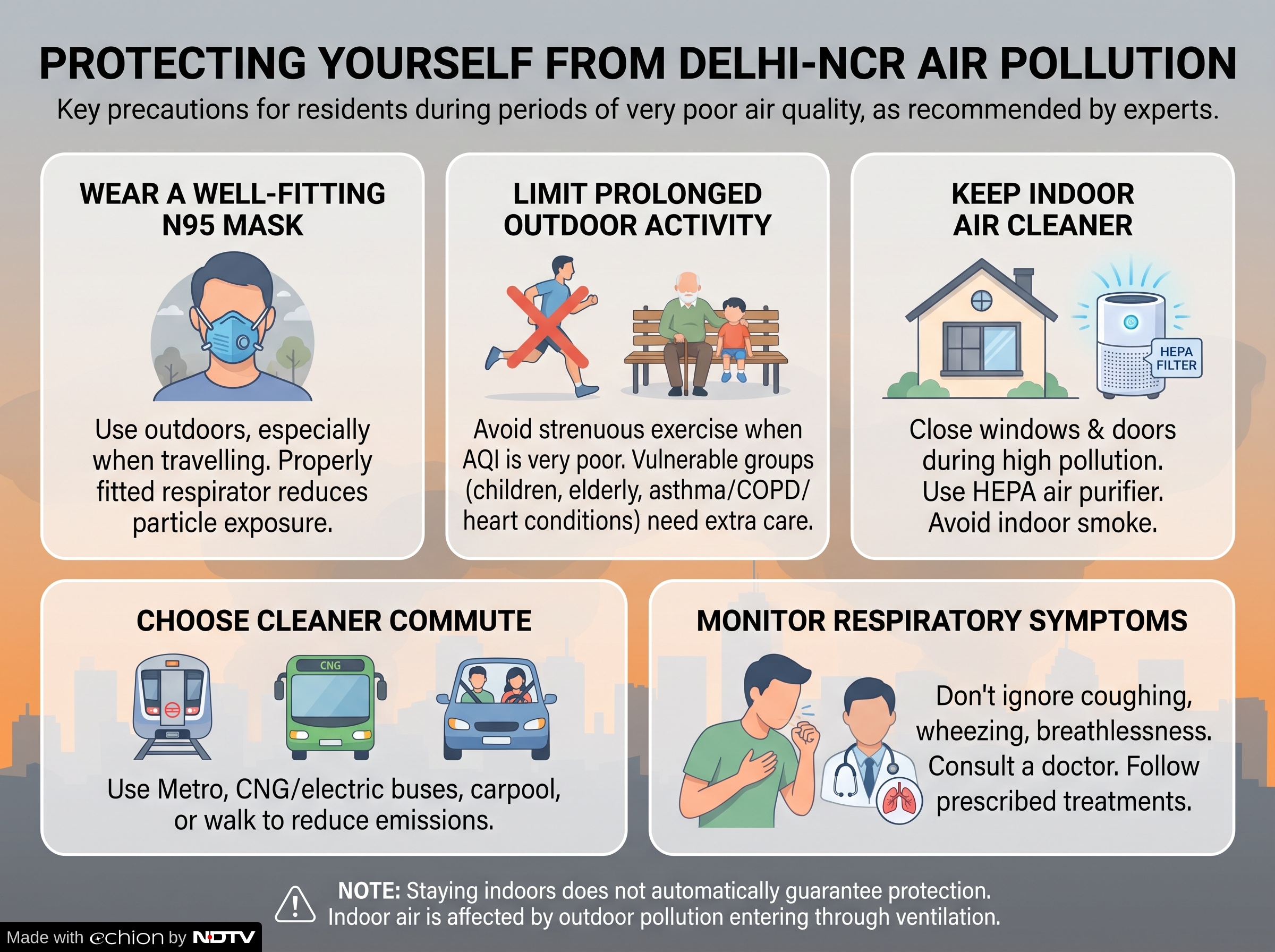
- Wear a well-fitting N95 mask outdoors: Use it when travelling or spending time in areas with high pollution. A properly fitted respirator can help reduce exposure to airborne particles.
- Limit prolonged outdoor activity: Avoid strenuous exercise, running or cycling outdoors when AQI levels are very poor. Children, older adults and people with asthma, COPD or heart disease should take particular care.
- Keep indoor air cleaner: Keep windows and doors closed during periods of particularly high outdoor pollution. If available, use an appropriately sized air purifier with a HEPA filter, and avoid indoor sources of smoke.
- Choose cleaner ways to commute: Use the Metro, CNG or electric buses, carpool or walk when conditions and distances permit, rather than adding to private vehicle emissions.
- Do not ignore respiratory symptoms: Persistent coughing, wheezing, chest tightness or breathlessness should be evaluated by a doctor. People with existing respiratory conditions should follow their prescribed treatment and seek medical advice if symptoms worsen.
It is also important to remember that staying indoors does not automatically guarantee protection. Indoor air can also be affected by outdoor pollution entering through doors, windows and ventilation systems.
READ | 7 Steps To Prepare Your Home And Health For Peak Pollution Season
GRAP II is an important intervention to address Delhi-NCR's worsening air quality, but its success depends on effective enforcement, coordination between government agencies and sustained public participation. More frequent road cleaning, better public transport, restrictions on polluting generator sets and measures to discourage private vehicle use can help reduce emissions and exposure.
However, emergency restrictions cannot substitute for long-term action on transport emissions, construction and road dust, industrial pollution, waste management and regional sources of pollution. As Dr Sood emphasises, improving air quality is not merely an environmental objective; it is a public health necessity.
For Delhi-NCR residents, the message is equally important: follow air-quality advisories, reduce avoidable exposure and seek medical attention if respiratory symptoms persist. Protecting health requires both cleaner air and informed individual precautions.
Disclaimer: This content including advice provides generic information only. It is in no way a substitute for a qualified medical opinion. Always consult a specialist or your own doctor for more information. NDTV does not claim responsibility for this information.