

)
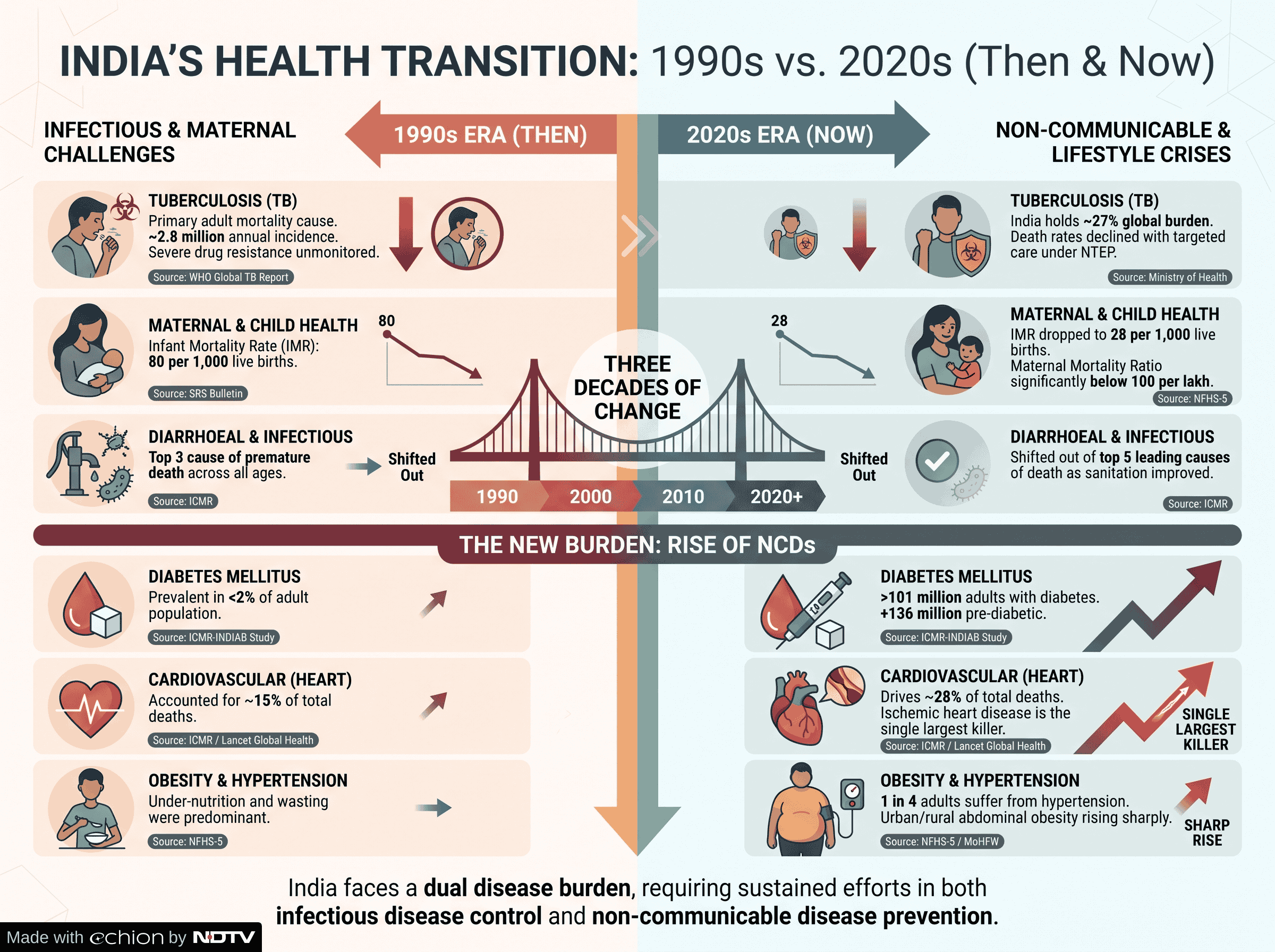
In 1990, an Indian citizen was far more likely to die from a bout of acute diarrheal disease, severe tuberculosis, or maternal complications during childbirth than from a clogged artery or elevated blood sugar. Fast forward three decades: while our hospitals are still managing crowded infectious disease wards, the silent killer occupying ICU beds and driving families into catastrophic health debt isn't a microbe. It is a chronic metabolic and lifestyle disease. India is undergoing one of the fastest epidemiological transitions in global history. But as the nation's disease profile changes, a fundamental question emerges: Did India's health burden shift faster than its healthcare system could keep up?
The Diseases That Changed India's Health Burden
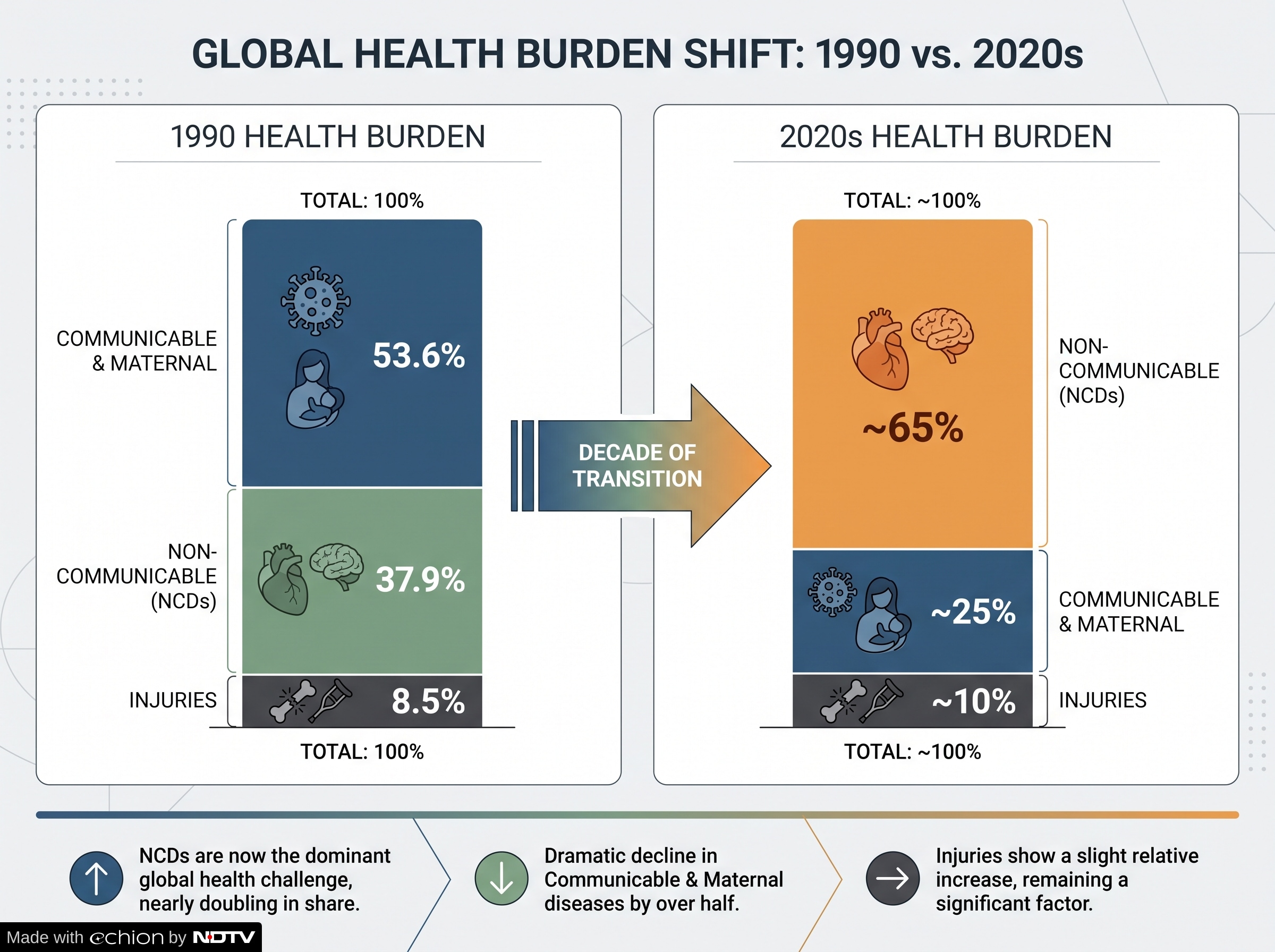
Data from the Indian Council of Medical Research (ICMR) and the Global Burden of Disease (GBD) study highlight a massive shift in how mortality and morbidity are distributed across the Indian population. In 1990, communicable, maternal, neonatal, and nutritional conditions accounted for 53.6% of total disease burden (measured in DALYs—Disability-Adjusted Life Years) in India. By the late 2010s and early 2020s, that figure had dropped dramatically.
Replacing it is the surge of Non-Communicable Diseases (NCDs), which now account for nearly two-thirds (65%) of all deaths in India.
How Key Health Indicators Have Shifted
National surveys, including NFHS-5 (National Family Health Survey) and ICMR state-level disease burden reports, reflect this shift across key health metrics:
Did The Health System Lag Behind The Shift?
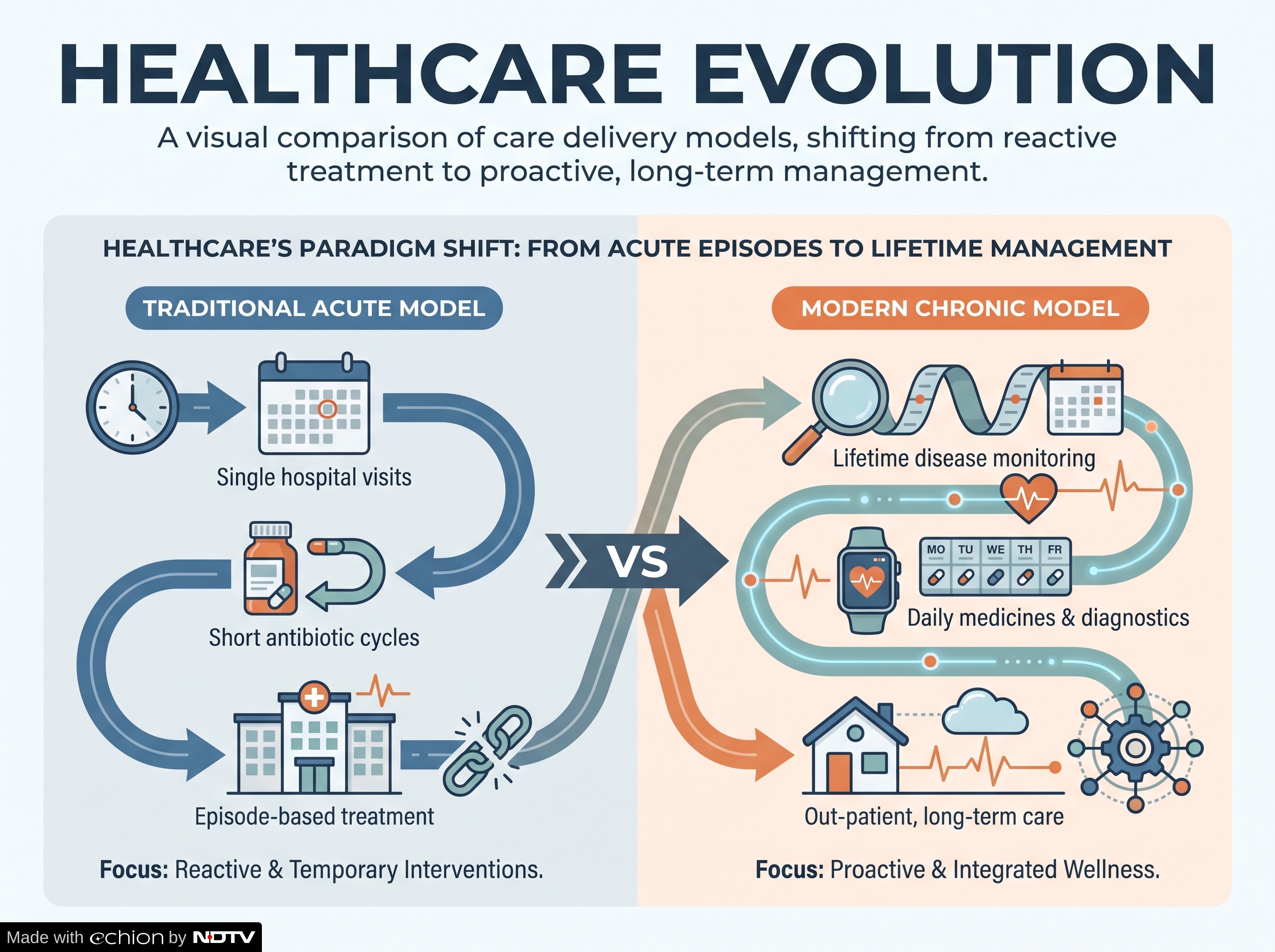
The short answer is yes. India's clinical infrastructure was originally engineered around acute care: treating episodic events like high fevers, infectious outbreaks, traumatic injuries, and childbirth.
Chronic diseases like diabetes, hypertension, chronic kidney disease (CKD), and cancer demand a fundamentally different model: continuous primary care, routine screening, lifetime medication management, and preventive lifestyle counselling.
The Three Critical Gaps Exposed By The Shift
1. The Out-of-Pocket Expenditure Trap: NCDs are slow, silent, and chronic. While acute hospital stays are covered by schemes like Ayushman Bharat (PM-JAY), long-term outpatient expenses such as monthly blood tests, daily anti-hypertensives, and continuous glucose monitoring that remains out of pocket for millions, leading to financial strain.
2. Late-Stage Diagnosis: Because conditions like fatty liver disease, early-stage renal failure, and hypertension develop without pain, patients often visit secondary or tertiary care centres only when complications occur (e.g., heart attacks or end-stage kidney failure).
3. The Dual-Burden Challenge: India cannot simply pivot all resources to NCDs. Public health networks must manage lifestyle diseases while continuing to handle vector-borne outbreaks (dengue, chikungunya), respiratory illnesses, and endemic infections like TB simultaneously.
How Delayed Primary Care Drives Secondary Failure
The widening disconnect between India's changing disease burden and its legacy healthcare apparatus is best captured in a single metric: diagnostic latency.
When infectious diseases strike, symptoms are dramatic, immediate, and force urgent clinical visits. Non-communicable diseases (NCDs), by contrast, operate on a timeline of silent progression. Landmark findings from the ICMR-INDIAB study show that an astonishing 136 million Indians live with prediabetes which is a completely asymptomatic metabolic phase that quietly damages vascular walls long before clinical diagnosis.
Because India's primary health apparatus historically prioritised infectious triage over routine adult wellness, millions bypass early lifestyle intervention entirely. By the time an urban or rural patient seeks care at a tertiary hospital, they are rarely presenting with managed hypertension or mild hyperglycaemia; they are arriving with end-stage renal failure, massive ischaemic strokes, or advanced diabetic retinopathy.
While initiatives like the government's 1.8 lakh Ayushman Arogya Mandirs have rolled out over 70 crore combined screenings for hypertension and diabetes, the structural lag remains. The health system is still racing to transform its clinical workflow from episodic crisis management into an active, lifelong chronic care architecture before the fiscal burden overwhelms public infrastructure.
Catching Up To The Data
To address this shift, the government launched the Ayushman Bharat Health and Wellness Centres (now Ayushman Arogya Mandirs), which aim to deliver primary NCD screening for hypertension, diabetes, and common cancers closer to communities.
However, curbing the NCD tide requires more than clinic infrastructure. It demands policy-level interventions which range from stricter regulations on ultra-processed foods and front-of-pack nutrition labelling to urban planning that promotes physical activity.
India's disease transition shows that while we have successfully countered many infectious diseases, the next health crisis won't come from mosquito bites or contaminated water. It is quietly taking root on our dinner plates, in our sedentary work habits, and in our stress levels. The real race now is ensuring India's primary healthcare system can catch up before the burden grows even heavier.
Also Read: India's Healthcare Gets Cheaper, Wider: National Statistical Office Survey Reveals Big Gains
Disclaimer: This content including advice provides generic information only. It is in no way a substitute for a qualified medical opinion. Always consult a specialist or your own doctor for more information. NDTV does not claim responsibility for this information.