

)
What does being independent mean to you? Having your own money? Moving out? Paying your own bills? Making your own decisions? Saying "I don't need anyone" with unnecessary confidence?
Fair enough.
But there is another kind of independence people don't talk about enough: health independence.
Simply put, health independence means being able to take an active role in your own health: knowing what your body needs, understanding basic health risks, getting preventive checks, making informed choices, recognising when something is not normal and knowing when to see a doctor.
It does not mean becoming your own doctor. It does not mean Googling your headache at 2 am and deciding you have three rare diseases. And it definitely does not mean replacing medical advice with an Instagram reel.
It means having enough knowledge, access and confidence to make better health decisions.
And India has never had more tools to help us do that, than it does today.
From Ayushman Arogya Mandirs and vaccination programmes to digital health records, telemedicine, affordable medicines and rapidly expanding medical technology, the country is building a healthcare system that can do more than treat us when we fall sick.
The next step is making sure the nation's citizens use it before they become patients.
So, what exactly is health independence?
Think of it as the health version of being financially independent. Financial independence means understanding your money, planning ahead and knowing how to make decisions that protect your future. Health independence is similar.
It means knowing:
- What your basic health numbers are, like blood pressure, blood sugar, weight and other relevant measures
- Which vaccines you need and when
- Which symptoms you shouldn't ignore
- When a health problem needs a doctor rather than Google
- How to identify credible health information
- Where to get affordable and reliable healthcare
- What habits are quietly affecting your health
- How to access and understand your own medical records
The goal isn't to live in constant health anxiety. The goal is to replace "I hope I'm fine" with "I know what I'm doing about my health."
Your body doesn't care that you're young
One of the biggest health myths among young people is that serious diseases are automatically a "future me" problem. But India's disease profile is changing.
Diabetes, hypertension, obesity and cardiovascular disease are no longer issues that can simply be associated with old age. WHO identifies unhealthy diet, physical inactivity, tobacco, alcohol and air pollution among major risk factors for non-communicable diseases.
That doesn't mean every 22-year-old needs a full-body health check every six months. It means your twenties and thirties are not a health-free trial period. Sleep deprivation, smoking, inactivity, excessive alcohol consumption, poor diet and chronic stress can accumulate over years. The earlier you build healthier habits, the less repair work your future self may have to do.
Stop waiting for your body to send a push notification
Your phone reminds you about everything. Meetings. Deliveries. Birthdays. Screen time. Low battery. Your body isn't quite so organised.
High blood pressure can have no obvious symptoms. Diabetes can develop silently. Some cancers are much easier to treat when detected early.
That's why preventive healthcare matters. India's government has been expanding population-based screening for hypertension, diabetes and common cancers through its primary healthcare network. The National Programme for Prevention and Control of Non-Communicable Diseases includes screening for adults aged 30 and above for hypertension, diabetes and oral, breast and cervical cancers.
For younger people, the lesson is simple:
Don't panic. Know your risk.
Family history, tobacco use, obesity, lifestyle, symptoms and other factors can change when and what screening is appropriate. Your doctor can help you figure that out.
Your health feed is not your doctor
Today's generations have access to more health information than any generation before. And somehow, people have also become spectacularly good at being confused by it.
One video says carbohydrates are evil. Another says you need them. One influencer recommends supplements. Another says supplements are toxic. Someone has "detoxed" their liver with a juice. Someone else has discovered that their entire personality is apparently caused by gut health.
The problem isn't access to information. It is knowing which information deserves your trust.
Health independence means learning to ask:
- Who is saying this?
- What evidence supports it?
- Is this an actual medical recommendation or someone's personal experience?
- Could this advice be dangerous for someone with a medical condition?
WHO has repeatedly warned about the risks of health misinformation and disinformation, particularly when it affects people's ability to make informed health decisions.
Being health-independent doesn't mean believing everything you read. It means becoming harder to fool.
Your digital health era has arrived
There is another reason this is the right moment to talk about health independence: India is building the digital infrastructure to support it. Under the Ayushman Bharat Digital Mission, more than 94 crore ABHA accounts had been created by July 2026, alongside millions of registered health facilities and healthcare professionals.
The idea is relatively simple: your health information should not have to disappear every time you change hospitals. Digital health records, teleconsultations and interoperable systems can make healthcare more connected and potentially easier to navigate.
But there is an important rule: Your health data is yours. Digital health should make you more informed and empowered, while protecting privacy, consent and security. Technology should work for the patient, not the other way around.
Health independence also means knowing when to ask for help
This might be the most important part. Independence does not mean doing everything alone. If your mental health is deteriorating, you don't get bonus points for suffering silently. If you have persistent symptoms, you don't win by ignoring them. If a doctor recommends a test, asking why is healthy. If you don't understand your diagnosis, asking questions is healthy. If you need a second opinion, seeking one can be healthy.
Health independence is not "I don't need doctors." It is: "I know when I need one." India is making healthcare more accessible, now we need to use it
The country's healthcare system is changing rapidly. More than 1.86 lakh Ayushman Arogya Mandirs were functional by July 2026, providing preventive, promotive and primary healthcare services closer to communities. Vaccination programmes are expanding, digital health infrastructure is growing and India's medical education and healthcare capacity have increased significantly.
The opportunity is enormous. But infrastructure can only take one so far.
A health centre cannot help if you never go. A vaccine cannot protect you if you skip it. A screening programme cannot detect a disease if people don't participate. A digital health record cannot empower you if people don't understand what is in it.
Healthcare can become more accessible. But health independence requires participation.
Independence Day, but make it health
India's independence gave its citizens the freedom to determine their own future. The next generation has an opportunity to redefine what that future looks like. Maybe health independence is not about becoming obsessed with wellness. Maybe it is much simpler:
- It is drinking less because you know what alcohol can do to your health
- Going for a walk because you understand what inactivity does
- Getting vaccinated because prevention beats treatment
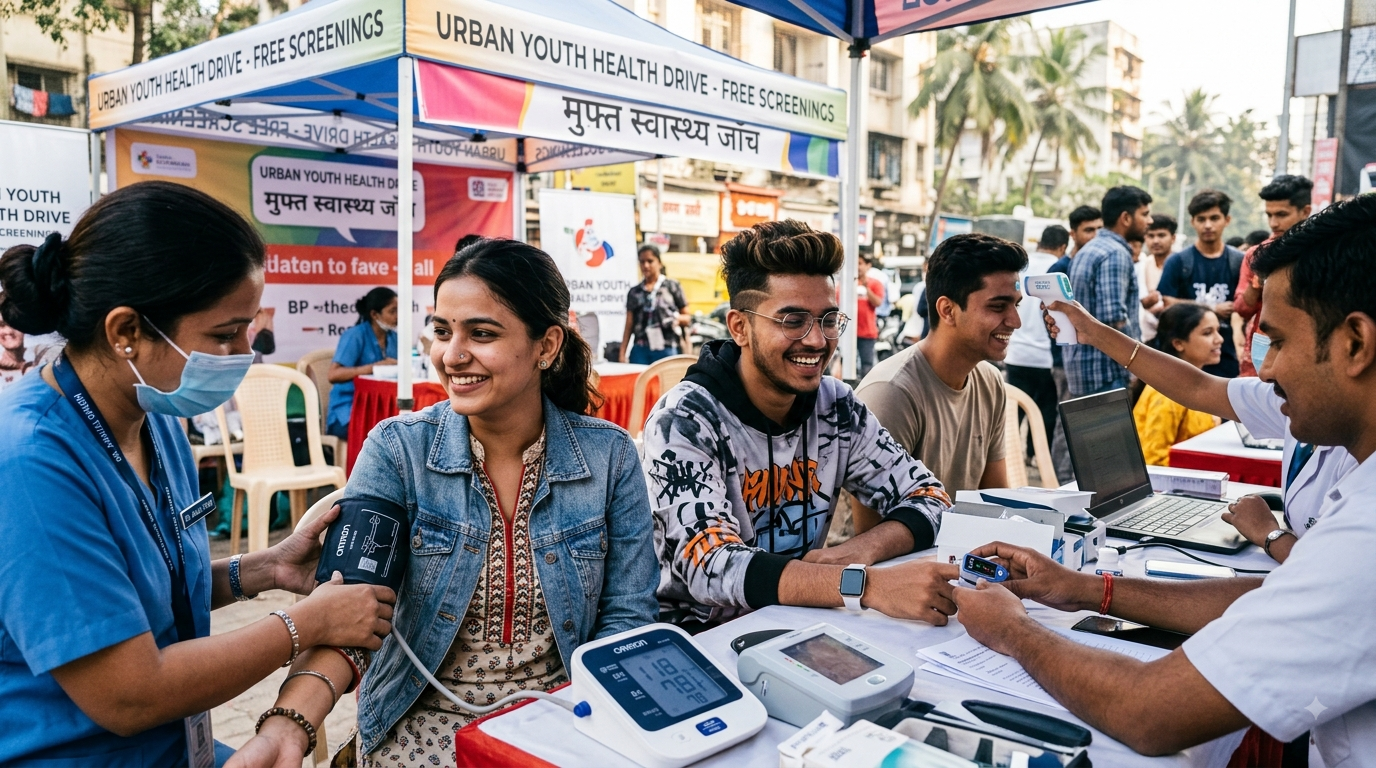
- Checking your blood pressure because hypertension can be silent
- Getting that persistent symptom checked instead of turning it into a meme
- Learning enough about nutrition to recognise nonsense online
- Asking questions at the doctor's office
- Knowing your family medical history
- Knowing where to get help
- And understanding that taking care of yourself is not boring, paranoid or "uncool"
It is one of the most independent things you can do. India has spent decades building the healthcare infrastructure to fight disease. Now comes the more personal revolution: Indians becoming active participants in their own health. Because the best time to become health independent isn't when you're sick. It's now.
Disclaimer: This content including advice provides generic information only. It is in no way a substitute for a qualified medical opinion. Always consult a specialist or your own doctor for more information. NDTV does not claim responsibility for this information.