

)
Walking 10,000 steps a day is a common goal for many individuals. Consistently walking 10,000 steps a day offers impressive health benefits for long-term health. It can help boost cardiovascular health, support weight management, boost cognitive function and support bone health. However, for those leading a sedentary lifestyle, hitting the 10,000-step mark may not be sufficient for optimal vein health.
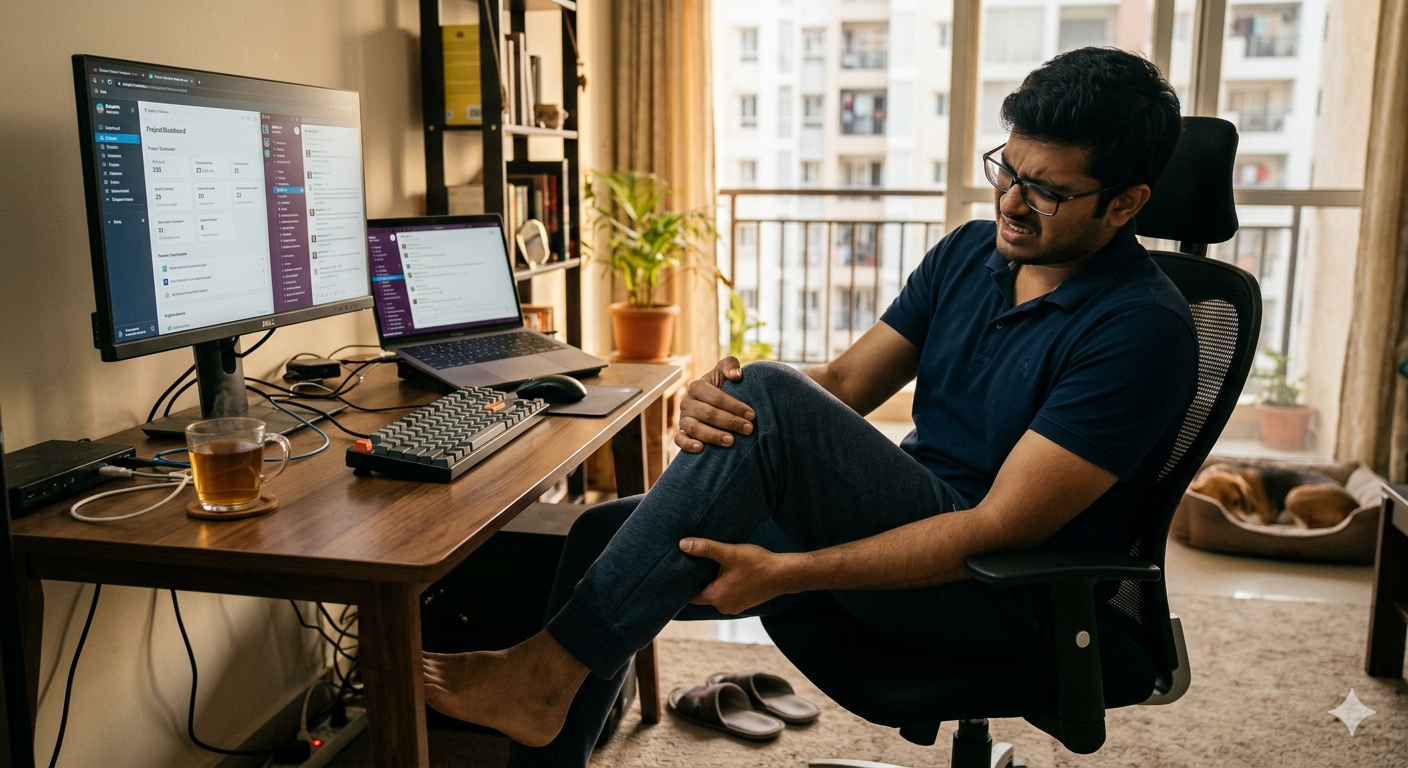
Spending 9 to 10 hours sitting at a desk without any physical movement can severely impact your health, especially affecting your veins. Even if you manage to walk 10,000 steps in the evening, it cannot completely counteract the damage caused to your veins by prolonged sitting. This is primarily because your circulatory system benefits more from frequent movement throughout the day rather than a single, concentrated effort.
Dr. Sumit Kapadia, a Gujarat-based Vascular Surgeon and Varicose Vein Specialist with 18 years of experience, emphasised in an Instagram post that even a healthy step count cannot reverse 10 hours of immobility.
"Your 10,000 steps don't undo 10 hours of sitting. This is something I tell my patients almost every day."
"You can hit your step goal in the evening. But if you've been desk-bound from 9 AM to 7 PM, your veins have already taken the damage. Because circulation doesn't depend on how much you walk. It depends on how often you move," Dr. Kapadia said in the post.
A sedentary lifestyle damages veins by deactivating the calf muscle pump, causing blood pooling and elevated venous pressure. Over time, this chronic stress weakens vessel structures and triggers serious circulatory disorders.
"Long sitting leads to blood stagnation, leading to vein valve weakness followed by swelling and varicose veins, resulting in a higher risk of clots," he explained.
The hazards of prolonged sitting on your veins:
-
Inactive muscle pump
Veins must fight gravity to return blood from the lower body to the heart. Your calf muscles act as a "second heart" by contracting during movement to squeeze blood upward. Inactivity silences this mechanical pump.
-
Blood stasis and pooling
Without muscle contractions, blood flow slows down dramatically. Gravity forces the blood to pool in the lower legs and feet.
-
Elevated venous pressure
Continuous pooling creates sustained high pressure inside the delicate walls of the leg veins.
What should you do?
Dr. Kapadia shared the following rules you should follow for optimal vein health:
- Get up every 45-60 minutes
- Stretch
- Walk for 2 minutes
- Move your calf muscles as they're your peripheral heart
Some additional tips:
- Set a timer to stand up, walk, or stretch for two minutes every half hour.
- Flex your ankles, lift your heels, and perform calf raises while seated to engage muscles.
- Prop your feet above heart level during rests to let gravity naturally drain pooled blood.
- Drink plenty of water daily to thin the blood and lower the likelihood of clot formation.
"Tiny breaks. Huge difference. Your veins don't need marathons. They need movement," the expert concluded.
While 10,000 steps is a solid fitness goal, to truly protect your veins, you must change your movement pattern. Researchers have found that taking a 5-minute walking break for every hour of sitting actively prevents the blood stagnation and vessel damage from occurring in the first place.
Disclaimer: This content including advice provides generic information only. It is in no way a substitute for a qualified medical opinion. Always consult a specialist or your own doctor for more information. NDTV does not claim responsibility for this information.