





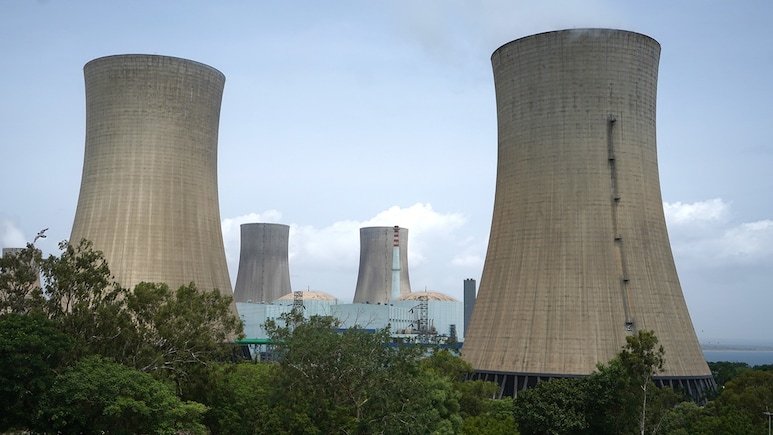
The US-India Business Council (USIBC) and KPMG in India have released a major new report calling for an aggressive expansion of India's nuclear energy programme, arguing that the country must scale installed nuclear capacity more than tenfold to 100 GW by 2047 to meet its energy security and climate goals.
Titled "Atoms for Net-Zero", the report positions nuclear power as a cornerstone of India's long-term industrial growth strategy, particularly as electricity demand surges from data centres, artificial intelligence, manufacturing, green hydrogen production, and heavy industry.
Released jointly in New Delhi, the report comes at a time when India is attempting to balance rapid economic expansion with its commitment to achieve net-zero emissions by 2070. The study argues that renewable energy alone will not be sufficient to meet round-the-clock power requirements and that nuclear energy will be essential for providing "firm, clean power and grid stability".
At the centre of the report is a proposed transformation of India's nuclear ecosystem through deeper collaboration with the United States in areas including reactor technology, fuel supply, manufacturing, licensing standards, and supply chain development. The report says India could emerge not only as a major nuclear deployment market but also as a "global nuclear manufacturing and innovation hub".
The report arrives amid sweeping reforms in India's nuclear sector following the passage of the SHANTI Act, 2025, legislation that replaces older atomic energy laws and opens the door to private-sector participation in nuclear energy projects while retaining government control over sensitive fuel-cycle and safety functions.
USIBC Managing Director Rahul Sharma said the reforms marked a decisive shift from ambition to implementation.
"India's roadmap for nuclear energy is clear - from 22 GW by 2032 to 100 GW by 2047," Sharma said in the joint statement. "With the SHANTI Act and the Nuclear Energy Mission, the country has aligned ambition with institutional reform. The focus must now shift decisively to execution, partnerships, and bankable delivery models."
India currently has about 8.8 GW of installed nuclear capacity, accounting for a small fraction of its total electricity generation mix. The report notes that the country generated more than 56,000 million units of nuclear power in FY2024-25, with nuclear plants operating at capacity utilisation rates exceeding 80 per cent consistently over the last five years.
The study highlights that India remains heavily dependent on imported fossil fuels, importing around 88 per cent of its crude oil requirements and nearly half its natural gas demand. Nuclear energy, the report argues, could significantly reduce import dependence while supporting decarbonisation.
One of the report's most significant findings is the scale of private and industry interest already emerging around nuclear power. According to the study, announced commitments and proposals from public and private players together exceed 140 GW - substantially above the government's 100 GW target.
Major industrial groups including NTPC, Holtec, Adani Group and Jindal Steel are among those exploring large-scale nuclear investments or procurement arrangements. Holtec alone has outlined plans linked to 30 GW of small modular reactor (SMR) deployment involving India and international markets.
The report places particular emphasis on SMRs, describing them as potential "catalysts for expansion" because of their modular construction, lower upfront costs, enhanced safety systems and suitability for industrial applications.
India's government has already announced plans to invest INR 20,000 crore to support the development of five indigenous SMRs under the National Nuclear Energy Mission.
The report argues that SMRs could play a major role in sectors such as steelmaking, desalination, shipping, hydrogen production and remote industrial operations. It notes growing international interest in nuclear-powered maritime transport and clean industrial heat applications as countries seek alternatives to fossil fuels.
KPMG International's Global Head for Energy, Natural Resources and Chemicals, Anish De, said financing and execution would determine whether India's nuclear ambitions become reality.
"Nuclear power can anchor India's clean energy system by delivering reliable, low-carbon electricity and industrial heat at scale," De said. "With predictable regulation, viable financing structures, and standardised technology pathways, India can mobilise private capital and build a safe, competitive, and future-ready nuclear ecosystem."
The report also calls for inclusion of nuclear energy within green finance frameworks, along with viability gap funding and blended finance structures to attract institutional capital into the sector.
Another major challenge identified is workforce readiness. Scaling nuclear capacity to 100 GW would require tens of thousands of highly skilled workers across reactor operations, construction, digital controls, safety systems and advanced manufacturing. The report advocates expanded investment in STEM education and stronger international academic partnerships.
The study concludes that India stands at a "strategic inflection point" in its nuclear journey and says timely execution, regulatory certainty and sustained international collaboration - particularly with the United States - will be critical if the country is to translate its nuclear ambitions into operating capacity by 2047.
Track Latest News Live on NDTV.com and get news updates from India and around the world

