Iran's Missiles Still Flying, So Is Hormuz Threat. US May Be Running Out
Reports the Iranian military is far from the spent force the Trump administration wants everyone to believe it is have been followed by news that attacks may resume.

Iran has restored operational access to 30 of 33 missile launch sites along the Strait of Hormuz and retained nearly 70 per cent of its pre-war missile arsenal, potentially resetting a nearly three-month war with the United States and a naval stand-off for control of a maritime chokepoint that ships 20 per cent of the world's crude oil.
US intelligence officials told policymakers in closed-door briefings Iran has been able to re-open around 90 per cent of its underground storage facilities, which may contain more drones and missiles, and underscored the likely challenge to American forces running low on critical munitions, including Tomahawks and Patriots, if the ceasefire were to snap.
The intel, reported by The New York Times on May 12, seemed to undercut weeks of US laims about the 'decimation' of Iran's air defences, missile and drone launch capabilities, and raises the possibility of a global energy crisis extending for months.
Brent crude, which traded $60 to $75 a barrel in the months before the war, was pushed to four-year highs. Oil has stayed in the $100-$110 range since early March - except for three weeks in April - leaving net import countries paying billions more.
India, which imports around 89 per cent of its crude oil needs - about 40 per cent of which comes via the Hormuz - responded by diversifying sources and loosening federal taxes to help OMCs absorb most of the increased costs, which includes increased risk premiums. This week the government stressed it has sufficient oil and gas reserves.
Trump's Claims, Shot Down
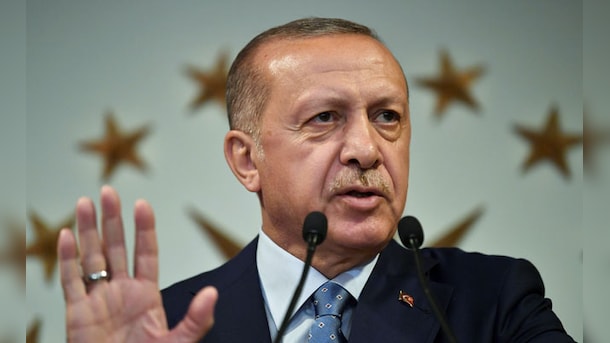
On March 4, five days into the war, President Donald Trump said: "They have no navy; it's been knocked out. No air force; it's been knocked out. No air detection - that's been knocked out."
On April 2, 34 days into the war, he declared again: "Iran's Navy is gone, Air Force is in ruins, and their leaders - most of them - and the terrorist regime they led are now dead..."
That sentiment has been repeated - by Trump, Secretary of State Marco Rubio, Secretary of Defense Pete Hegseth, and White House social media channels - over the past 40-odd days.
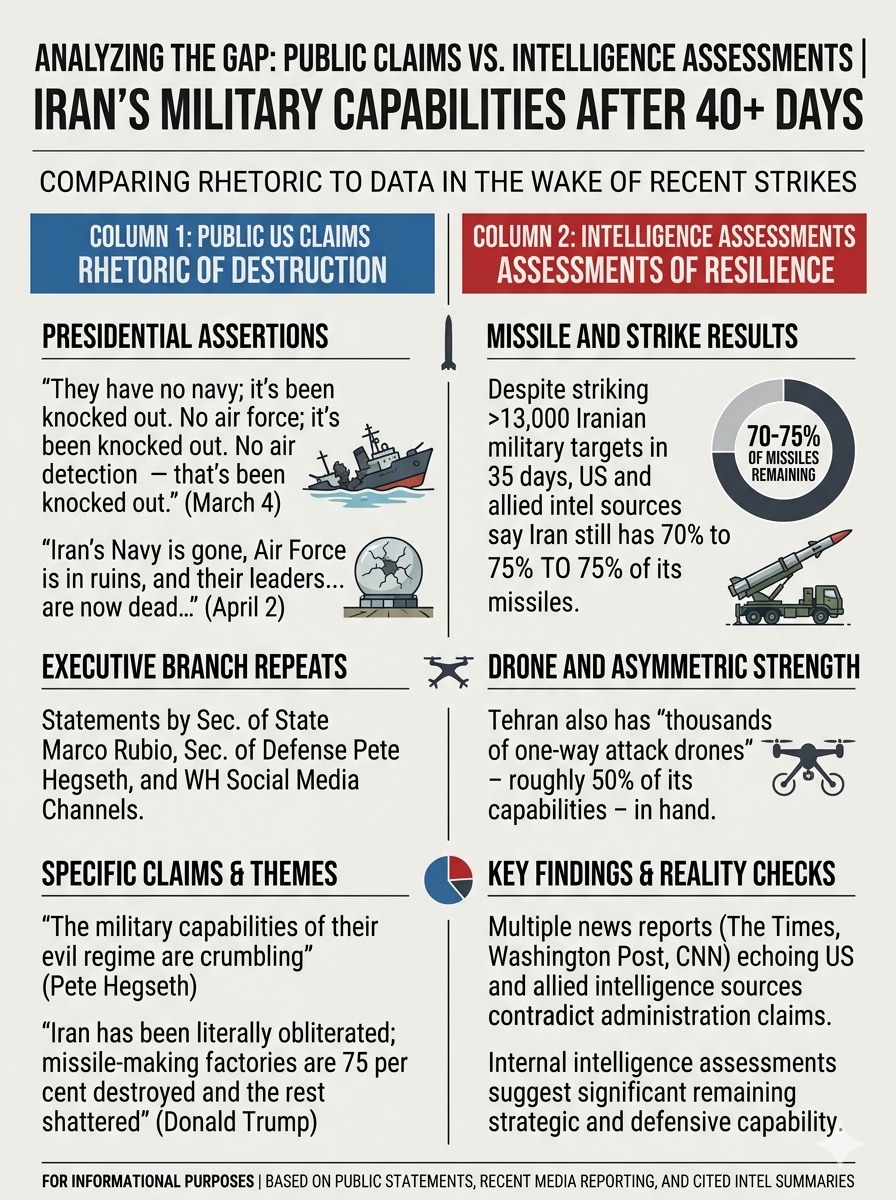
Image generated by AI
In March Hegseth snapped back at a Pentagon briefing to say: "The military capabilities of their evil regime are crumbling", while his boss insisted in televised remarks in April: "Iran has been literally obliterated; missile-making factories are 75 per cent destroyed and the rest shattered."
But this week The Times offered a reality check, echoing an earlier Washington Post report and its own from April. In all three, US and allied intel sources said Iran still had 70 to 75 per cent of its missiles, despite US forces having struck over 13,000 Iranian military targets in 35 days.
An early-April report by CNN was even more pessimistic; sources told the broadcaster Tehran also has 'thousands of one-way attack drones' - roughly 50 per cent of its capabilities - in hand.
Ceasefire under pressure
Reports the Iranian military is far from the spent force the Trump administration wants everyone to believe it is have been followed by news that attacks may resume.
Trump and Hegseth this week called Tehran's latest peace offer "garbage".

Trump and Hegseth have insisted US forces have 'decimated' Iran military levels (File)
It included demands for the US to pay compensation, end sanctions, and recognise Iranian authority over the Hormuz. Trump's response: "We're going to make a deal or they're going to be decimated."
There is no current scenario in which Washington would agree to pay Iran war costs or recognise Tehran's control over the Hormuz. And Trump has made it clear he will not lift sanctions without Iran giving up its nuclear programme and stockpile of enriched uranium.
That leaves only two options - the Hormuz energy stalemate continues, which is bad news for the world, or military action resumes, and escalates, on the back of pressure from one side.
And that is where US intel on Iran's missile capabilities could come into play.
The Trump administration has denied any report that its missile stocks have dropped to dangerously low levels. But these multiple intel reports paint a different picture.
'Out of missiles'? Not a chance, says IRGC
And they match statements by the Iranian military, which has repeatedly said its stocks - believed to be the largest in the Middle East - are far from exhausted.
Last week an Iran MP told Turkey's Anadolu Agency his country's reserves are "sufficient to sustain years of war". In March an IRGC spokesperson warned the US "most of our advanced weapons have not even been used".
The data suggests Iran has fired only 3,600 drones and 700 missiles from older stocks.
READ | Iran's Missile Arsenal. Is It Really Gone?
If data about the US running low is even roughly accurate, resuming missile strikes now risks Washington running reserves to critically low levels, something that has alarmed its allies in Europe and Asia. This particularly with Russia continuing its war on Ukraine - and on the EU's doorstep - and China's Taiwan fixation still a point of concern in East Asia.
READ | China Is Mining Iran War For Lessons On US Military Power
In fact, this week a South China Morning Post report said Beijing has been mining the war to assess US military capabilities - defensive and offensive - in varied combat scenarios in the event of future conflicts with Washington over Taiwan.
-
Opinion | Why A 'Bangladesh' Proposal By Turkish Media Should Worry India

A recent article in Turkish media illustrates how Ankara is turning into a strategic threat for India and its neighbourhood
-
Opinion | 4,800 Indians Removed, 51,000 ICE Arrests: What's Happening In Trump's America?
According to Stop AAPI Hate, Indians are now one of the most targeted groups by ICE, with the highest number of arrests, detentions, and deportations out of all Asian and Pacific Islanders.
-
Opinion | Noakhali To Parliament, What Gandhi, Nehru, Jinnah And Faiz Were Doing On Aug 15, 1947
What was Gandhi doing while Nehru was making his famous midnight speech, and why was Jinnah hosting a lunch as a new nation began fasting? August 15, 1947, looked very different depending on where you stood.
-
Opinion | 79 Years On, India's Enduring Answer To Those Who Had Predicted Its Collapse
Seventy-nine years in the lifespan of an ancient civilisation is a mere heartbeat; yet, in the annals of modern nation-building, it's an audacious triumph.
-
The Coast Pays, Delhi Collects: What The Centre's Mineral Bill Takes From States
India's mineral wealth may lie with the states, but the power to tax it is increasingly travelling north.
-
Opinion | Nanded Attack: Sukhbir Badal And The Past That Still Haunts Him, 11 Years Later
Badal has now faced two serious physical attacks at Sikh religious places in less than two years. Is religious atonement enough for political forgiveness?
-
How Parents Walk Tightrope Of Sending Child To Daycare And Ensuring Safety
As dual-income households rise in India and nuclear families become the norm, daycare support is no more a want, but a need.
-
Opinion | Indian Parliament And The Perils Of Empty 'Swagger'
Indian MPs - on all sides - have found a dangerous new way to game the Parliament. And so far, they all are winning
-
Al-Assad Faces Death, But Sleeps Safely In Russia. What Syrians Think
A court in Damascus sentenced Syria's ousted president Bashar al-Assad and his brother, Maher al-Assad, in absentia for murder, torture and crimes against humanity committed before and during Syria's 14-year civil war that left about half a million people dead.
-
One Company, 40-Year Career: The N Chandrasekaran Story
N Chandrasekaran, a former chief executive of Tata Consulting Services (TCS), took over as chairman of Tata Sons in 2017 following a bitter boardroom battle that led to the ouster of Cyrus Mistry.