





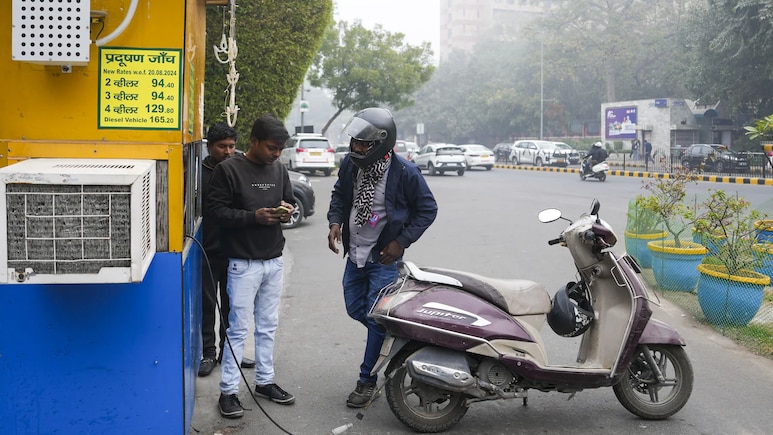
If you drive in Delhi, park your car, work in an office, or are planning construction this winter, a new set of rules could change your routine.
From November 1, motorists without a valid Pollution Under Control (PUC) certificate may not be able to buy petrol, diesel, or CNG. Older vehicles from outside Delhi will face entry curbs, parking charges will double at authorised facilities, many offices will operate with only half their staff on-site, and large commercial buildings will have to install anti-smog guns.
The measures are part of the Delhi government's biggest winter pollution-control framework yet, which will remain in force every year till February 28. Unlike previous years, when restrictions were largely introduced after pollution levels worsened, the government says the new framework is designed to tackle the city's annual smog crisis before it reaches emergency levels.
According to the government, Delhi's Air Quality Index (AQI) has repeatedly remained in the 'Very Poor' and 'Severe' categories during the winter months over the past three years, prompting a shift towards advance planning instead of reactive measures.
At A Glance: What's Changing This Winter?
- No fuel without a valid Pollution Under Control (PUC) certificate.
- Entry curbs on older vehicles registered outside Delhi.
- Parking charges at authorised parking facilities to double.
- Government and private offices to operate with only 50% physical attendance.
- Work-from-home for the remaining employees.
- Tighter restrictions on construction and demolition activities.
- Anti-smog guns and mist systems mandatory for large commercial buildings.
- Drone surveillance to detect pollution violations.
- Fines, environmental compensation and prosecution for violators.
No PUC? No Petrol, Diesel Or CNG
One of the biggest changes will directly impact vehicle owners. Petrol, diesel, and CNG will be supplied at fuel stations across Delhi only to vehicles carrying a valid PUC certificate.
Compliance will be monitored through Automatic Number Plate Recognition (ANPR) cameras and digital databases, while vehicles found without a valid PUC certificate will face penalties.
Older Vehicles From Outside Delhi To Face Curbs
Between November 1 and January 31, vehicles registered outside Delhi that do not comply with BS-VI emission norms will face entry restrictions.
CNG vehicles, electric vehicles, ambulances, fire brigade and police vehicles will be exempt.
Parking To Cost Double During Winter
To discourage the use of private vehicles during the peak pollution season, parking charges at authorised facilities will be doubled between November 1 and February 28.
Parking facilities operated by the Delhi Metro Rail Corporation (DMRC) will remain exempt to encourage commuters to use public transport.
Half The Workforce To Work From Home
Government and private offices will operate with only 50% physical attendance during the winter months, while the remaining employees will work from home.
Private organisations have also been advised to encourage carpooling, staggered office timings and greater use of public transport to reduce traffic congestion and emissions.
Construction Sites To Face Winter Curbs
Dust-generating construction and demolition activities will face tighter restrictions during the winter months, with stricter controls expected during the period when pollution typically peaks.
Vehicles carrying construction material will also face restrictions.
Anti-Smog Guns Mandatory For Large Buildings
Commercial high-rise buildings, malls, hotels and office complexes with a built-up area of more than 3,000 square metres will be required to install anti-smog guns or mist systems.
Construction sites larger than 1,000 square metres will also have to install mist systems to reduce dust pollution.
Burn Garbage, Face Action
Resident Welfare Associations (RWAs), housing societies, institutions and commercial establishments will be responsible for preventing the burning of garbage, leaves, plastic and other waste within their premises.
Drone surveillance will be stepped up to detect open burning and other pollution-causing activities, particularly during the night.
Fines, Sealing And Even Prosecution
Violators could face action under the Environment (Protection) Act, 1986.
Authorities may impose fines, recover environmental compensation, seal premises and initiate prosecution in serious cases.
Why Delhi Is Bringing In These Rules
The government says Delhi's AQI has remained between 312 and 342 during the winter months over the past three years, while peak levels have ranged from 461 to 494, placing air quality in the 'Very Poor' and 'Severe' categories.
The new framework aims to put pollution-control measures in place before air quality deteriorates instead of relying only on emergency restrictions after pollution levels spike.
The measures are expected to affect millions of residents, commuters, offices, builders and businesses across the national capital every winter.
Track Latest News Live on NDTV.com and get news updates from India and around the world

