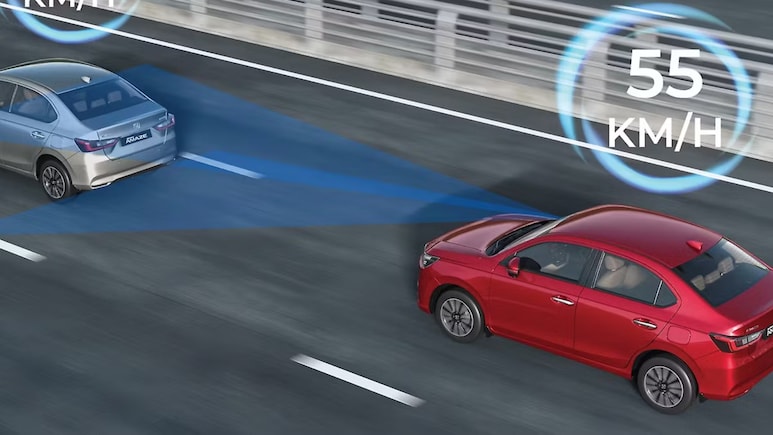
The Ministry of Road Transport and Highways has put forward a plan to make automatic emergency braking a standard fitment on passenger cars. One of the ADAS (Advanced Driver Assistance System) features will be a requirement set to reach every M1-category model by October 2032. The proposal, published as a draft amendment to the Central Motor Vehicles Rules, 1989, is now open for public feedback for 30 days.
What AEBS Does
AEBS, or Advanced Emergency Braking System, is an ADAS feature that applies the brakes automatically if the driver fails to respond to an impending collision. The idea is simple: either avoid the impact altogether or reduce its severity.
-

-
 "High Inflation Is Like Tax On Everyone": RBI Governor At NDTV World Summit
-
 The Mystery Of A Bare Nail In Ashwini Vaishnaw's Office
-
 Paris Setback, Asian Games Glory: Lovlina Borgohain's New Perspective
-
 To PM Modi's "Failed Product" Jab At Rahul Gandhi, A Shashi Tharoor Counter
-
 NDTV World Summit 2026: AI, Chips, Warfare And The Future Of The World | Key Conversations
-
 Kriti Sanon On Situationships, Open Relationships And Being Old-School
-
 'AI Scares Me': Kriti Sanon On Personality Rights And Need For Laws
-
 'AI Scares Me': Kriti Sanon On Personality Rights And Need For Laws
-
 'This Time I Wanted Gold': Savita Punia Reflects On Historic Asiad Success
-
 Inside The Mind Of Archer Kumkum Mohod, Who Dared To Challenge South Korea
READ | No Valid PUC? Here's How To Check Certificate Validity Before Rs 10,000 Challan
Implementation In Phases
The draft lays out a staged rollout. From October 1, 2028, any M1 passenger vehicle or N1 light goods vehicle that comes with AEBS must comply with AIS-185, the relevant Automotive Industry Standard.
From October 1, 2030, AEBS becomes mandatory on newly manufactured M1 models. Two years later, on October 1, 2032, the requirement extends to all M1 models, including those already in production.
READ | Kendall Jenner's 1998 Range Rover Makes A Stylish Appearance In Instagram Post
Steering And Lane-Keeping Too
The draft doesn't stop at braking. From October 1, 2027, steering effort on motor vehicles would need to comply with AIS-193, with motorcycles, invalid carriages and three-wheelers without a steering wheel exempt.
M1 vehicles fitted with Automatic Command Steering Functionalities (ACSF) from that date would also need to meet AIS-193, while those with an Emergency Lane Keeping System (ELKS) would have to comply with AIS-191 (Part 1).
READ | Kawasaki KLE650 Adventure Motorcycle Teased Ahead Of Launch
From October 1, 2029, ACSF and ELKS would become mandatory for M1 vehicles registered as transport vehicles, a move expected to particularly affect taxis, with drowsiness and attention-warning systems also proposed for these vehicles.
Commercial Vehicles And V2V
The draft comes alongside other safety measures for commercial vehicles. New truck and bus models are set to receive AEBS from January 2027, with blind-spot information, moving-off information, driver-drowsiness detection and lane-departure warning systems also made mandatory.
READ | "Will Pick Ferrari Over Tesla Roadster Flying Car": Gautam Singhania At NDTV World Summit 2026
A revised braking standard for trucks is due from October 1, 2027, alongside electronic stability control (ESC) to improve stability during braking on curves.
MoRTH has also proposed mandating Vehicle-to-Vehicle (V2V) communication on all newly manufactured vehicles from October 1, 2028. The technology lets vehicles exchange information such as speed, position, and direction, complementing ADAS functions like AEBS.
What Happens Next
The proposals form part of the government's broader effort to improve road safety and reduce accidents and fatalities. The draft notification is open for public consultation for 30 days, after which the ministry will consider objections and suggestions before finalising the rules.
Track Latest News Live on NDTV.com and get news updates from India and around the world
