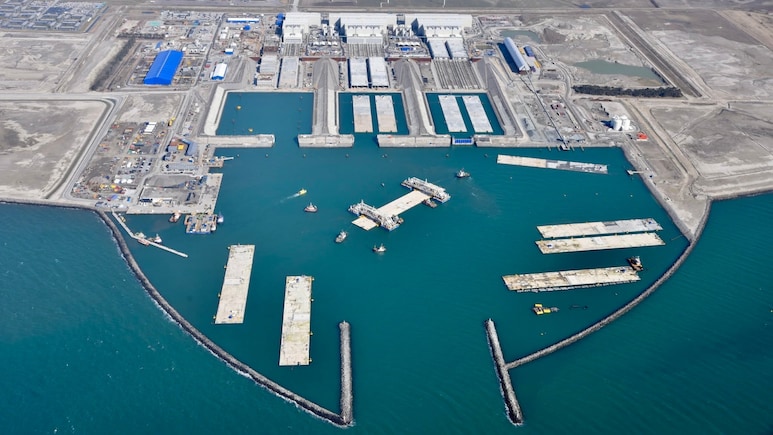
Journey between Denmark and Germany that now takes around 45 minutes by ferry will soon take just few minutes by car and train. This change will be possible through the Fehmarn Fixed Link, a project that will connect Scandinavia with Europe through an 18-kilometre tunnel under the sea.
Once completed, it will become the world's longest underwater road and rail tunnel.
The tunnel is being built using large sections made on land and also on the seabed. Moving and joining these huge sections is a major task, as the project deals with difficult ground conditions and complex engineering work.
Also Read: Love GTA 6? These Real-Life Florida Locations Should Be On Your Bucket List
The Fehmarnbelt tunnel will remain open 24 hours a day, as bad weather and strong winds will not affect it. It will have two separate railway tracks for trains and a four-lane road for cars and other vehicles.
The tunnel will have 79 main sections, measuring 217 metres and weighing 73,500 tonnes. Another 10 special sections will have space for electrical equipment needed to run the tunnel.
All these parts are being built at a special factory near Rodbyhavn in Denmark. Workers will connect all the sections and cover them with sand, gravel and stones to keep the tunnel safe and secure.
Once the Fehmarn Fixed Link opens, travellers will be able to cross between Denmark and Germany in just seven minutes by train or 10 minutes by car. Trains will travel at up to 200 km/h, while cars can move at around 110 km/h. At present, the ferry service takes 45 minutes.
The new tunnel will also make travel between Hamburg and Copenhagen much faster. A train journey between the two cities is expected to take around two and a half hours instead of the current five hours.
As per ENR reports, the tunnel was earlier expected to open in 2029, but the project is now running at least two years late. Danish company Femern A/S shared that the road and rail sections will open in two separate stages instead of starting together. Another major reason for the delay is a problem with a vessel used to lower the tunnel sections under the sea.
Work on the German side is also facing delays because the railway officials have not received the approvals and permits to open in 2029. Germany's rules to control noise under the water are adding more problems.
Latest Construction Update
According to the latest update shared on November 13, 2026, the immersion of the first special element for the Fehmarnbelt Tunnel has been postponed and is expected to continue after the rubber gasket's repair is completed.
Track Latest News Live on NDTV.com and get news updates from India and around the world


