




Voyager 1 is one light-day from Earth. It's November 18, the day it was supposed to reach this historic milestone. As the spacecraft becomes the first human-made object to cross such a staggering distance, space enthusiasts around the world are looking back at one of the most powerful photographs it ever captured. Voyager 1 was launched September 5, 1977. It flew past Jupiter on March 5, 1979, and Saturn on November 12, 1980. When it was zooming off of the solar system, beyond Neptune, it gave humanity a humbling perspective of itself.
Also read | What A 'Light-Day' Means As Voyager 1 Nears Historic Milestone
'Pale Blue Dot'
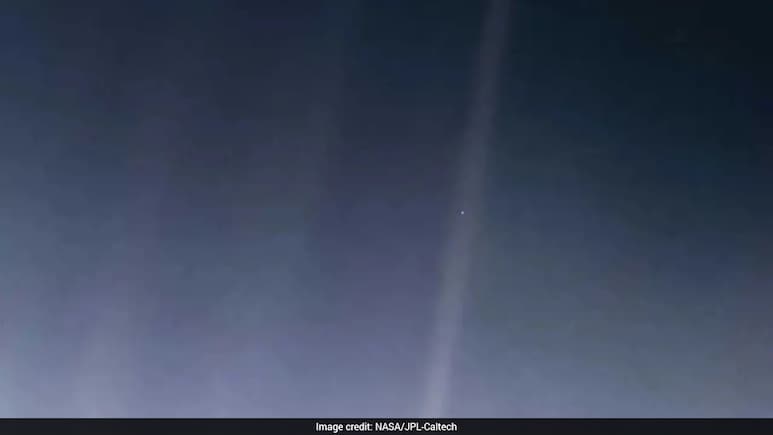
On Valentine's Day in 1990, as the probe was roughly 3.7 billion miles (6 billion kilometres) from the Sun and finishing up its primary planetary tour, scientists instructed it to turn its camera back toward home one last time.
The result was a composite family portrait of our solar system, featuring a tiny dot inside a scattered beam of sunlight. That barely noticeable speck was Earth, famously known as the 'Pale Blue Dot'.
Earth's image was captured by something so far away that our giant planet just looked like a point of light about a pixel in size.
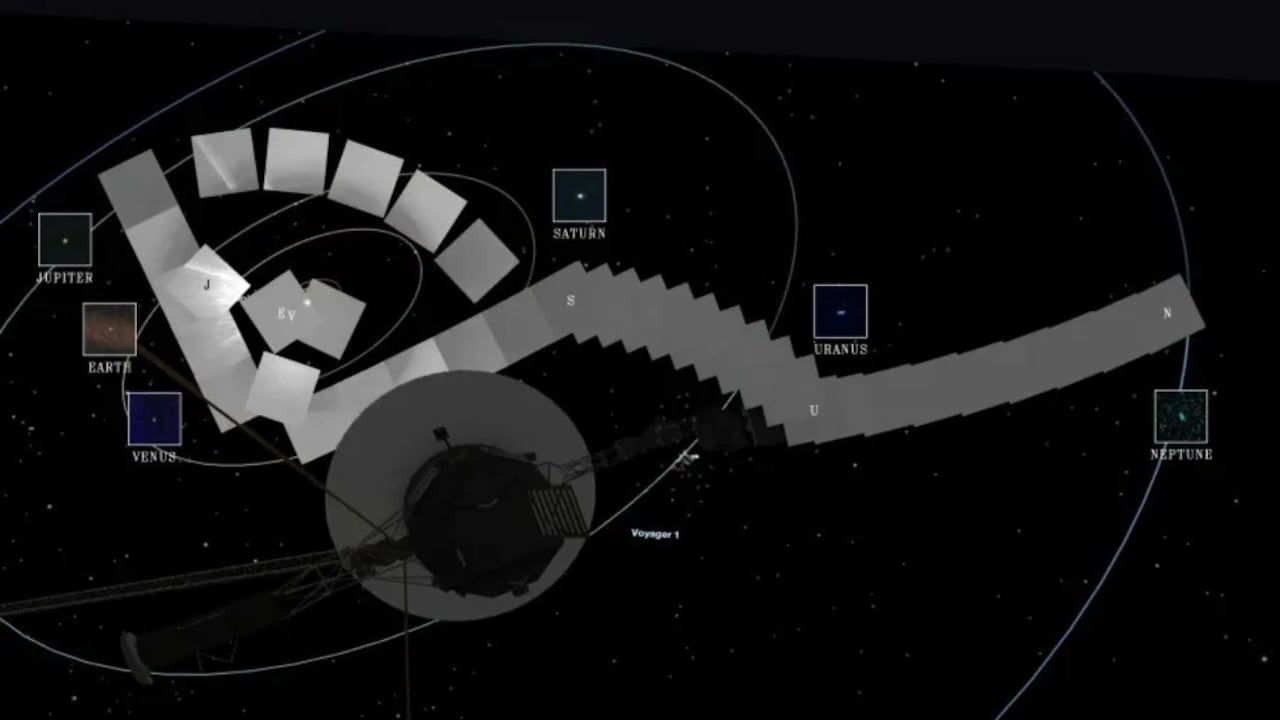
This simulated view shows Voyager 1's perspective when it took its final series of images known as the "Family Portrait of the Solar System".
Photo Credit: NASA/JPL-Caltech
Also read | Family Signs 'Do Not Disturb' Contract For GTA 6 Launch: 'He Won't Cook Meals'
After this image and other "family photos", Voyager 1 powered off its cameras forever, because the mission planners wanted to save its energy for the long journey ahead.
The image was made possible by astronomer Carl Sagan and imaging team members who wanted to capture our home in the vastness of the cosmos.
While reflecting on the image, Sagan, in his book "Pale Blue Dot: A Vision of the Human Future in Space," wrote: "That's here. That's home. That's us. On it everyone you love, everyone you know, everyone you ever heard of, every human being who ever was, lived out their lives... on a mote of dust suspended in a sunbeam."
"There is perhaps no better demonstration of the folly of human conceits than this distant image of our tiny world," he said.
"To me, it underscores our responsibility to deal more kindly with one another, and to preserve and cherish the pale blue dot, the only home we've ever known."
Voyager 1 entered interstellar space in August 2012. It's now one light-day away, and the most distant human-made object ever.
Track Latest News Live on NDTV.com and get news updates from India and around the world

