




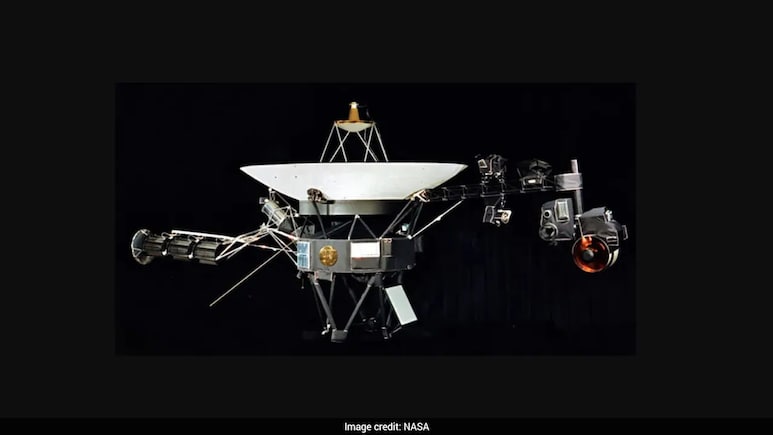
Voyager 1, the robotic space probe launched by American space agency NASA, has achieved a major milestone - becoming the farthest man-made object. On November 18, it reached a distance of one light-day - 25.9 billion kilometres - from Earth. It has taken 49 years, two months and 11 days to travel this distance from Earth. A light-day is the distance that light, travelling at approximately 300,000 km per second, covers in 24 hours. Voyager 1 is about to exit the solar system and continues to travel at 61,000 km per hour.
And surprisingly, it is still communicating with NASA.
READ | What A 'Light-Day' Means As Voyager 1 Nears Historic Milestone
The robotic probe carries a rather unusual piece of cargo. Along with its scientific instruments, the spacecraft has a gold-plated record containing greetings, music, photographs and sounds from Earth.
It is a message from humanity to anyone who might one day discover the spacecraft, offering a glimpse of the planet it came from and the life that inhabits it.
Called the Golden Record, the 12-inch gold-plated copper disc was placed aboard both Voyager 1 and Voyager 2 before their launches in 1977. The udea behind the project was that if an advanced extraterrestrial civilisation ever came across either spacecraft, the record could offer a way to introduce humanity.
What's On The Golden Record?
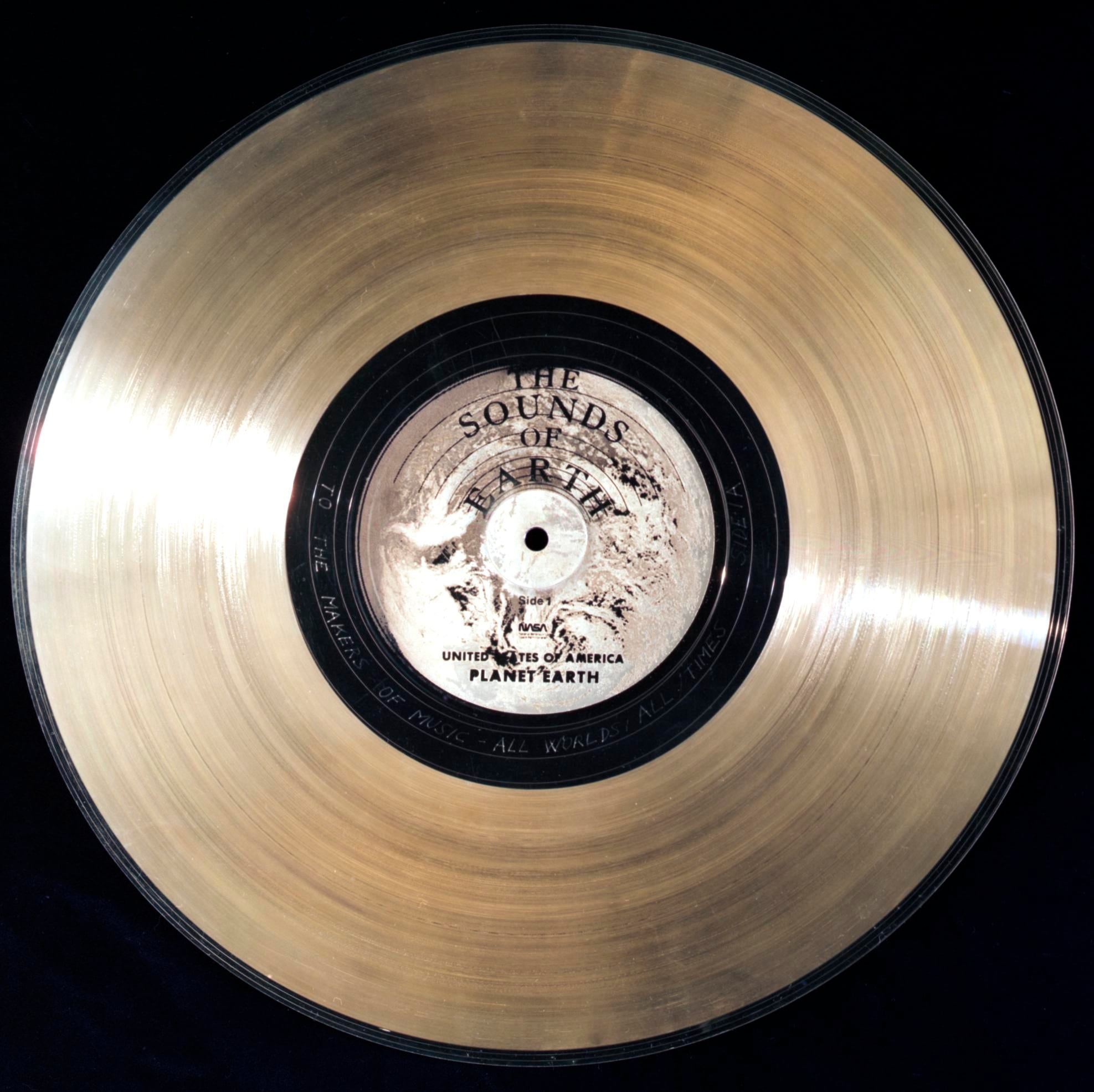
The cover of the golden record created by NASA experts for Voyager 1
Photo Credit: NASA
According to NASA website, the golden record contains 115 images, a collection of natural sounds, musical selections from different parts of the world and spoken greetings in 55 languages.
The images offer a visual introduction to Earth and its inhabitants. They include photographs and illustrations showing human anatomy, DNA, childbirth, families, animals, landscapes, buildings, food and everyday activities.
There are pictures of the Taj Mahal, the Great Wall of China, the Sydney Opera House and the Golden Gate Bridge. Other images show people working, eating, dancing and interacting with nature.
The record also carries sounds such as crashing of waves, wind, thunder, birds, whales and other animals. These are accompanied by a selection of music from different cultures and periods.
The musical collection includes compositions by Bach, Beethoven and Mozart, alongside traditional music from Africa, Asia and other parts of the world. American musician Chuck Berry's 'Johnny B. Goode' also features on the record.
India's Contribution To Voyager 1 Golden Record
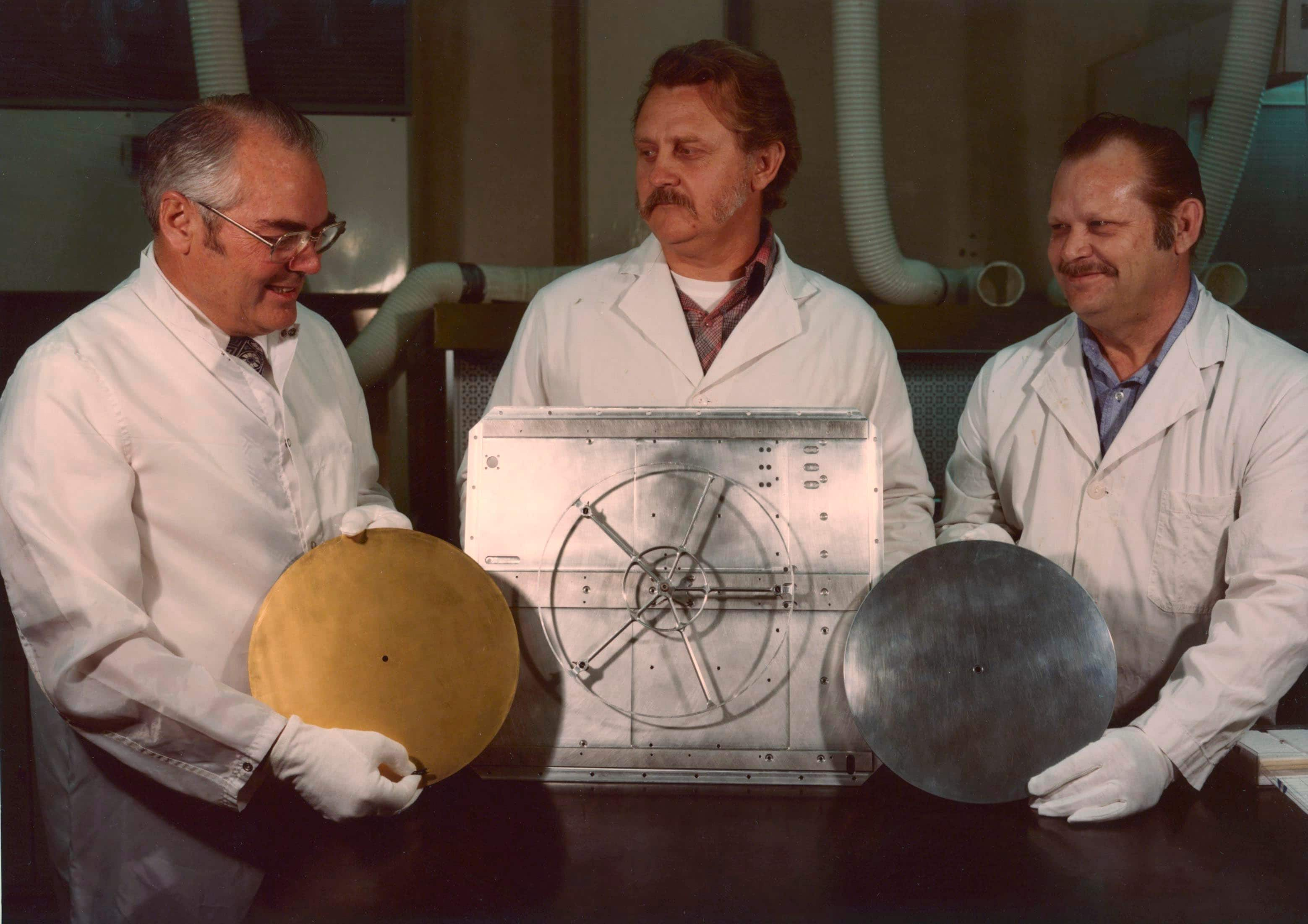
NASA experts posing with the golden cover of Voyager 1
Photo Credit: NASA
Among the musical selections on the record is 'Jaat Kahan Ho', a classical raga performed by renowned Indian vocalist Kesarbai Kerkar.
Kerkar was one of the celebrated exponents of the Jaipur-Atrauli gharana.
India also features in the record's collection of spoken greetings. Hindi, Bengali, Gujarati, Kannada, Marathi, Nepali, Punjabi, Rajasthani, Telugu and Urdu are among the languages represented.
The Hindi greeting reads: "Greetings from the inhabitants of this world." The Marathi message says: "Greetings. The people of the Earth send their good wishes."
The Punjabi greeting is particularly warm: "Welcome home. It is a pleasure to receive you."
How Would Aliens Play The Golden Record?
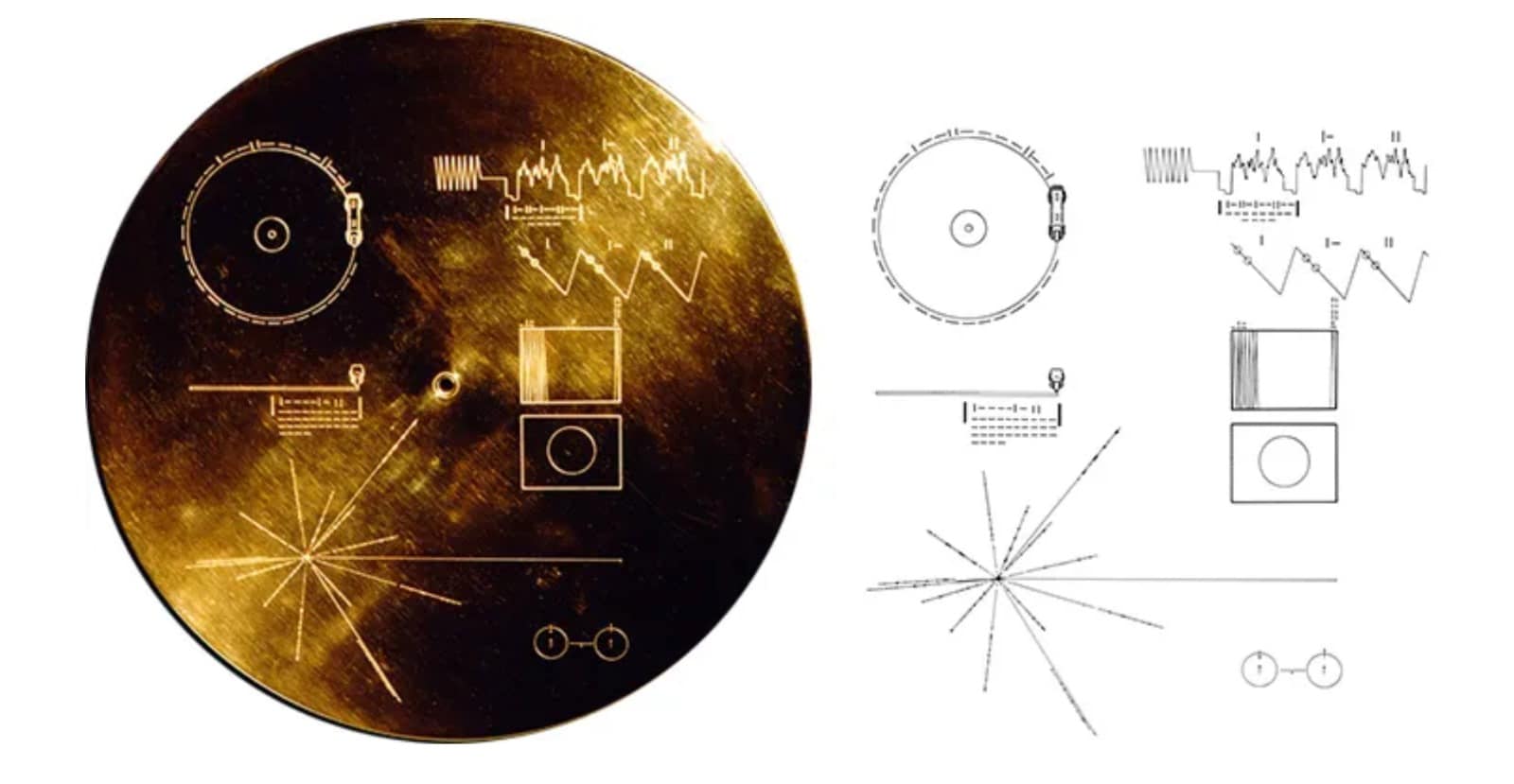
The golden cover contains instructions for aliens.
Photo Credit: NASA
NASA has etched instructions onto the protective cover of the Golden Record, which include diagrams explaining how to operate the record and convert its contents into images and sounds.
It also carries a symbolic map showing the location of our solar system using the positions of 14 pulsars. Pulsars are rapidly rotating neutron stars that emit regular pulses of radiation and can serve as cosmic reference points.
Another diagram uses the hydrogen atom's transition as a universal reference for establishing units of time and length.
The golden record was never intended to be a conventional message sent to a specific destination. Voyager 1 and Voyager 2 are travelling on their own trajectories, and there is no guarantee that either will ever be discovered by another civilisation.
Even if someone finds them, it could take an extraordinarily long time. NASA has said that Voyager 1 will take around 40,000 years to make a close approach to another star system.
By then, the world that created the record could look very different. Languages may have changed and the music and sounds preserved on the disc could belong to a distant chapter of Earth's history.
Track Latest News Live on NDTV.com and get news updates from India and around the world

