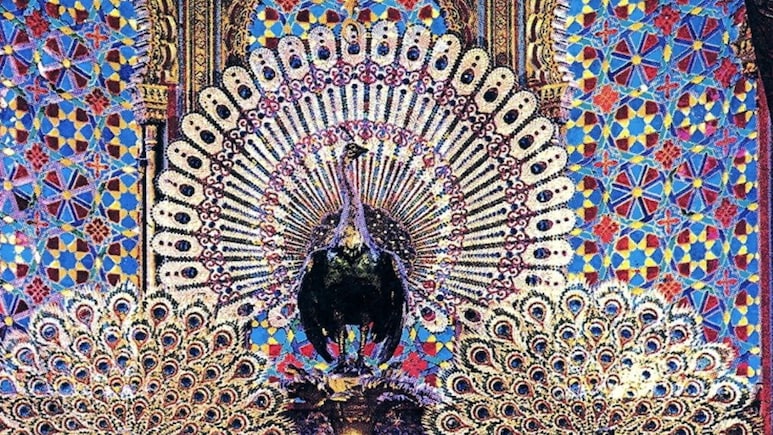
In 1739, Delhi witnessed one of the most consequential invasions in its long history. Nadir Shah, the ruler of Iran (then Persia), marched into the Mughal capital after defeating Emperor Muhammad Shah, exposing the weakening grip of the once powerful empire.
What followed was not just a military occupation but a large-scale transfer of wealth, including the famed Peacock Throne, a dazzling symbol of imperial power, which was taken and never returned. What followed reshaped perceptions of Mughal invincibility and left an enduring mark on South Asian history.
The Rise Of Nadir Shah And The March Towards Delhi
Nadir Shah was not born into royalty. He began life leading a band of warriors from Iran's rugged Khorasan, but his leadership qualities soon propelled him into the politics of Iranian power. By 1736 he had established the Afsharid Dynasty and taken the title Shah of Iran.

Nadir Shah by 1736 had established the Afsharid Dynasty and taken the title of Shah of Iran. Photo: Wiki
His military prowess was formidable; he consolidated Iranian territories and defeated external foes such as the Ottomans.
But by the late 1730s, his ambitions turned eastward. The once magnificent Mughal Empire was in decline, weakened by court intrigues, internal strife, and administrative decay. Sensing opportunity, Nadir Shah launched a campaign into India. In February 1739, his forces crushed the Mughal army in the Battle of Karnal, forcing Emperor Muhammad Shah into a humiliating surrender.
The Conquest And Carnage
With the Mughal army defeated, Nadir Shah entered Delhi. Initially, his reception was cautious but civil; the keys of the Red Fort were handed over and there were negotiations over tribute. When a rumour spread that Nadir Shah had been assassinated within the city, sentiments erupted into chaos.
Mughal subjects attacked Persian soldiers in the streets, killing many. This enraged Nadir Shah. What followed was one of the most brutal episodes in Delhi's history. The city was sacked, and thousands were massacred.
But the slaughter was accompanied by a systematic plunder of the empire's treasures. Nadir Shah did not leave empty-handed. Beyond the countless lives lost, he carted away an astonishing haul: treasure estimated at Rs 70 crore in those times, including gold, jewels, rare artefacts, and artisans and craftsmen pressed into service. Most symbolically, he seized two of the Mughal court's greatest treasures - the Koh-i-Noor diamond and the Peacock Throne.
The Splendour Of The Peacock Throne
The Peacock Throne was the most splendid seat ever created in the Mughal courts.
Originally called Takht-e-Murassa, it was the ornate imperial seat of Mughal emperors in Delhi's Red Fort. Commissioned by Shah Jahan in 1628, it took seven years for skilled jewellers and goldsmiths to craft by 1635, costing around Rs 1 crore-roughly double the Taj Mahal's expense.
It was constructed from about 1,150 kg of solid gold, adorned with 230 kg of precious gems including the Koh-i-Noor diamond, Timur ruby, thousands of diamonds, rubies, emeralds, and pearls. The design featured twelve emerald columns supporting gem-encrusted peacock figures, enamel panels, and intricate jewel settings depicting trees and birds, all housed in the Diwan-i-Khas hall.
But as Nadir Shah prepared to leave India, he had the throne, along with countless other treasures, loaded onto elephants and camels for the long trek back to Iran.
He also looted Rs 1 crore in gold, Rs 60 crore in jewellery, and Rs 60 lakh in cash. His total loot was estimated at Rs 70 crore, including:
- 7,000 artisans
- 200 carpenters
- 100 stone-cutters
- Thousands of elephants, horses, and camels.
What Happened Next
Once in Iran, the throne's fate was as tumultuous as its journey. After Nadir Shah's assassination in 1747 by his own guards, some historical experts say the Peacock Throne was dismantled in the ensuing chaos.
Historical accounts indicate its gold frame was likely melted down and gems like the Koh-i-Noor, Darya-i-Noor, and Timur Ruby dispersed across royal collections.
Its jewels were dispersed, repurposed or lost; what remained of it influenced later thrones made by Iranian rulers.
The sack of Delhi and the theft of the Peacock Throne marked a turning point. It signalled the collapse of Mughal dominance in India and encouraged future invaders such as Ahmad Shah Abdali in subsequent decades.
READ MORE: How The Kohinoor Diamond Brought Death And Devastation For All Its Male Owners
Track Latest News Live on NDTV.com and get news updates from India and around the world
