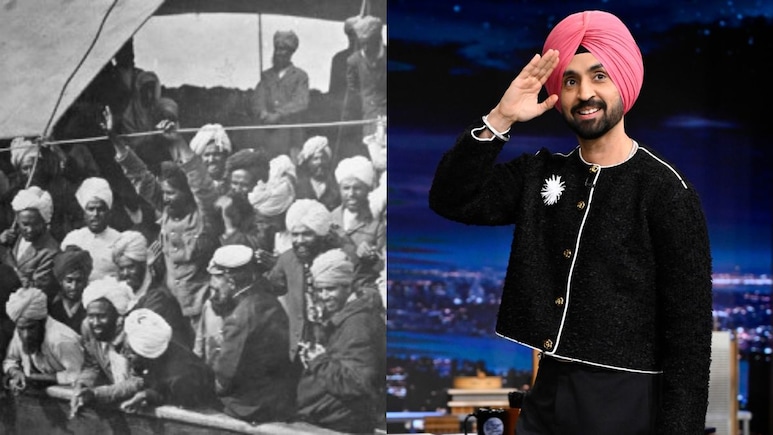
They were told they cannot enter Canada. Days ago, one of their own headlined a music show, regaling a crowd of around 55,000 at one of the country's landmark venues in Vancouver.
On May 23, 1914, a group of 376 passengers, mostly Sikhs and some Hindus and Muslims, on board the Japanese cargo steamship Komagata Maru were denied entry into Canada. Why? The arrival of the passengers was challenged by the Canadian immigration authorities who didn't give passage to them in accordance with a law that was discriminatory in nature on the basis of race.
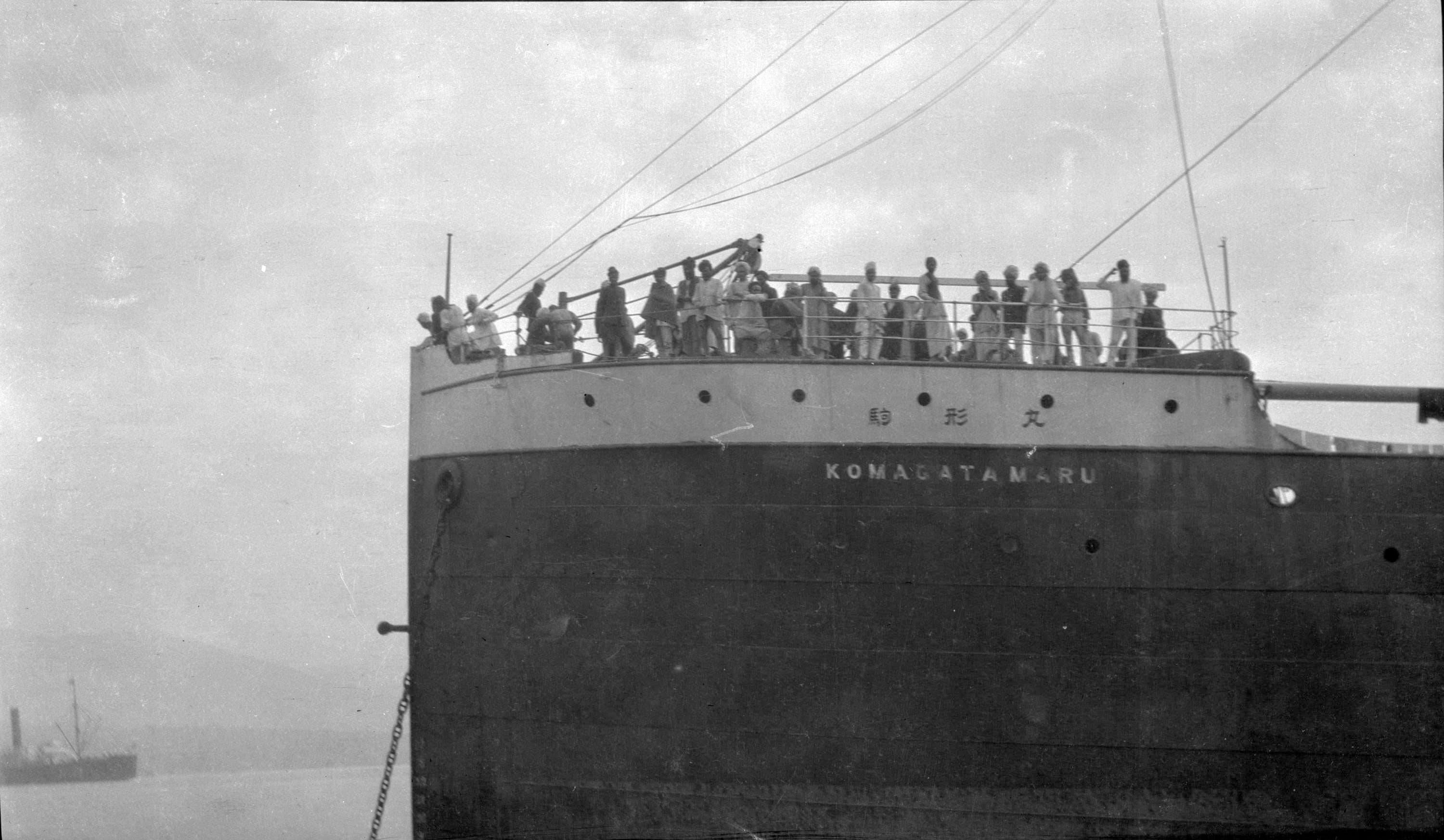
Komagata Maru sets sail. Photo: City of Vancouver Archives
With nowhere to go, the passengers were stranded within the confines of the ship. Two months in the water, they started falling sick. They were starving and thirsty. No medication. The Komagata Maru was forcefully sent to India where it was put under guard with all passengers held as prisoners. Days later in Budge Budge, a municipality 27 km from Kolkata (then Calcutta), protests broke out in which 20 passengers died and nine were hospitalised. Several of them were jailed, many left for Punjab, and some went missing.
Over a century and a decade later, the Komagata Maru incident is once again in the news, courtesy popular singer-actor Diljit Dosanjh.
What Diljit Dosanjh Said About 1914's Komagata Maru Incident On The Tonight Show Starring Jimmy Fallon
Diljit Dosanjh kicked off his Aura World Tour 2026 with a sell-out show at BC Place in Vancouver, Canada, on April 23. The stadium is about 2 km from the Komagata Maru memorial area in Coal Harbour waterfront where the incident is commemorated.
The Punjabi singer, who has gone big around the globe since his Dil-Luminati Tour 2024-25, appeared on The Jimmy Fallon Show to promote his ongoing trek. At the show, Diljit Dosanjh spoke about enthralling a crowd of around 55,000 people at a venue that is barely 2 km away from the Komagata Maru memorial.
"That stadium we did in Vancouver... Like in 1914, our people came for the first time to Canada, they didn't allow us to come and go to Canada. And that stadium is just 2 km away from the Guru Nanak Jahaz Komagata Maru incident. So, it's a big thing for us now, 55,000 people in the one stadium there. Just 2 km away... You didn't allow us to come. And now, here we are, man," he said.
Diljit Dosanjh used his growing celebrity and influence to jog our collective memory about an event largely forgotten in world history but still deeply remembered by the Indian diaspora, especially Sikhs, for whom the Komagata Maru incident remains a painful chapter.
Some may argue that the singer was being a bit pompous using a global platform to remind the West about the past misjudgement and prejudice towards migrants. For others, it may be about the East still being under the colonial hangover - that it needs an American late-night talk show to say its piece. It would, however, be a little too simplistic to look at Diljit Dosanjh's comments as just that. This, in fact, is a full-circle moment for the Punjabi singer and the entire Sikh community.
What Is The Komagata Maru Incident Of 1914
Fearing loss of jobs to brown men of South Asian descent, the Federal government passed the "Continuous Passage Act" in 1908 which eventually became a law. According to this law, Indians would have to come to Canada via direct passage from India and they would have at least 200 dollars to enter the Canadian province of British Columbia (at an average par rate of 0.10 dollars per day which was a task at the time).
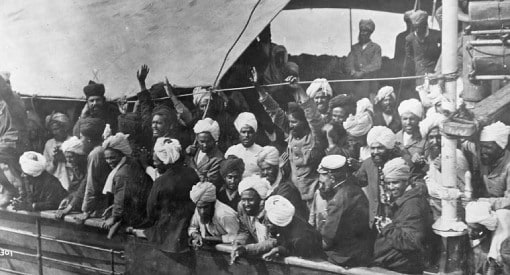
All aboard the Komagata Maru. Photo: Library and Archives Canada
In 1914, both Hong Kong, from where the ship sailed, and Vancouver were under British rule. Logically, the ship from one corner of the British empire should be allowed to enter the other corner. Gurdit Singh, a well-off Malaysian Sikh who chartered the Komagata Maru voyage, thought the same.
With 150 Sikh passengers, the Komagata Maru -- renamed Guru Nanak Jahaz right before it set sail -- left from Hong Kong to Vancouver. The ship picked up more immigrants on its way to Shanghai, Moji and Yokohama.
When the ship reached the shores of Burrard Inlet in Vancouver, British Columbia, it was not allowed to go any further into Canadian territory. From May 23, 1914 to July 23, 1914, the voyagers were stuck -- surrounded by water, denied food and drinking water, and basic amenities. During these two months, a committee consisting of local activists of South Asian descent collected money to hire a lawyer to fight the case in the favour of the migrants. "The court allowed only one case to be heard and based on that case summarily denied all passengers entry, except 20 passengers who could prove their prior residency in Canada," according to Canadian government's official website.
On July 23, 1914, the Komagata Maru left for India, reaching Budge Budge on September 29, 1914, when the British Indian troops fired at the passengers, leaving at least 20 dead.
Course Correction
Marking the centenary of the Komagata Maru incident, the Government of Canada designated it as a national historic event in 2014.
The Historic Sites and Monuments Board of Canada commemorative plaque for the event reads: "In May 1914, the Komagata Maru reached Vancouver via Hong Kong and Japan carrying 376 prospective Punjabi immigrants in contravention of racially restrictive Canadian immigration law that included the 'continuous journey regulation'.
"Its arrival provoked a strong anti-Asian backlash. The travellers were forced to remain on board for what would become two months. The local South Asian community united to fight their deportation, but eventually lost the legal battle, and the ship and most of its passengers were sent back to India. This incident continues to resonate in our history and is a symbol of the early struggle of South Asian Canadians for justice and equality."
Two years after the 100th anniversary of the Komagata Maru event, Justin Trudeau -- who was the Prime Minister of Canada in 2016 -- issued a formal apology in the House of Commons, the lower house of the Parliament of Canada, for the Komagata Maru incident.
"Today, while knowing that no words can fully erase the pain and suffering experienced by the passengers, I offer a sincere apology on behalf of the government for the laws in force at the time that allowed Canada to be indifferent to the plight of the passengers of the Komagata Maru.
"The Komagata Maru incident is a stain on Canada's past. But the history of our country is one in which we constantly challenge ourselves, and each other, to extend our personal definitions of who is a Canadian. We have learned, and will continue to learn, from the mistakes of our past. We must make sure to never repeat them," Justin Trudeau said in his May 18, 2016 address in the Parliament of Canada.
While the Jawaharlal Nehru-led Government of India set up a memorial to remember the Komagata Maru event at Budge Budge back in 1952, the Canadian authorities co-named Canada Place in Vancouver Komagata Maru Place in 2024.
Although the Komagata Maru incident is from the past, it will remain relevant in modern times as long as discrimination continues to exist in society. Diljit Dosanjh, who faced racism just last year during his Aura World Tour, would know a thing or two about it.
Also Read | Canadian University To Offer Course On Diljit Dosanjh
Track Latest News Live on NDTV.com and get news updates from India and around the world
