

)
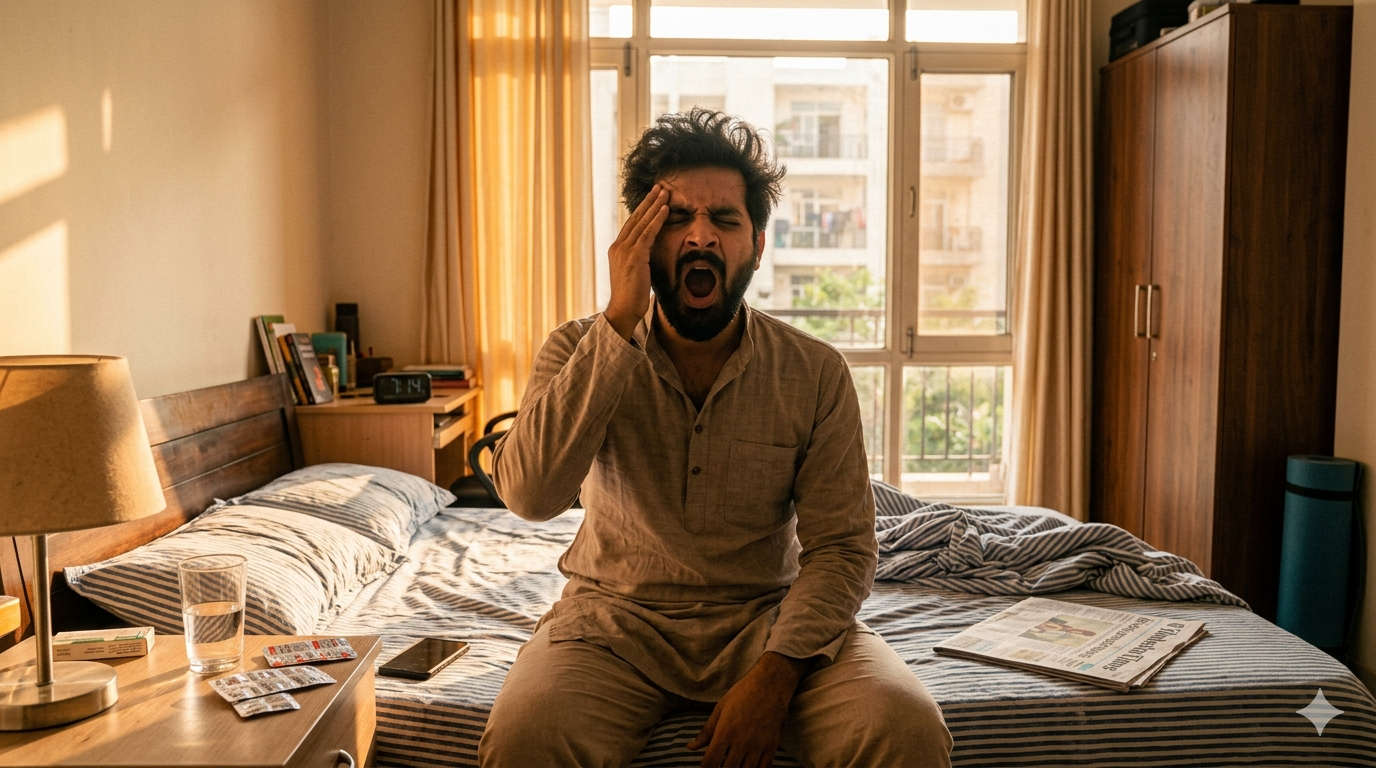
Every week in my clinic at Fortis, I meet patients who come in for something seemingly unrelated to sleep that is high blood pressure, poor sugar control, weight gain, persistent fatigue, or even breathlessness. And almost every time, when I ask them one simple question 'What time do you sleep and what time do you wake up?' the answer is different every single day.
That is the problem. Not just how much sleep you are getting, but how irregular it is.
We have all had stretches of late nights, a wedding season, project deadlines, a newborn at home. But when sleeping at 11 PM one night and 2 AM the next becomes a permanent pattern, the body starts to pay a price that goes far beyond feeling groggy the next morning.
Let me tell you what that price really looks like and then, more importantly, how to stop paying it.
What Irregular Sleep Is Actually Doing to Your Body
Before I list the risks, I want you to understand one key idea: Your body runs on a biological clock called the circadian rhythm that governs almost every organ in the body. Your heart, your lungs, your liver, your brain, your immune cells all of them follow a 24-hour schedule. Sleep is when this clock resets, repairs, and prepares your body for the next day.
When your sleep is erratic, you are constantly disrupting that clock. And every organ notices.
1. Your Heart Is Not Getting Its Rest
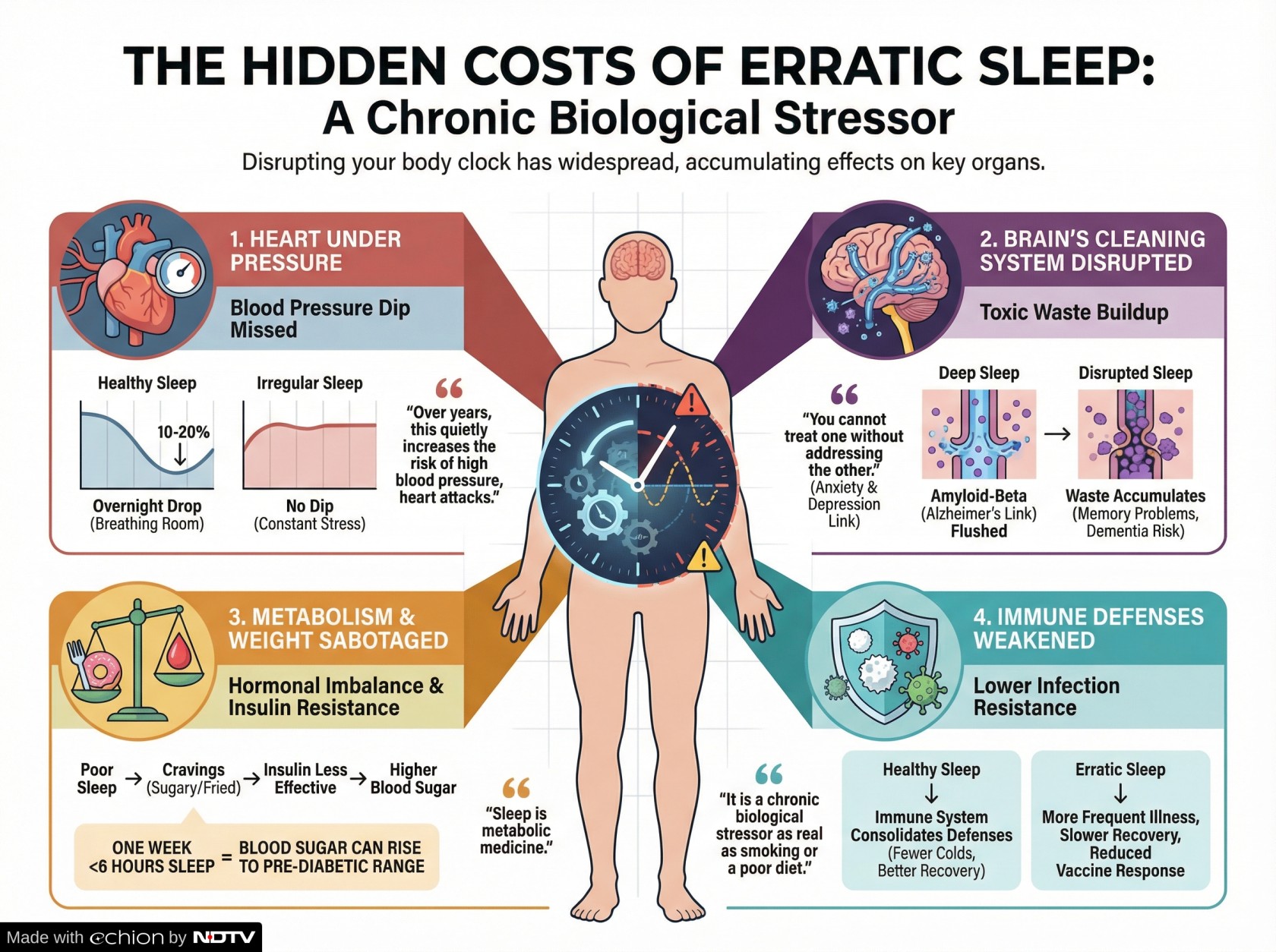
Most people do not know this, but blood pressure naturally drops by 10-20% during deep sleep. This overnight dip is the heart's breathing room it lowers stress and reduces the risk of long-term damage.
In people with irregular sleep, this drop often does not happen. The heart stays under pressure through the night. Over years, this quietly increases the risk of high blood pressure, heart attacks, and an irregular heartbeat conditions.
2. Your Brain Is Not Getting Its Cleaning Done
This sounds strange, but during deep sleep, your brain activates a kind of internal drainage system that flushes out toxic waste proteins including one called amyloid-beta, which is strongly linked to Alzheimer's disease. Think of it as the brain's nightly housekeeping shift.
When sleep is disrupted night after night, this waste builds up. Researchers now believe that decades of poor sleep significantly increase the risk of memory problems and dementia in later life. Beyond Alzheimer's, disrupted sleep plays havoc with mood, concentration, and mental health. Many patients I see for anxiety and depression have severe sleep irregularity underneath. You cannot treat one without addressing the other.
3. Your Weight and Blood Sugar Are Being Sabotaged
When sleep is poor or irregular, you end up eating more, craving sugary and fried foods, and feeling unsatisfied even after a full meal not because of poor willpower, but because your hormones have been thrown off balance by lack of sleep.
This same disruption makes the body less responsive to insulin, raising blood sugar. I routinely find that poorly controlled diabetic patients have undiagnosed sleep problems. Fixing sleep is often as impactful as adjusting medication.
Studies show that even one week of sleeping less than six hours per night can cause blood sugar levels to rise into the pre-diabetic range in otherwise healthy adults. Sleep is metabolic medicine.
4. You Are More Vulnerable to Infections
Sleep is when your immune system consolidates its defenses. Chronically poor sleepers catch more colds, take longer to recover from illness, and research suggests they even respond less effectively to vaccines.
For my asthma and COPD patients specifically, erratic sleep triggers more inflammation in the airways, leading to more frequent flare-ups. I have had patients halve their use of rescue inhalers simply by improving their sleep consistency.
Irregular sleep is not a lifestyle choice with minor consequences. It is a chronic biological stressor as real as smoking or a poor diet. Every major organ in your body runs on a clock, and when you disrupt that clock repeatedly, the damage accumulates quietly. The good news is, the body is remarkably forgiving if you give it a chance to reset.
How to Actually Fix Your Sleep - A Step-by-Step Guide
I want to be upfront with you. There is no pill, no supplement, and no weekend sleep marathon that will undo months of irregular sleep. But the human body is remarkably good at recalibrating if you give it consistent signals. Here is what I advise my patients, in plain, practical language.
Step 1: Fix Your Wake Time First - Not Your Bedtime
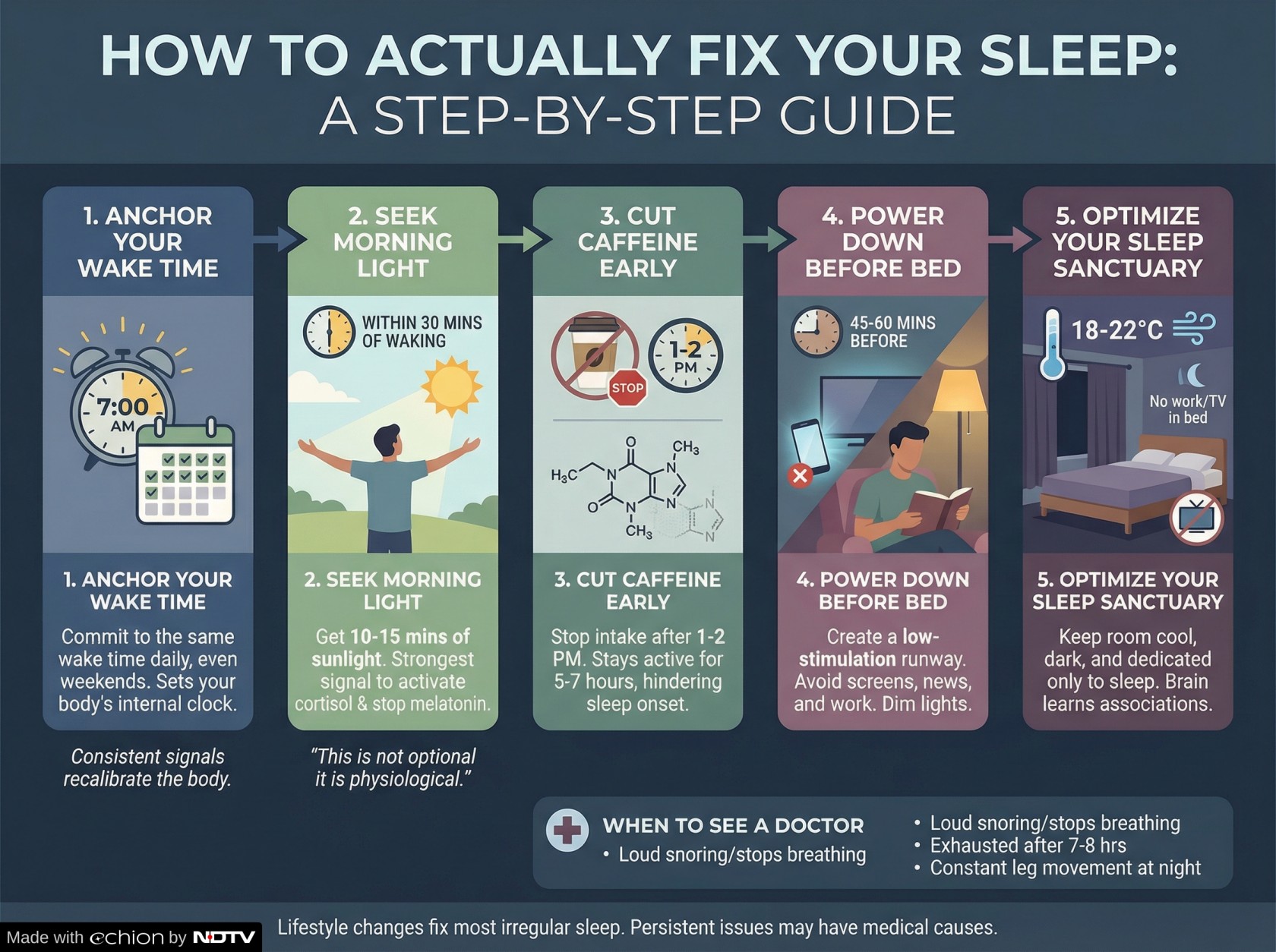
This surprises most people. The most powerful lever you have is not when you go to bed it is when you get up. Your body's internal clock is anchored by your morning wake time and morning light exposure. When that is inconsistent, everything downstream falls apart.
Pick a wake time you can commit to every single day weekdays and weekends. Set an alarm. Get up. Even if you slept late the night before.
Step 2: Get Morning Sunlight Within 30 Minutes of Waking
Step outside for 10-15 minutes in the morning light. This is not optional it is physiological. Morning light is the strongest signal your body has to set its internal clock. It stops the sleep hormone melatonin and activates the natural cortisol rise that makes you alert and ready for the day.
Step 3: Cut Caffeine After 1-2 PM
Caffeine stays active in your body for 5 to 7 hours. That post-lunch coffee or 4 PM chai is still half-present in your bloodstream at 10 PM, making it harder for your brain to wind down naturally.
I had a young doctor someone who knew all of this intellectually struggling with difficulty falling asleep. He had a 'small' coffee at 5 PM every day. We cut it off at 1 PM. His sleep onset improved dramatically within a week. Sometimes the obvious fixes are the real ones.
Step 4: Create a Winddown Hour Before Bed
Your brain does not switch off the moment you lie down. It needs a runway. For 45-60 minutes before your target bedtime, do something low-stimulation: gentle stretching, reading a physical book, light conversation, or simply sitting quietly. Avoid news, avoid social media, avoid work emails. Even dim the lights in your home bright overhead lights suppress melatonin even without a screen.
One of my patients a senior professional who had been scrolling Instagram in bed for years switched to reading fiction for 30 minutes before sleeping. She told me three weeks later that she had forgotten what it felt like to fall asleep within minutes of lying down. Now she remembered.
Step 5: Keep Your Bedroom Cool, Dark, and Dedicated to Sleep
Your body needs to drop its core temperature by about 1 degree Celsius to initiate sleep. A warm, stuffy room fights this process. Keep the AC or fan going. Aim for a bedroom temperature between 18 and 22 degrees Celsius. Use curtains that block outside light streetlights, phone charging lights, and even a thin sliver of daylight from a curtain gap can delay sleep and reduce its quality. And stop working, watching TV, or scrolling from your bed. The brain learns associations and the bedroom should be associated only with sleep.
Step 6: Be Sensible About Melatonin
Melatonin is widely available and widely misunderstood. It is not a sleeping pill. It is a timing signal it tells your brain that darkness has arrived and sleep should begin. See it as a short-term aid while you fix the underlying habits not a permanent solution.
Step 7: Know When to See a Doctor
Lifestyle changes work for most people with irregular sleep. But some sleep problems have a medical cause that no amount of good habits will fix. Please see a sleep specialist if you experience:
- Loud snoring or your partner notices you stop breathing during sleep
- Waking up with headaches or a dry mouth
- Feeling exhausted even after 7-8 hours in bed
- Needing to move your legs constantly at night, especially with an uncomfortable crawling sensation
- Falling asleep uncontrollably during the day
These are signs of conditions like obstructive sleep apnea or restless legs syndrome, both very treatable, but not with lifestyle changes alone.
I see many patients who have spent months buying sleep gummies, herbal teas, and white noise machines when what they actually needed was a proper sleep study and a CPAP machine. Please do not self-treat for more than three to four weeks. If it is not getting better, come in.
Your body wants to sleep well. It just needs you to stop fighting it.
(By Dr. Prashant Saxena, Principal Director and Head, Pulmonology, Pulmonology Critical Care and Sleep Medicine, Fortis Hospital Vasant Kunj)
Disclaimer: The opinions expressed within this article are the personal opinions of the author. NDTV is not responsible for the accuracy, completeness, suitability, or validity of any information on this article. All information is provided on an as-is basis. The information, facts or opinions appearing in the article do not reflect the views of NDTV and NDTV does not assume any responsibility or liability for the same.