
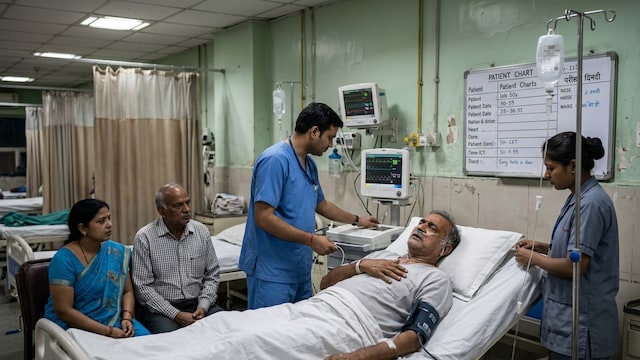
Heart health is a balance in how the heart muscles, arteries, valves, and blood flow are functioning in the body internally. According to the World Heart Federation, heart disease affects 905 per 100,000 of the Indian population, which makes understanding heart health essential. If you want to safeguard your long-term heart health, you need to know how it works to make sure that you don't suffer from a heart-related ailment. Many people believe that if you have a blocked artery, then opening it can restore blood flow, but this is not true in absolute terms.
While opening up a blocked artery is essential to restore normal blood flow, you need to understand that a no-reflow syndrome may occur. This happens when blood flow to the heart's muscles doesn't fully return despite clear arteries. It is increasingly recognised as a serious complication after heart attack treatment and angioplasty, which makes it a serious condition that needs medical treatment.
What Is No-Reflow Syndrome?
No reflow syndrome occurs when coronary blood flow remains impaired even after a blockage is removed. The arteries may appear open on angiography, but microvascular circulation failure leads to ongoing heart muscle damage despite treatment. A review published in the Journal of Clinical Medicine details that no-reflow syndrome happens when blood doesn't reach the heart even after a blocked artery has been reopened. This happens even after a cleared heart artery is shown on medical tests, as the heart tissue still doesn't get enough blood flow.
Medically, it is known as 'microvascular obstruction', which means that the smallest blood vessels are not working properly.
Why Does Blood Flow Not Return Even After Clearing Arteries?
Blood flow doesn't return even after clearing the heart arteries, as the small blood vessels are damaged. The possible inflammation and swelling after a heart procedure result in tiny clots or debris blocking the microcirculation of blood.
It is a type of reperfusion injury that signals damage caused when the blood supply suddenly returns after a procedure.
Who Is At Risk Of No-Reflow Syndrome?
No-reflow syndrome can occur in patients who have:
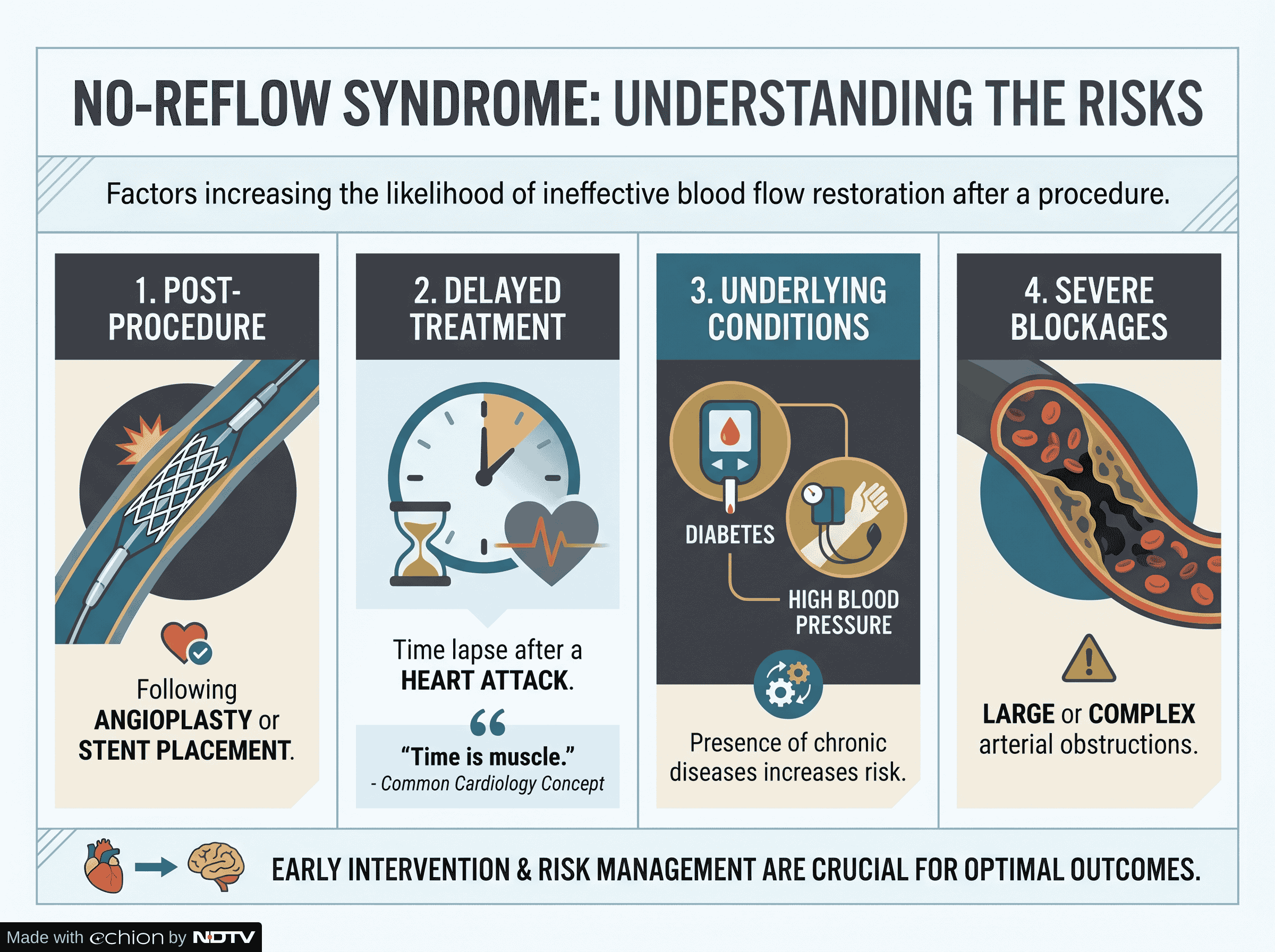
- Undergone angioplasty or stent placement to clear blockage in their arteries.
no reflow syndrome - Delayed treatment after a heart attack can result in reflow syndrome.
- Diabetes and high blood pressure increase the chances of developing this syndrome.
- Large or severe arterial blockages can affect the chances of no reflow syndrome.
Also Read: Infertility Found to Be A Potential Risk Factor For Early Menopause, Says New Study
Warning Signs That Blood Flow To The Heart Is Still Compromised
1. Persistent Chest Pain After Angioplasty
Blood flow after angioplasty can become compromised as the medical procedure clears out the arteries. If you experience persistent chest pain after angioplasty, even after arteries appear open on medical tests, the possibility of no reflow syndrome is possible.
2. Ongoing Fatigue And Weakness
Fatigue and weakness can occur if there are ongoing internal issues with the heart's functioning. When there is reduced heart blood flow efficiency, then no reflow syndrome can result in ongoing fatigue and weakness.
3. Irregular Heart Rhythm
The heart functions on a delicate balance of proper blood flow, heart valves pumping blood throughout the body, and the heart's muscles operating in the right manner. When there is an electrical instability due to poor perfusion of blood, it is a sign that blood flow in the heart is compromised.
4. Shortness of Breath
When the heart struggles to pump blood effectively throughout the body, then shortness of breath can happen. It is essential that shortness of breath after a medical procedure on the heart is conveyed to the cardiologist on time to seek treatment.
5. Poor Recovery After Heart Attack
A heart attack needs a recovery process that internally heals the way the heart functions. Due to delayed healing due to inadequate oxygen supply in the heart, possible medical intervention is needed to timely address heart injury.
Dr Ashok Seth, Chairman, Fortis Escorts Heart Institute, New Delhi (Interventional Cardiologist), explains, 'No-reflow syndrome highlights that simply opening a blocked artery is not always enough. The quality of microvascular blood flow determines how well the heart muscle recovers."
Why Clear Arteries Do Not Guarantee Heart Safety
Clear arteries of the heart do not guarantee heart safety, as the:
- Standard tests focus on the large arteries of the heart but exclude the minor arteries of the heart.
- Microcirculation is often missed in routine imaging scans, which need to be identified by the signs that the heart may be showing.
- The heart muscle may still suffer from oxygen deprivation, which needs to be determined by proper and detailed analysis of symptoms.
How Is No-Reflow Syndrome Diagnosed?
A no-reflow syndrome can only be diagnosed by a cardiologist by looking at the following:
- Angiography showing poor tissue perfusion in the heart.
- Cardiac MRI to detect heart muscle damage that may have occurred.
- Electrocardiogram changes that detail the way the heart's functioning is affected.
Can No-Reflow Syndrome Be Treated Or Prevented?
A no-reflow syndrome can be treated or prevented by following the following approaches:
- Medications to improve microvascular blood flow can help the heart function better.
- Anti-inflammatory drugs that reduce the inflammation in the tiny blood vessels of the heart.
- Blood thinners can help in faster blood flow from the heart to the entire body.
- Early treatment of a heart attack is crucial to preserve heart muscle.
- Managing diabetes and blood pressure, as these medical conditions can complicate how the heart recovers.
- Lifestyle changes, such as consuming a nutritious diet and daily exercise, are necessary.
Why This Condition Matters In India
In India, about 50-60% of people tend to deal with no-reflow syndrome, especially after a severe heart attack. And the rising heart attack cases in the younger population are an alarming factor, which makes knowing and understanding heart health essential for its preservation.
- A delay in hospital access can increase the risk after a heart attack.
- People need to be aware of the possibility of post-angioplasty complications, which remain low.
No reflow syndrome after a severe heart attack or after an angioplasty can happen. So, you need the signs that can result in these complications that need timely care for correction.
Disclaimer: This content including advice provides generic information only. It is in no way a substitute for a qualified medical opinion. Always consult a specialist or your own doctor for more information. NDTV does not claim responsibility for this information.