

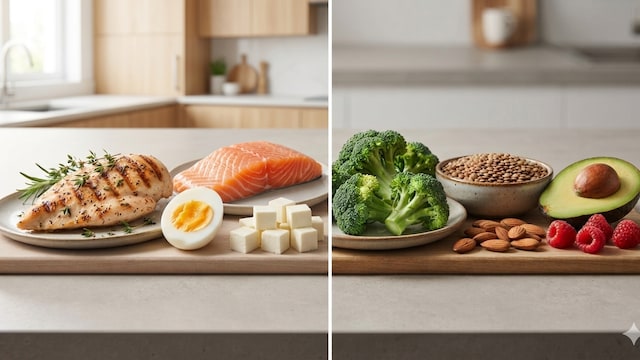
The internet is filled with tips that claim to support effective weight management. While some suggest increasing fibre intake, others state that meeting daily protein requirements is non-negotiable. However, the truth is that both protein and fibre play crucial roles in promoting satiety and supporting fat loss.
Understanding satiety
Satiety is a complex physiological response influenced by various factors, including the macronutrients you consume. When you feel satiated, you are less likely to overeat. Foods that effectively promote satiety can help with weight management and fat loss by controlling hunger and reducing unnecessary calorie intake.
The role of protein
Protein is well-known for its ability to support weight loss. It is not only essential for muscle repair and growth but also has a high thermic effect, meaning your body burns more calories digesting protein than it does with fat or carbohydrates.
Incorporating protein-rich foods can help you feel fuller for longer. This is partially because protein influences the secretion of hormones that control appetite, such as ghrelin and peptide YY. When you consume adequate protein, you may experience reduced hunger and cravings, making it easier to adhere to calorie-restricted diets without feeling deprived.
The role of fibre
Fibre, found in plant-based foods such as fruits, vegetables, grains, and legumes, is another critical player in achieving satiety. Unlike protein, fibre is not digested and absorbed by the body; instead, it passes through the digestive system intact. This process contributes to a feeling of fullness in several ways. First, fibre adds bulk to meals, promoting a sense of fullness without adding excessive calories. Second, it slows down the digestion of carbohydrates, stabilising blood sugar levels and preventing sudden spikes that can lead to hunger pangs.
Moreover, certain types of fibre, particularly soluble fibre, can form a gel-like substance in the gut, further enhancing feelings of fullness. Foods such as oats, chia seeds, and beans are excellent sources of soluble fibre, making them versatile additions to a weight-loss-focused diet.
Which is a superior choice for weight loss?
While both protein and fibre have unique benefits for satiety and fat loss, it's essential to recognise that they complement each other rather than compete for attention.
Eating protein without fibre will leave you physically empty, while eating fibre without protein will result in muscle loss over time. A well-rounded diet that includes adequate amounts of both nutrients can maximise your chances of achieving and maintaining your weight loss goals.
Here's how you can strike that balance:
- Aim for a source of protein at breakfast, lunch, and dinner. Fill half your plate with non-starchy vegetables and fruits that provide both fibre and essential nutrients.
- Swap refined grains for whole grains like quinoa, brown rice, and whole-wheat bread. These options are higher in both fibre and protein.
- Select snacks that combine protein and fibre, such as hummus with carrot sticks or an apple with peanut butter.
In the debate between fibre and protein, the winner isn't necessarily one over the other but rather how they work together to enhance satiety and support fat loss. Prioritising both in your meals can help you feel fuller, manage hunger, and ultimately lead to successful weight management.
Disclaimer: This content including advice provides generic information only. It is in no way a substitute for a qualified medical opinion. Always consult a specialist or your own doctor for more information. NDTV does not claim responsibility for this information.