

)
Strong lower legs are important for more than just fitness. The muscles in the calves, ankles and lower part of the legs help support the body while walking, climbing stairs, standing and moving around. Good lower leg strength can also improve balance and stability, which may reduce the risk of losing balance during everyday activities. When these muscles are weak, simple movements can feel more tiring and the body may have to work harder to stay stable. Therefore, building strength in the lower leg can be extremely beneficial.
Yoga can be a good way to work on lower leg strength while also improving flexibility, balance and body control. Many yoga movements require you to support your body weight through your feet and maintain a steady position, which can engage the muscles around the ankles and calves. Regular practice may help improve strength and stability over time. Here are some yoga asanas that can help to build lower leg strength.
1. Heel Raises
Heel raises are a simple movement that can strengthen the calf muscles. Stand upright with your feet hip-width apart and slowly lift your heels so you are standing on your toes. Hold the position briefly before lowering your heels. This movement can be included during a yoga session or performed separately. Start with a small number of repetitions and gradually increase them as your strength improves. Keep your movements slow and controlled rather than bouncing up and down.
2. Chair Pose (Utkatasana)
Chair Pose challenges several muscles in the legs, including the calves and muscles that support the knees and ankles. Stand with your feet apart, bend your knees and lower your hips as if you are sitting on an imaginary chair. Keep your chest lifted and avoid allowing your knees to move too far forward. Initially, holding the position for a few seconds can be enough. Over time, you can gradually increase the duration as your legs become stronger.
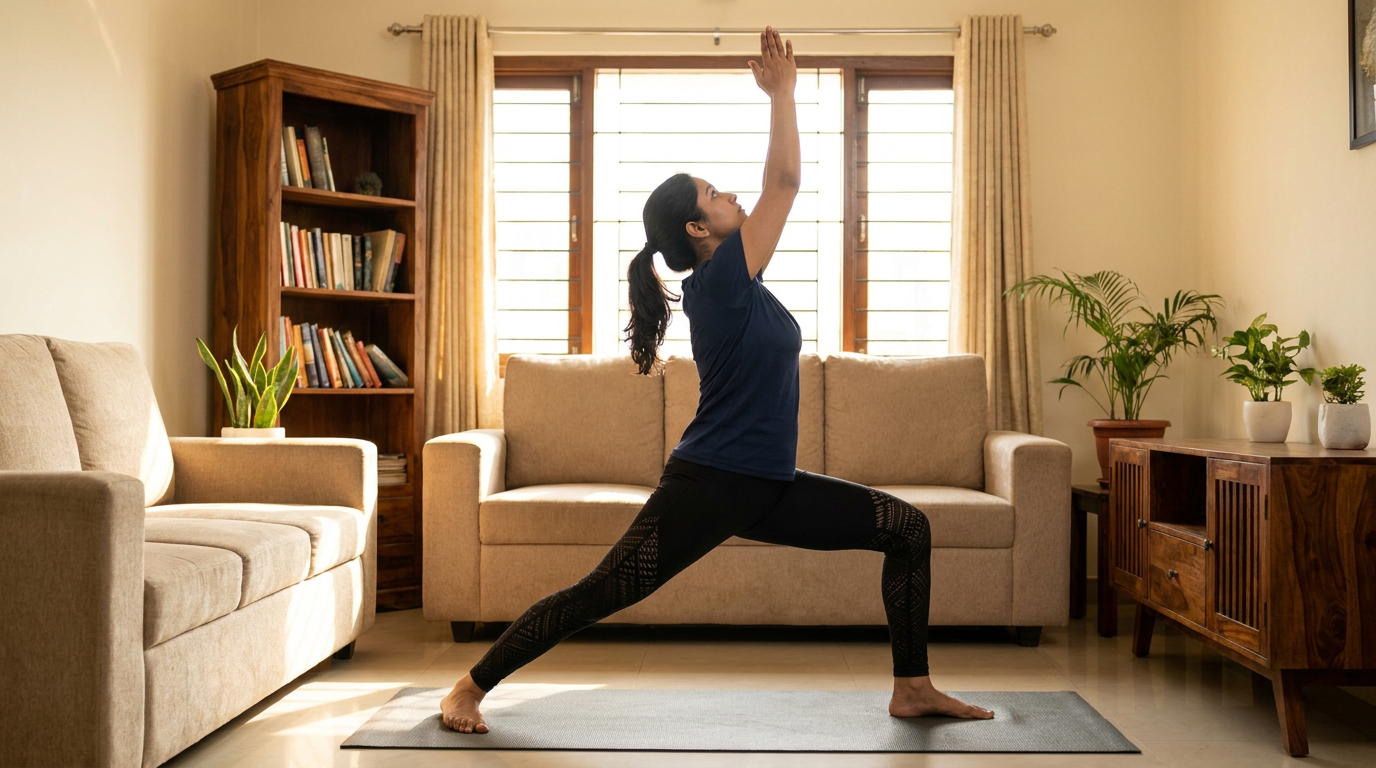
3. Warrior Poses (Virabhadrasana)
Warrior poses involve standing firmly through the feet while maintaining a stable body position. They engage the legs and require the ankles to work to keep you balanced. Focus on pressing your feet into the floor and keeping your movements controlled. These poses can also help improve lower-body endurance, which may make everyday activities easier.
4. Balancing Postures
Balance-focused yoga poses can strengthen the muscles around the ankles and lower legs because these muscles constantly make small adjustments to keep the body stable. Begin with a simple one-leg balance while standing near a wall or sturdy surface for support. As your balance improves, you can gradually make the movement more challenging. Do not rush into difficult positions as losing stability can increase the risk of a fall.
5. Downward-Facing Dog (Adho Mukha Svanasana)
Downward-Facing Dog provides a combination of stretching and weight-bearing for the lower body. The posture involves supporting the body through the hands and feet while lifting the hips upward. The calves and the muscles around the ankles are involved as you work to maintain the position. Avoid forcing your heels toward the floor. Keeping the knees slightly bent is fine.
6. Bridge Pose (Setu Bandhasana)
Bridge Pose mainly works the hips and thighs but also involves the legs and feet. Lie on your back with your knees bent and feet placed firmly on the floor. Lift your hips while keeping your feet grounded and lower your body slowly. Maintaining steady pressure through the feet can better lower-body engagement. This pose can also complement standing yoga poses by strengthening other muscles that contribute to overall leg stability.
It is important that you pay attention to pain, swelling or unusual discomfort. Mild muscle effort is normal, but if you have sharp or persistent pain, you should stop and seek professional advice. Combining yoga with regular walking and other forms of physical activity can be a better way to improve lower-body strength.
Disclaimer: This content including advice provides generic information only. It is in no way a substitute for a qualified medical opinion. Always consult a specialist or your own doctor for more information. NDTV does not claim responsibility for this information.