

)
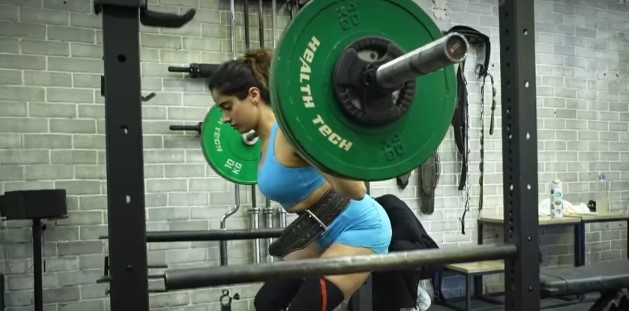
Leg day can be one of the most demanding workouts in the gym, but it's also one of the most important and should never be skipped. Strong legs are not just about how they look. The muscles of the thighs, hips, glutes, and calves help support everyday movements, from walking and climbing stairs to maintaining balance and getting up from a chair. They also play an important role in stability and overall physical function. Actor Janhvi Kapoor recently gave a glimpse of her leg workout, showing exercises including kettlebell lifts, leg extensions and leg presses. While celebrity workouts can be motivating, the bigger takeaway from her session is the importance of building strength across different muscle groups of the lower body rather than focusing only on aesthetics. Here is what these exercises target and why lower-body strength matters.
Janhvi Kapoor's Leg Workout: What Exercises Does She Do?
Research published in the journal PLOS One indicates that training the lower body two times a week yields higher strength gains measured by 1-repetition maximum compared to lower or unstructured frequencies.
The workout featured a combination of compound and more targeted lower-body exercises. Kettlebell lifts require coordinated movement through the hips and legs, while leg extensions specifically target the quadriceps. The leg press, meanwhile, works with several major muscles of the lower body together. This combination is useful because the legs do not work as isolated muscles during most everyday activities. Walking, running, climbing stairs and getting up from a seated position involve multiple muscles working together. A balanced leg workout can therefore include both multi-joint exercises that train several muscle groups and isolation exercises that place greater emphasis on a particular muscle.
Kettlebell Lifts: Why Hip And Ankle Stability Matter
Kettlebell movements can challenge several parts of the lower body while also requiring coordination and control. Depending on the specific technique being used, kettlebell lifts can involve the glutes, hamstrings, quadriceps and muscles around the hips. They also require the person to maintain balance and control through the feet and ankles. Ankle stability is often overlooked when people think about leg training. But the ankle and foot form the foundation of many lower-body movements. Poor control or weakness in this area can affect how force is transferred through the legs. Training movements that require balance and controlled weight transfer can therefore contribute to better overall lower-body stability.
Leg Extensions: A Direct Workout For The Thighs
As per a study published in International Journal of Sports Physical Therapy, the leg extension exercise isolates and strengthens the quadriceps, the four-part muscle group located on the front of the thigh. The leg extension is primarily used to strengthen the quadriceps; the group of muscles located at the front of the thighs. The quadriceps play an important role in extending the knee and are involved in everyday activities such as walking, climbing stairs, standing up and sitting down.
For people who are new to resistance training, strengthening the quadriceps can be particularly useful because these muscles contribute to the ability to perform many basic movements. However, leg extensions should be performed with controlled movement rather than using excessive weight. The goal of resistance training is not simply to move the heaviest possible load, but to challenge the target muscles safely and progressively.
Leg Press: One Exercise, Multiple Lower-Body Muscles
The leg press is a compound resistance exercise that can involve the quadriceps, hamstrings and glutes. Unlike some free-weight lower-body exercises, the machine provides support for the back and controls the movement path. This can make it easier for some people to focus on pushing through the legs. The exact muscle emphasis can vary depending on factors such as foot position, range of motion and technique. But overall, the leg press is commonly used to build lower-body strength and muscular capacity. It is also a good example of why leg training should not focus on a single muscle. Strong lower limbs require several muscle groups to work together.
Why Strong Thighs Matter Beyond Aesthetics
The thighs are among the largest muscle groups in the body and contribute to several basic movements. Strong quadriceps and hamstrings can help with activities such as walking, climbing stairs, getting out of a chair and maintaining control while lowering the body. Strength training also helps build the capacity to produce and control force. This becomes particularly important as people age, when maintaining muscle strength can help preserve independence and physical function.
This is why a leg workout should not be viewed simply as a way to build defined thighs. It is part of maintaining the strength needed for everyday life.
Strong Hips And Glutes Help With Stability
The hips and glutes are another major part of lower-body strength. The gluteal muscles help extend and stabilise the hip and contribute to movements such as walking, running, climbing and standing up. Strong muscles around the hips can also help the body control movement through the pelvis and legs. This is particularly important during activities that involve changing direction, stepping, jumping or balancing on one leg. For this reason, a good lower-body programme should include movements that train the hips and glutes alongside exercises that target the thighs.
Don't Forget Your Calves
The calves may receive less attention than the thighs and glutes, but they are involved in almost every step you take. The calf muscles help control movement at the ankle and contribute to pushing the body forward during walking and running. They also play a role in balance and stability. Strengthening the calves, therefore, is not simply about developing larger calf muscles. Adequate calf strength can contribute to better control of the ankle and lower limb during everyday movement and exercise.
Why Women Should Include Strength Training For The Legs
There is still a misconception that women should focus mainly on cardio or lighter workouts if they want to stay lean. But resistance training is an important component of fitness for women as well. Lower-body strength training can help build and maintain muscle, improve physical capacity and make everyday movements easier. It can also be adapted according to a person's fitness level, goals, age and previous injuries.
The aim does not have to be lifting extremely heavy weights. Consistent resistance training with appropriate loads and progressive increases can provide substantial benefits.
Should You Copy Janhvi Kapoor's Workout?
Celebrity workouts can provide inspiration, but copying a workout exactly is not necessarily a good idea. The appropriate weight, number of repetitions, range of motion and exercise selection depend on an individual's training experience, mobility, strength and medical history.
Using excessive weight or performing an exercise with poor technique can increase the risk of injury. Beginners should ideally learn the correct technique before increasing resistance.
The same exercise can also feel very different for someone with a previous knee, hip, ankle or back problem. In such cases, exercise selection may need to be modified with guidance from a qualified fitness professional or healthcare provider. Janhvi Kapoor's leg workout is a reminder that lower-body training is about much more than achieving a certain appearance. Kettlebell movements can challenge coordination and stability, leg extensions target the quadriceps, while leg presses train several major muscles of the lower body. Strong thighs, hips, glutes and calves help support walking, balance, climbing, running and other everyday movements. Rather than copying a celebrity's routine exercise for exercise, focus on the larger principle: build lower-body strength progressively, use proper technique and choose exercises that match your own fitness level and goals.
Disclaimer: This content including advice provides generic information only. It is in no way a substitute for a qualified medical opinion. Always consult a specialist or your own doctor for more information. NDTV does not claim responsibility for this information.