

)
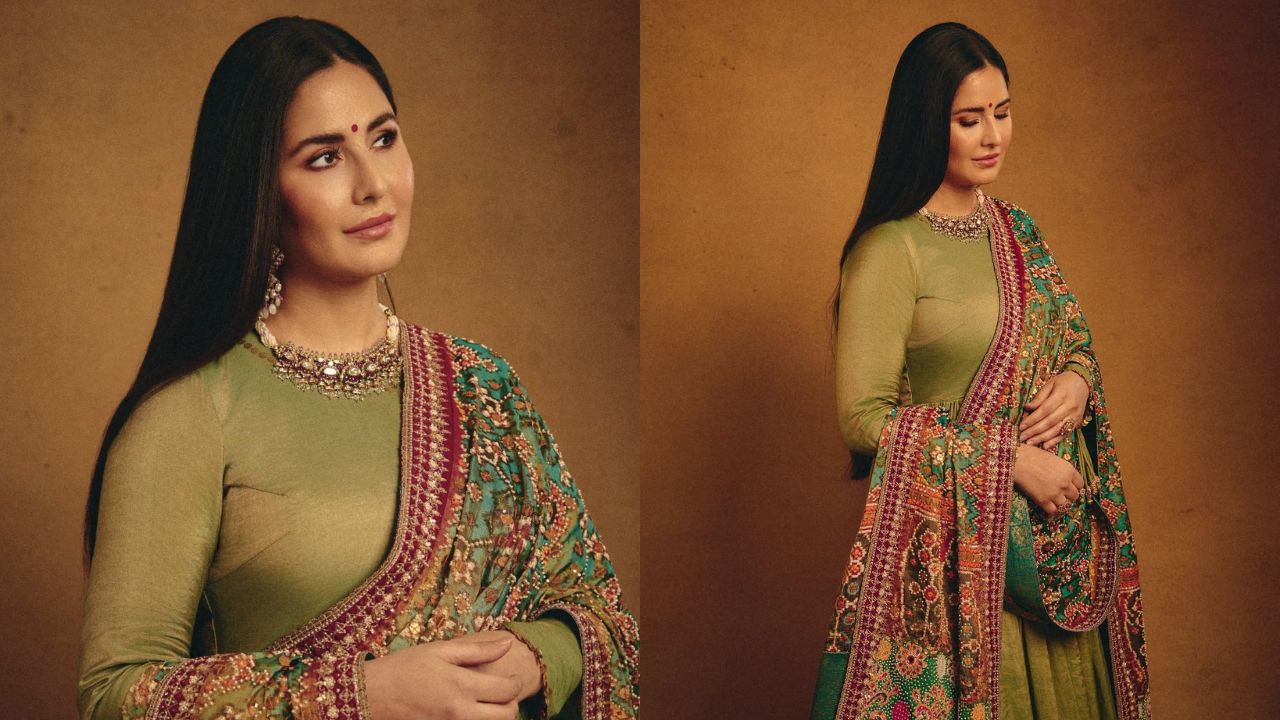
Katrina Kaif is facing scrutiny over her appearance, this time after making a rare public appearance with husband Vicky Kaushal at the Ambani family's Ganesh Chaturthi celebrations in Mumbai. The actor was subjected to comments about her postpartum body and weight, with some social media users comparing her current appearance with how she looked before motherhood. However, her fans pushed back against the trolling and pointed out that physical changes after pregnancy are normal and that postpartum recovery does not follow a fixed timeline.
Katrina and Vicky welcomed their first child, son Vihaan Kaushal, on November 7, 2025. That means the actor is still within the first year after childbirth. The discussion around her appearance raises a much bigger question: why are women expected to look as though they were never pregnant soon after giving birth? Pregnancy can affect body weight, fat distribution, abdominal muscles, hormones, sleep, energy levels and physical activity. Research also shows that postpartum weight change can continue well beyond the first few months. In other words, there is no medically defined deadline by which every woman should have her pre-pregnancy body back.
What Happens To The Body After Childbirth?
Pregnancy involves major changes to almost every system of the body. Weight gained during pregnancy includes not just body fat, but also the baby, placenta, amniotic fluid, increased blood volume and changes in breast and uterine tissue. Some of these changes reverse relatively quickly after delivery, while others take considerably longer.
Importantly, postpartum weight does not necessarily disappear at the same rate for every woman. A study published using data from 305 women found that 81% had a higher weight three months after delivery than before pregnancy. Between three and 12 months postpartum, however, 74.4% of the women lost weight.
An Indian cohort study involving women in Puducherry also found substantial variation. At one year postpartum, 64.1% of the women retained some weight, with a mean retention of 5.2 kg, while 33.8% experienced weight loss.
These findings make one point clear: postpartum weight change is a process, not an overnight transformation.
Pregnancy Can Change Body Composition
Pregnancy can alter where and how the body stores fat. How much weight a woman gains during pregnancy can also influence how much weight she retains afterwards.
A 2024 systematic review and meta-analysis found that women with excessive gestational weight gain retained, on average, nearly 3 kg more weight at six months postpartum and about 1.9 kg more at more than six months to one year, compared with women whose pregnancy weight gain was within recommended ranges.
However, this does not mean postpartum weight is simply a matter of calories or willpower. Genetics, pre-pregnancy weight, pregnancy weight gain, diet, physical activity, breastfeeding, sleep and socioeconomic factors can all influence recovery.
The Abdomen May Look Different After Pregnancy
The abdominal area can also change significantly. During pregnancy, the abdominal wall stretches to accommodate the growing uterus. Some women develop diastasis recti, a separation or widening between the abdominal muscles. As a result, a postpartum abdomen may remain softer, fuller or more prominent even after some pregnancy weight has been lost. This is not necessarily an indication that someone is unhealthy or has failed to exercise.
The abdominal muscles and overall core strength may also take time to recover. A gradual return to physical activity, when medically appropriate, can help rebuild strength.
Hormonal Changes Can Affect Weight And Appetite
Pregnancy and childbirth bring substantial hormonal shifts. After delivery, pregnancy-related hormone levels change rapidly, while breastfeeding introduces another physiological state. Breastfeeding can increase energy demands and may make it easier for some women to lose pregnancy weight, but the effect is not identical for everyone. American College of Obstetricians and Gynecologists (ACOG) says that breastfeeding may help with postpartum weight loss, while also acknowledging that postpartum weight change is influenced by multiple factors. Therefore, assuming that every breastfeeding woman will automatically lose weight quickly is also misleading.
Broken Sleep Can Make Recovery Harder
New motherhood often comes with fragmented sleep. Babies may wake repeatedly through the night for feeding, changing or comfort. ACOG notes that sleep problems are common after childbirth and can be associated with breastfeeding, pain, stress and other postpartum factors.
Poor or interrupted sleep can also affect appetite, energy and the ability to maintain regular physical activity. This means a new mother may be trying to recover physically while simultaneously dealing with sleep deprivation and the demands of caring for an infant.
Postpartum Weight Loss Is Not A Race
There is no single timeline by which every woman should return to her pre-pregnancy weight or body shape. Research has found that weight can continue to change during the first year and even beyond it. One long-term study also found that significant weight changes can occur between the first and second years after pregnancy, showing why a single early postpartum measurement cannot tell the whole story.
This is why asking why a woman has not "bounced back" can be an unfair way of looking at postpartum recovery. The body has undergone months of pregnancy and childbirth, followed by the physical and emotional demands of caring for a newborn.
Celebrity Or Not, Postpartum Bodies Deserve Respect
Katrina Kaif's recent trolling is a reminder that celebrity status does not make a woman immune to the physical realities of pregnancy. Her public appearance does not provide enough information to judge her health, recovery, diet or lifestyle.
A postpartum body is not a before-and-after photograph. It is a body recovering from pregnancy and childbirth while adapting to a completely new phase of life.
Women can choose to work towards weight loss or fitness after childbirth, but those goals should ideally be guided by individual health needs and medical advice rather than social media and societal expectations.
Disclaimer: This content including advice provides generic information only. It is in no way a substitute for a qualified medical opinion. Always consult a specialist or your own doctor for more information. NDTV does not claim responsibility for this information.