

)
Waking up with stiff joints can make even simple morning tasks feel difficult. The stiffness may become more noticeable after several hours of inactivity, when the knees, hips, shoulders, back or fingers feel tight and difficult to move. While occasional stiffness can happen to anyone, especially after sleeping in one position, regular morning discomfort may also be linked to ageing, muscle tightness, osteoarthritis or other joint conditions. A gentle stretching routine can help get the body moving without putting excessive stress on the joints.
Morning stretching is not about pushing your body into difficult positions or trying to achieve extreme flexibility. The goal is to gradually increase movement, improve circulation and loosen muscles and joints after rest. Slow and controlled movements can be particularly useful for people who feel stiff when they first get out of bed.
Why Are Joints Stiff In The Morning?
Morning stiffness can happen because the body remains relatively still during sleep. Muscles and connective tissues may become temporarily tight, while joints may feel less mobile after hours without movement.
For some people, stiffness may be due to osteoarthritis, which commonly affects the knees, hips, hands and spine. Inflammatory conditions such as rheumatoid arthritis can also cause significant morning stiffness. The duration and severity of stiffness can provide useful clues, so persistent symptoms should not simply be dismissed as a normal part of ageing.
Simple Stretching Exercises To Start Your Day
1. Neck Turns
Sit or stand comfortably with your shoulders relaxed. Slowly turn your head towards the right, return to the centre and then turn towards the left. Repeat 5-10 times on each side. Keep the movement gentle and avoid forcing your neck beyond a comfortable range.
2. Shoulder Rolls
Shoulder rolls can help loosen stiffness around the shoulders and upper back. Raise your shoulders gently towards your ears, move them backwards and then lower them. Repeat the movement slowly for 10 repetitions, then reverse the direction.
3. Wrist And Finger Stretches
If your hands feel stiff in the morning, start by opening and closing your fists several times. Then slowly rotate each wrist in both directions. You can also spread your fingers as wide as comfortable before relaxing them. Repeat these movements 5-10 times.
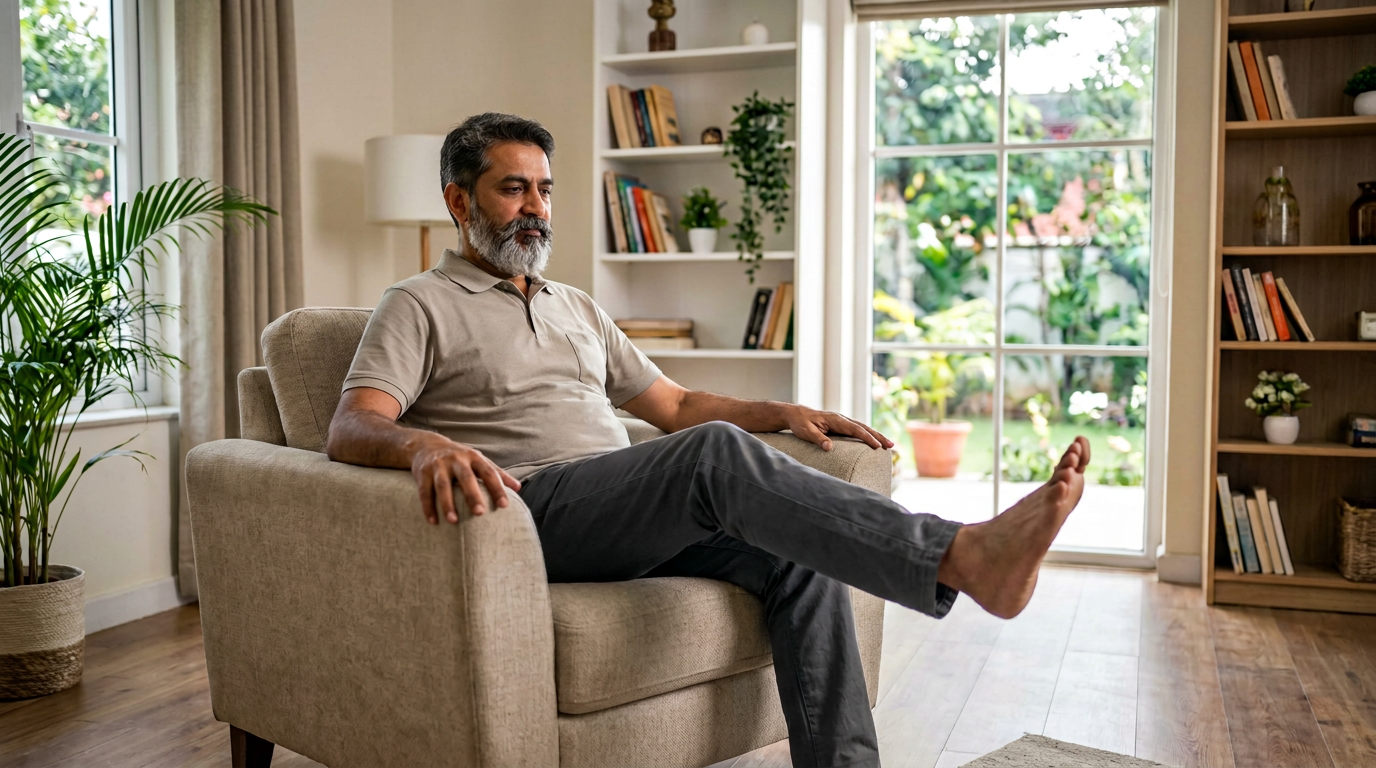
4. Seated Knee Extensions
Sit on the edge of a sturdy chair with your feet flat on the floor. Slowly straighten one knee until your leg is comfortably extended, hold for a few seconds and lower it. Repeat 8-10 times per leg. This movement can help warm up the knees before standing or walking.
5. Ankle Circles
While sitting or standing with support, lift one foot slightly from the floor. Slowly rotate your ankle in circles in one direction and then the other. Do 5-10 circles in each direction before switching feet. This can help improve ankle mobility and prepare the legs for movement.
6. Gentle Hamstring Stretch
Sit towards the front of a chair and extend one leg forward with the heel resting on the floor. Keep your back straight and lean forward slightly from your hips until you feel a gentle stretch behind the thigh. Hold for 15-20 seconds and repeat on the other side. Do not bounce or force the stretch.
7. Cat-Cow Stretch
If getting onto the floor is comfortable for you, start on your hands and knees. Slowly arch your back while gently lifting your chest, then round your spine while relaxing your neck. Move between these positions slowly for 5-10 repetitions. This exercise can help loosen the spine and surrounding muscles.
Tips For A Safer Morning Stretch
The body may be stiff immediately after waking, so begin slowly rather than jumping straight into deep stretches. Take a few minutes to walk around the room or perform gentle joint movements before attempting longer stretches.
Breathe normally throughout each exercise and avoid bouncing. Stretch only until you feel mild tension, and not pain. People with existing joint problems should choose movements appropriate for their condition.
Disclaimer: This content including advice provides generic information only. It is in no way a substitute for a qualified medical opinion. Always consult a specialist or your own doctor for more information. NDTV does not claim responsibility for this information.