






- Polycystic Ovary Syndrome (PCOS) renamed Polyendocrine Metabolic Ovarian Syndrome (PMOS) globally
- New name reflects multisystem nature affecting hormones, metabolism, ovaries, and health risks
- PMOS diagnosis criteria remain unchanged but emphasize broader metabolic and endocrine impacts
One of the world's most common yet misunderstood women's health disorders has received a historic new name. Polycystic Ovary Syndrome (PCOS) will now be known as Polyendocrine Metabolic Ovarian Syndrome (PMOS), following a global consensus led by international endocrine and reproductive health experts and published in The Lancet.
The renaming comes after more than a decade of consultation involving clinicians, researchers and patient advocacy groups across multiple countries. Experts argued that the term "PCOS" was medically misleading because many women with the condition do not actually have ovarian cysts. More importantly, the old name failed to capture the syndrome's widespread effects on metabolism, hormones, mental health and cardiovascular risk.
The change is particularly relevant for India, where PCOS affects millions of women and is increasingly linked with obesity, diabetes, infertility and mental health concerns. Indian researchers have repeatedly warned that the condition is underdiagnosed and often misunderstood as merely a fertility issue rather than a lifelong metabolic disorder. (PMC)
Why Has PCOS Been Renamed PMOS?
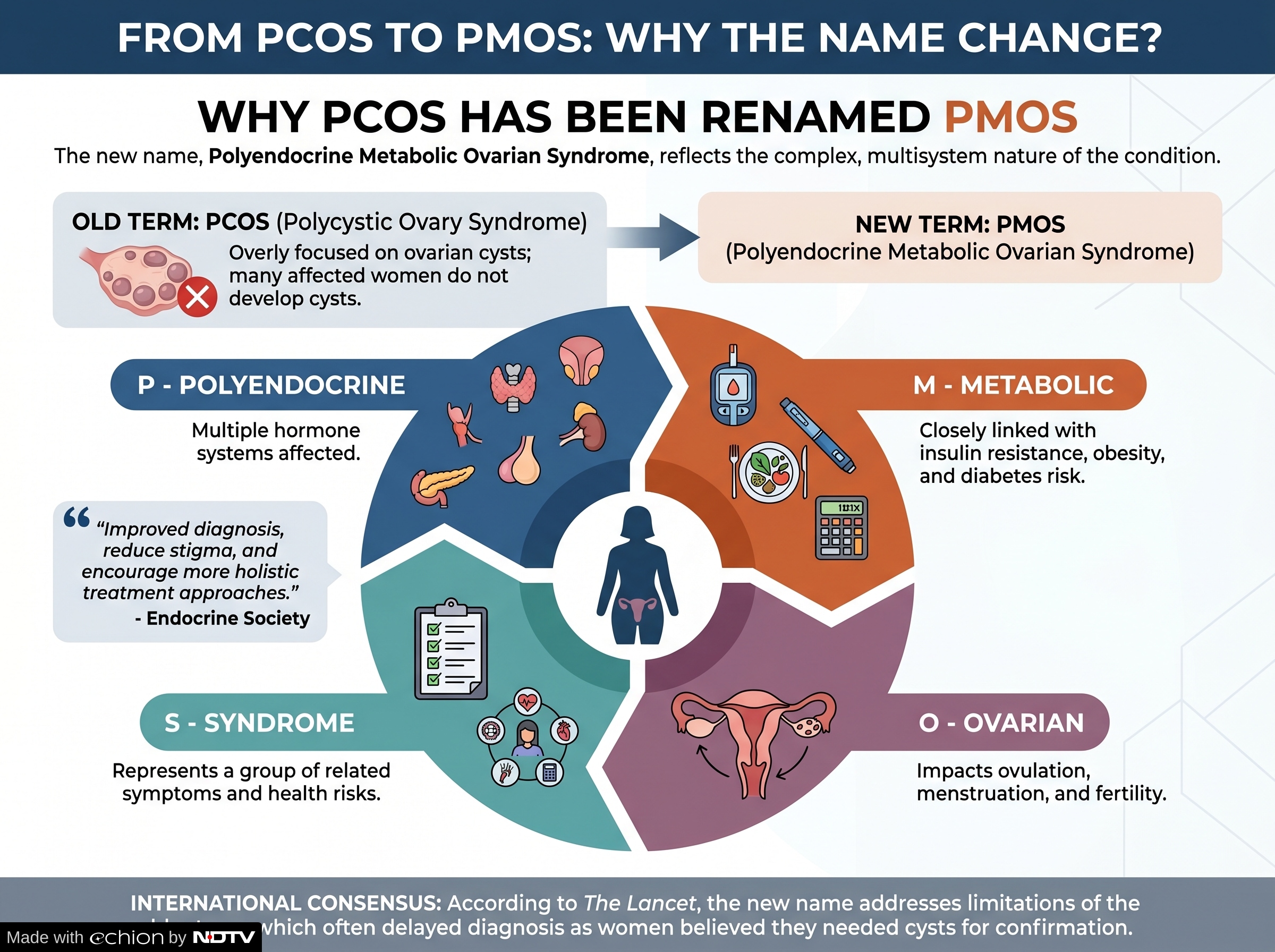
The new name, Polyendocrine Metabolic Ovarian Syndrome, was introduced to reflect the condition's complex and multisystem nature. According to the international consensus published in The Lancet, the older term overly focused on ovarian cysts, despite the fact that many affected women do not develop cysts at all. Instead, the disorder involves abnormalities in the endocrine system, metabolism and ovarian function.
Here is what the new name signifies:
- Polyendocrine: Multiple hormone systems are affected
- Metabolic: The condition is closely linked with insulin resistance, obesity and diabetes risk
- Ovarian: It still impacts ovulation, menstruation and fertility
- Syndrome: It represents a group of related symptoms and health risks
The Endocrine Society said the name change aims to improve diagnosis, reduce stigma and encourage more holistic treatment approaches. Experts also noted that the old terminology often delayed diagnosis because many women believed they could not have PCOS unless scans showed ovarian cysts.
What Exactly Is PMOS?
PMOS remains the same medical condition previously known as PCOS. The diagnostic criteria have not changed. It is a hormonal and metabolic disorder commonly characterised by:
- Irregular or absent periods
- Excess androgen hormones
- Acne and facial hair growth
- Weight gain or difficulty losing weight
- Insulin resistance
- Fertility challenges
- Multiple immature ovarian follicles in some patients
The condition also raises long-term risks of:
- Type 2 diabetes
- Hypertension
- Heart disease
- Fatty liver disease
- Sleep disorders
- Depression and anxiety
Globally, experts estimate that PMOS affects nearly one in eight women.
Why This Matters For India
India is witnessing a sharp rise in PCOS cases, especially among adolescents and young urban women. The Indian Council of Medical Research (ICMR)-supported PCOS study, among the largest in the country, highlighted wide regional variation in prevalence and warned of increasing metabolic complications among Indian women.
Several Indian studies estimate prevalence rates ranging from 3.7% to over 22%, depending on diagnostic criteria and geography.
Researchers have linked the rise to:
- Sedentary lifestyles
- Processed-food consumption
- Increasing obesity
- Poor sleep
- Stress
- Genetic predisposition
Importantly, Indian women with PCOS also appear to face higher metabolic risks at younger ages. An article published in the Indian Journal of Medical Research reported that metabolic syndrome affects more than one-third of Indian women with PCOS.
Doctors believe the new PMOS terminology could help shift attention beyond fertility concerns and encourage earlier screening for diabetes, cardiovascular disease and mental health complications.
Could The Name Change Improve Diagnosis?
Experts hope so. Many women reportedly experience years of delayed diagnosis because symptoms vary widely and are often dismissed as cosmetic or lifestyle-related concerns. The revised name may help doctors and patients better understand that the condition is not restricted to the ovaries.
Researchers involved in the global renaming effort also said the previous name contributed to stigma in several cultures, particularly where reproductive disorders can affect marriage prospects or social perceptions of women.
For India, where conversations around menstrual and reproductive health remain limited in many communities, experts say clearer terminology could improve awareness and healthcare access.
What Treatment Looks Like Now
Although the name has changed, treatment strategies remain largely the same.
Management typically includes:
- Regular physical activity
- Weight management
- Balanced nutrition
- Sleep improvement
- Stress reduction
- Hormonal therapy where needed
- Insulin-sensitising medicines like metformin
Specialists also increasingly recommend multidisciplinary care involving:
- Endocrinologists
- Gynaecologists
- Nutritionists
- Mental health professionals
Experts say the PMOS framework may encourage healthcare systems to treat the condition more comprehensively rather than focusing only on fertility.
The renaming of PCOS to PMOS marks more than a cosmetic terminology update. It reflects a growing scientific understanding that this is a complex endocrine and metabolic condition with lifelong implications for women's health. For India, where millions of women remain undiagnosed or untreated, the change could help improve awareness, reduce stigma and encourage earlier intervention. Doctors say recognising PMOS as a full-body health condition rather than simply an ovarian disorder may ultimately improve outcomes for women across generations.
Disclaimer: This content including advice provides generic information only. It is in no way a substitute for a qualified medical opinion. Always consult a specialist or your own doctor for more information. NDTV does not claim responsibility for this information.
Track Latest News Live on NDTV.com and get news updates from India and around the world

