

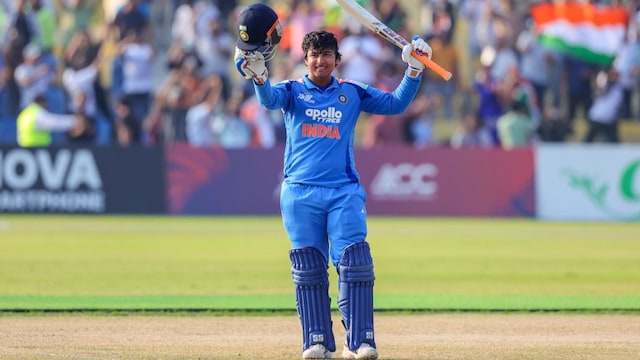
Vaibhav Sooryavanshi's fitness story is about more than the power behind his big shots. Preparation of the young prodigy has involved years of batting practice, physical conditioning, sprinting, strength work and attention to nutrition. Recently, he showed his cricketing skills by smashing 204 off 53 balls for India A against the UAE in the Asia Cup Men's Rising Stars tournament in Doha on Tuesday, setting a new record in the history of cricket. Previously, Vaibhav coaches have spoken about the discipline that went into building his game, while Sooryavanshi himself has acknowledged that improving his fitness is important for a long career. However, there is no publicly verified, fixed day-by-day workout or meal plan. Here is what has been reported about his training and eating habits, and why these elements matter for a young cricketer.
Vaibhav Sooryavanshi's Fitness Secrets: A Look At His Training0 And Nutrition Routine
Vaibhav Sooryavanshi's explosive batting has made him one of the most talked-about young cricketers. But behind the towering sixes and fearless stroke play is years of preparation, including long hours in the nets and a growing focus on physical conditioning.
1. Years Of Training And Strength Work
Fitness journey of the 15 year old cricketer began early. His coaches have previously spoken about how he started structured training at a young age, combining cricket practice with physical conditioning. In April 2025, reports quoting his coach Manish Ojha highlighted his focus on weight training and cardio. Strength training can help cricketers develop the muscular strength required for batting, running between the wickets, fielding and maintaining body control while playing powerful shots.
For a batter, strength is not simply about lifting heavier weights. Lower-body strength, core stability and coordination all contribute to balance and the ability to transfer force through the body while playing a shot.
The training approach of a young athlete, however, needs to be age-appropriate and supervised. Strength work should support movement quality, athletic development and injury prevention rather than focus only on lifting heavy weights.
2. Running And Sprinting For Speed And Stamina
Running and sprint drills have also featured in accounts of Sooryavanshi's conditioning. His coach has described cardio as an important part of his preparation, with sprinting and running helping develop speed, agility and endurance. These qualities are particularly relevant in cricket. A batter needs quick acceleration when taking a run, the ability to change direction while running between the wickets and enough stamina to remain alert through long periods on the field.
Sprint training also develops explosive movement. Short bursts of acceleration can help improve how quickly a player moves from a stationary position, while repeated running efforts can support the demands of a match.
A Times of India Report has also mentioned high-intensity interval training (HIIT) as part of his broader conditioning work. HIIT involves alternating short periods of intense activity with recovery intervals. The format can help athletes work on their cardiovascular fitness and ability to repeat high-intensity efforts. However, the precise frequency, duration and intensity of Sooryavanshi's current running sessions have not been publicly established.
READ | Cardio Vs Weight Training: Which Workout Helps Lower Cholesterol More?
3. Long Hours In The Nets To Build Batting Muscle Memory
Physical conditioning is only one part of Sooryavanshi's preparation. His batting development has involved years of consistent practice and repetition. In June 2026, his coach Manish Ojha spoke about the youngster's demanding early training schedule, saying he would practise for several hours and face more than 600 balls in a day. The account highlighted how much time went into developing his range of strokes and building muscle memory.
The Indian Express has also reported on the structured coaching he received as a child, including sessions focused on mastering individual shots. This kind of repetition helps a batter become familiar with different movements and respond more instinctively during a match.
Batting practice also places physical demands on the body. Repeatedly moving into position, rotating the trunk, transferring weight and maintaining balance requires coordination, strength and stamina.
4. A Focus On Nutrition And Balanced Meals
Nutrition is another part of Sooryavanshi's preparation that has attracted attention. Reports quoting his coaches have described efforts to make his diet more balanced, with an emphasis on wholesome food and limiting certain junk-food choices.
In 2025, his coach spoke about removing pizza from his diet and encouraging healthier eating habits. Reports have also mentioned nuts and seeds as convenient snacks that can provide energy between meals.
Other media accounts have described a diet containing protein-rich foods and carbohydrate sources. However, a complete, independently verified daily meal plan, including exact portions and calorie intake, is not publicly available.
For a young cricketer, adequate nutrition is particularly important. Carbohydrates provide energy for training and matches, while protein supports muscle repair and recovery. Fruits, vegetables, whole grains and other fibre-rich foods contribute vitamins, minerals and overall nutritional balance.
A growing athlete also needs sufficient food to support normal development, not just sporting performance. Restrictive diets or attempts to control body weight without professional guidance can affect growth, recovery and energy levels.
5. Nuts And Seeds For Convenient Snacking
Nuts and seeds have been mentioned in reports about Sooryavanshi's eating habits. They are convenient options that provide a combination of healthy fats, protein, fibre and micronutrients.
For athletes, snacks can help maintain energy between meals, particularly on days involving extended training sessions. Nuts such as almonds and walnuts, along with seeds such as pumpkin and sunflower seeds, can form part of a balanced diet.
They are not a substitute for complete meals, though. Athletes need a varied diet that provides enough carbohydrates, protein, fats and micronutrients to meet the demands of their training.
6. Recovery And Flexibility Matter Too
Training consistently is important, but recovery is equally necessary. Reports about Sooryavanshi's conditioning have mentioned static stretching as part of his cool-down routine.
Gentle stretching after exercise can help an athlete gradually transition from intense activity to rest and maintain flexibility. Recovery also involves adequate sleep, hydration, appropriate rest days and managing training loads.
This becomes especially important for young athletes who are still growing. Their training schedules need to balance performance development with recovery and long-term physical health.
7. Sooryavanshi Has Acknowledged The Importance Of Fitness
Sooryavanshi's own comments have underlined the importance of physical conditioning. After IPL 2026, he acknowledged that he was working on his fitness because he wanted to avoid injuries and play for a long time.
His comments came amid discussions about whether the young batter needed to focus more on his overall fitness. India coach VVS Laxman had also pointed out in July 2026 that overall fitness remained an area in which Sooryavanshi had room to improve.
This is an important distinction: being a powerful batter does not automatically mean an athlete has completed every aspect of physical development. Cricket requires a combination of strength, speed, endurance, mobility, coordination and recovery. Vaibhav Sooryavanshi's preparation reflects years of consistent batting practice alongside physical conditioning. Reports about his routine point to strength training, cardio, running, sprint drills and attention to nutrition. His coaches have also highlighted the role of repetition in developing his batting skills.
The bigger lesson is that athletic performance is built through several interconnected habits. For young cricketers, the priority should be a balanced approach that supports skill development, physical growth, adequate nutrition and recovery, rather than copying an intense training schedule without professional supervision.
Disclaimer: This content including advice provides generic information only. It is in no way a substitute for a qualified medical opinion. Always consult a specialist or your own doctor for more information. NDTV does not claim responsibility for this information.