

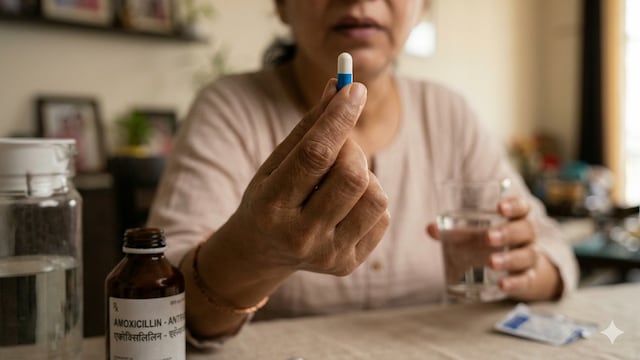
As India observes World AMR Awareness Week from November 18- 24, doctors are warning against self-medication and the indiscriminate use of antibiotics, which is contributing to the growing threat of antimicrobial resistance.
A fever, cough or sore throat often sends us looking for quick relief and sometimes, an antibiotic. In India, where antibiotics can be relatively easy to obtain, self-medication and inappropriate use remain serious concerns.
But taking an antibiotic every time you fall sick can do more harm than good.
This year's World AMR Awareness Week theme is "One Health, one action: Prevent AMR now." A new campaign guide developed by WHO and its partners calls for collective action across human health, animals, food systems and the environment to prevent antimicrobial resistance.
Antimicrobial resistance (AMR) occurs when microorganisms develop the ability to survive medicines that were once effective against them. As resistance increases, infections become harder to treat, medicines may stop working and patients may be left with fewer treatment options.
India carries a significant burden of antimicrobial resistance and is among the world's largest consumers of antibiotics. The easy availability of medicines, including antibiotics dispensed without prescriptions, adds to the challenge. "One of the biggest mistakes Indians make with medicines is self-medication," says Dr Ashutosh Shukla, Medical Director, Prana Centre for Integrative Medicine.
Taking medicines without medical advice can lead to inappropriate treatment, delay the correct diagnosis and contribute to antibiotic resistance. An antibiotic that may have been prescribed for a previous illness is not necessarily appropriate for a new infection. Similarly, symptoms such as fever, cough and sore throat do not automatically mean that an antibiotic is required.
Dr Narendra Saini, Chairman, IMA, AMR Committee, stresses the importance of responsible antibiotic use and cautions against taking these medicines without a prescription. "Use antibiotics only when prescribed by doctor," he says.
Why antibiotic resistance is a serious threat?
Antibiotics are among modern medicine's most important tools. They are essential for treating bacterial infections and make many medical interventions possible from major surgeries and cancer treatment to organ transplants and intensive care. When bacteria become resistant to antibiotics, infections that were once relatively straightforward to treat can become complicated and potentially life-threatening. Doctors may have to resort to stronger medicines, combinations of antibiotics or treatments with greater side effects.
In rare but serious situations, patients may develop infections that are resistant to the antibiotics available to treat them. This can leave doctors with very limited options, particularly when patients are critically ill or undergoing major medical procedures.
The threat of AMR is therefore not limited to someone taking an antibiotic unnecessarily today. It could affect the ability to treat infections in the future and the safety of medical procedures you routinely depend on.
The three questions every antibiotic prescription should answer
Responsible antibiotic prescribing involves three important steps: Decide, Select and Review.
1. DECIDE: Do you actually need an antibiotic?
The first step is establishing the diagnosis and determining whether the infection is bacterial or viral. Antibiotics work against bacteria, not viruses. They therefore do not treat viral illnesses such as the common cold and flu.
Doctors consider the patient's symptoms, the severity of the illness, risk factors, clinical examination and, when required, investigations before deciding whether an antibiotic is necessary.
A fever, cough or sore throat alone is not an indication for an antibiotic. Taking one unnecessarily exposes the body to medication without providing any benefit.
2. SELECT: Which antibiotic is appropriate?
If an antibiotic is required, selecting the right one is equally important. The choice depends on the suspected or confirmed infection, local resistance patterns, treatment guidelines, the patient's age, allergies, kidney function and other medical factors.
The right antibiotic, dose, frequency and duration of treatment all matter. Using an inappropriate antibiotic may fail to treat the infection effectively while contributing to the development of resistance.
This is why antibiotics should never be selected based on a previous prescription, a recommendation from a friend or family member, or the belief that a stronger medicine will help one recover faster.
READ | Experts Warn Against Misuse Of Antibiotics, Unproven 'Cures' As Plague Treatment Kits Surge Online
3. REVIEW: Is the antibiotic still needed?
Antibiotic treatment should not simply continue without reassessment. Doctors may review a patient's response after 48-72 hours, taking symptoms, clinical progress and investigation results into account.
Depending on the findings, the treatment may need to be stopped if an antibiotic is no longer indicated, narrowed to a more appropriate medicine or changed if resistance or treatment failure is suspected.
The goal is to ensure that antibiotics are used only when necessary and that the patient receives the most appropriate treatment.
Antibiotic resistance is not only a medical problem. Preventing infections in the first place is an important part of tackling AMR.
Dr Narendra Saini highlights the role of hygiene and infection prevention, emphasising that safe water and clean hands can help prevent infections from spreading and reduce the need for antibiotics. Handwashing, safe drinking water, sanitation, vaccination, food safety and appropriate infection-control practices can reduce the spread of infections. Fewer infections mean fewer situations in which antibiotics may be required.
AMR also needs to be viewed through the lens of One Health, recognising the interconnectedness of human health, animal health and the environment. The inappropriate use of antibiotics across these sectors can contribute to the larger resistance problem.
READ | This Common Antibiotic Habit Could Make Future Infections Untreatable, Shares Doctor
Dr Saini says, "Antibiotics are precious. Don't misuse them, don't lose them."
He also stresses the importance of responsible prescribing, warning that the choices made today will determine whether antibiotics remain effective for future generations. "Prescribe wisely today, preserve antibiotics for tomorrow," he says.
The fight against AMR requires action from doctors, patients, healthcare systems, policymakers and communities. It begins with a simple but important step which is not taking antibiotics casually or demanding them for every fever, cough or sore throat. As Dr Saini puts it, "The future of antibiotics is in our hands. Let us not allow misuse today to become untreatable infections tomorrow."
Disclaimer: This content including advice provides generic information only. It is in no way a substitute for a qualified medical opinion. Always consult a specialist or your own doctor for more information. NDTV does not claim responsibility for this information.