

)
With the recent launch of India's free HPV vaccination drive for adolescent girls and the arrival of World Oral Health Day 2026, the conversation around the link between the human papillomavirus (HPV) and oral cancer prevention has reached a critical turning point. While HPV vaccination remains the most effective preventive strategy, experts say barrier methods, such as condoms and dental dams, sometimes informally called mouth or tongue condoms, also play an important role in reducing risk.
HPV is one of the most common sexually transmitted infections globally, and it is increasingly associated with cancers of the mouth and throat. According to global health agencies, HPV can spread through oral contact and may infect the throat, leading to oropharyngeal cancer. This connection between HPV transmission and oral cancer needs urgent focus, says Dr V Rama Krishna, Consultant - Radiation Oncology, Manipal Hospitals Vijayawada, because cases in India have been steadily rising over the past decade.
"Many men diagnosed with oropharyngeal cancer have no history of smoking or heavy alcohol use, which traditionally were the main risk factors," Dr Krishna explains. "The common thread in these cases is HPV infection. Patients with neck lumps and swallowing difficulties and persistent throat pain tend to receive delayed diagnosis because they present with symptoms that seem minor."
Also Read: Oral Sex, HPV And Throat Cancer: Is Smoking No Longer The Top Risk?
Despite this, many people mistakenly believe oral contact carries little or no risk of infection. In reality, infections such as HPV, herpes, gonorrhoea, and syphilis can all be transmitted this way. "In a country where conversations around sex still happen in whispers, protection often gets limited to what we can't see, while risks like oral transmission remain ignored," says Dr Rajeev Arora, Consultant Dental Science, Fortis Hospital Faridabad. "Dental dams, or 'mouth condoms,' matter because they extend the idea of safe sex beyond intercourse, making protection inclusive of all forms of intimacy."
"Society fails to talk openly about sexual health, while people face stigma against discussing their sexual health issues, and public health organizations provide almost no educational materials to men about sexual health," says Dr Krishna. "These factors create obstacles that prevent people from receiving timely diagnosis and block access to preventive care." As Dr Arora says, "With rising awareness of HPV and its link to oral cancers, especially in India, these simple barriers can play a crucial role in prevention. Yet, due to stigma, lack of education, and limited availability, most people don't even know they exist."
In this context, knowing more about dental dams or mouth and tongue condoms may help people reduce risks of HPV and other sexually transmitted infections, along with linked diseases like oral cancer.
What Are Mouth And Tongue Condoms?
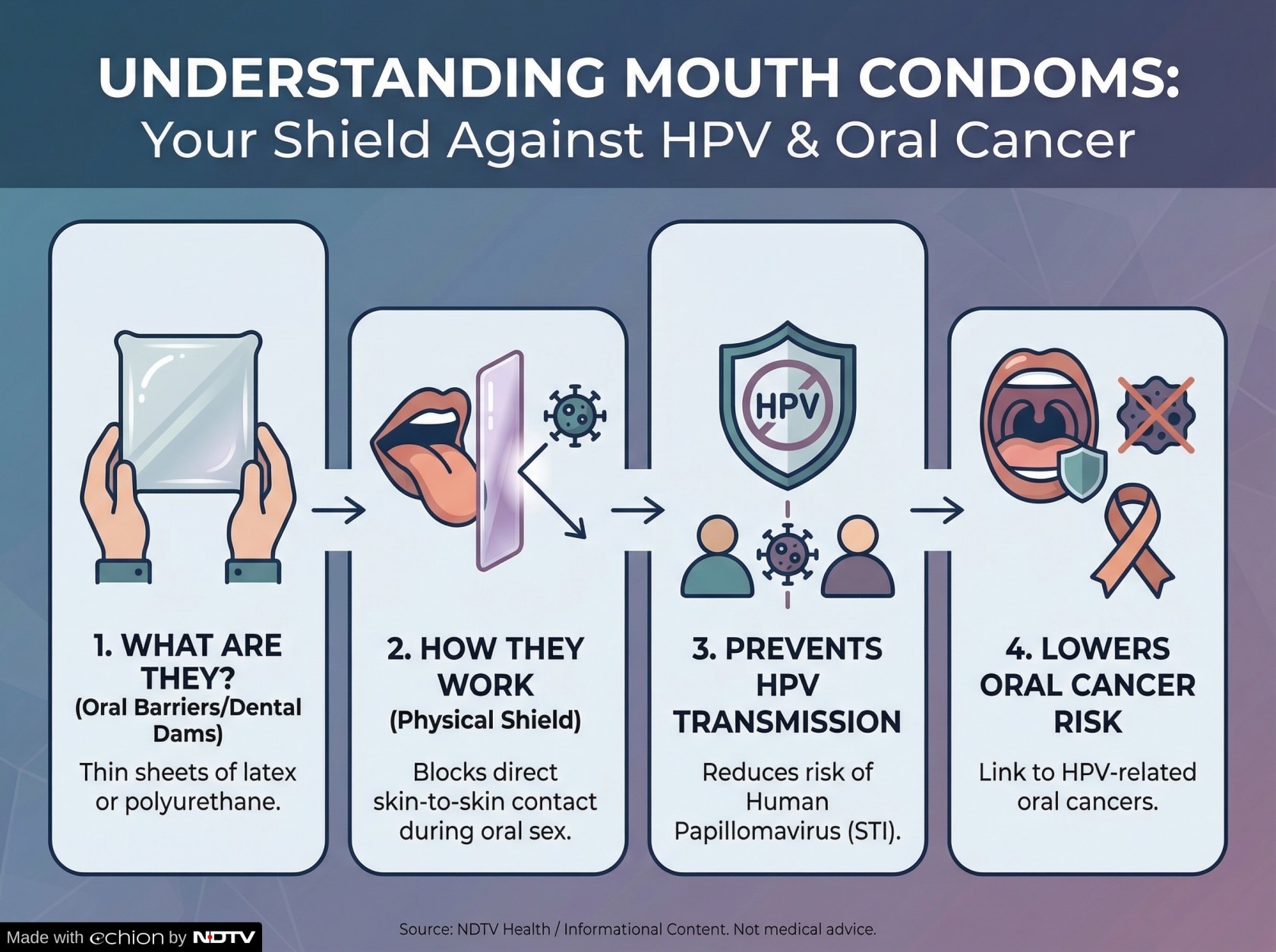
Mouth and tongue condoms is a non-technical term often used to describe dental dams, thin sheets made of latex or polyurethane placed between the mouth and genitals or anus during oral contact. They act as a physical barrier, preventing direct contact with bodily fluids and skin, which may carry infectious pathogens.
For oral contact involving the penis, standard condoms are recommended instead. For oral contact involving the vulva or anus, dental dams are used to create a protective layer.
How Do They Help Prevent HPV And Other Infections?
Barrier protection works on a simple principle of blocking transmission pathways.
- HPV spreads primarily through skin-to-skin contact, including oral contact
- Dental dams and condoms reduce exposure to infected surfaces and fluids
- This lowers, but does not eliminate, the risk of transmission
The Centers for Disease Control and Prevention (CDC) notes that when used correctly, condoms and dental dams can lower the chances of HPV transmission. Similarly, studies suggest that consistent condom use is associated with a significantly lower risk of acquiring HPV infections.
In addition to HPV, these barrier methods may also help reduce the risk of:
- Herpes
- Gonorrhoea
- Syphilis
- HIV (oral transmission risks are very low)
Why Oral Protection Matters For Cancer Risk
HPV is now recognised as a major cause of oropharyngeal cancers, which affect the throat, base of the tongue, and tonsils. According to the CDC, HPV-related throat cancers are rising, particularly among men, and are often linked to oral transmission of the virus.
This is where preventive strategies become crucial:
- HPV vaccination offers strong protection against cancer-causing strains
- Barrier protection adds an extra layer of safety during exposure
- Regular screening and awareness help detect early warning signs
While dental dams alone cannot fully prevent HPV, experts emphasise that combined strategies significantly reduce risk.
Also Read: All About The HPV Vaccine In India: Age, Doses And Who Should Avoid
Are Mouth Condoms Fully Effective?
It's important to understand that no barrier method offers 100% protection. HPV can infect areas not covered by condoms or dental dams, meaning some risk remains even with proper use. Additionally, research on dental dams specifically is still limited, and more data is needed to quantify their exact effectiveness against oral HPV transmission.
However, public health agencies consistently recommend their use because:
- They reduce exposure risk
- They are easy to use and accessible
- They support safer sexual practices overall
Why Awareness And Usage Remain Low
Despite their benefits, dental dams are underused globally. Studies highlight that many people:
- Are unaware they exist
- Assume oral contact is risk-free
- Lack access or education about proper use
This gap in awareness is a key public health concern, especially as oral HPV-related cancers continue to rise.
How To Use Them Safely
Health agencies recommend a few basic guidelines:
- Use a new dental dam or condom every time
- Avoid oil-based products that can damage the material
- Ensure full coverage of the contact area
- Do not reuse
Some experts also note that a dental dam can be made by cutting open a latex condom if a ready-made product is not available. This method does not come highly recommended as it can cause disease transmission if not done properly.
The Bigger Picture: Protection Beyond One Method
While mouth and tongue condoms are helpful, experts stress that they should be part of a broader prevention strategy:
- HPV vaccination remains the most effective protection
- Limiting the number of partners reduces exposure risk
- Regular health check-ups enable early detection
Using multiple layers of protection is the most effective way to safeguard both sexual and oral health.
The growing conversation around HPV-related oral cancers has highlighted an important gap in public awareness: Protection during oral contact. Mouth and tongue condoms, more accurately known as dental dams, offer a simple, accessible way to reduce the risk of HPV and other infections. While they are not a substitute for vaccination or medical care, they represent an important tool in a comprehensive prevention strategy. As awareness improves, integrating such barrier methods into routine health practices could play a meaningful role in reducing infection rates and, ultimately, preventing certain cancers.
Or as Dr Arora sums it up: "Normalizing dental dams isn't just about promoting a product, it's about promoting informed choices, dignity, and health. When awareness is low, silence becomes risky. When knowledge grows, so does the power to protect ourselves and our partners. Safe sex should not be selective. It should be complete, informed, and stigma-free."
Disclaimer: This content, including advice, provides generic information only. It is in no way a substitute for a qualified medical opinion. Always consult a specialist or your own doctor for more information. NDTV does not claim responsibility for this information.