

)
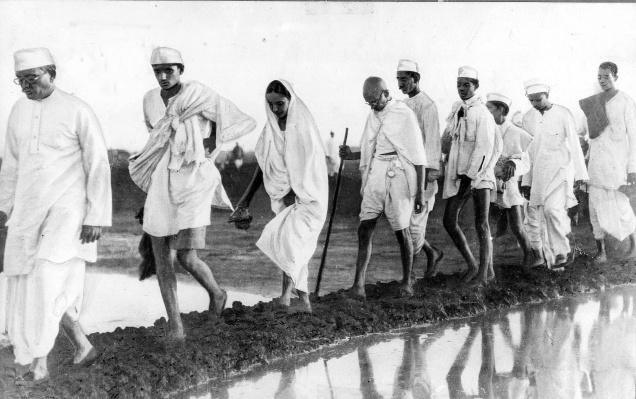
Long before step counters, fitness trackers and 10,000-step goals turned walking into a quantified health habit, Mahatma Gandhi was walking, a lot. According to research published by the Indian Council of Medical Research (ICMR), Gandhi walked around 18 km every day for nearly 40 years. During his campaigns between 1913 and 1948, he is estimated to have covered about 79,000 km, roughly twice the circumference of the Earth.
But Gandhi's approach to fitness was not simply about covering kilometres. Physical activity was part of a larger philosophy of disciplined living. His health writings repeatedly emphasised exercise, fresh air, self-restraint and the relationship between physical and mental wellbeing. A study by the National Medical Journal of India notes that his health philosophy included physical fitness alongside diet, cleanliness and nature cure.
Gandhi also developed an interest in yoga and, according to historical accounts reviewed in the medical literature, sought yoga practice and health advice from Swami Kuvalayananda in the 1930s.
More than seven decades after his death, the question is not whether people should attempt Gandhi's extraordinary walking distances. It is whether the principles behind his routine, regular movement, consistency and an active life, still make sense in an era of prolonged sitting and increasingly sedentary lifestyles.
The answer lies less in copying Gandhi's mileage and more in understanding the science of movement today.
Gandhi's walking habit: A fitness routine without a gym
Walking was arguably the most visible component of Gandhi's physical activity.
The ICMR's compilation Gandhi and Health @150 records that he walked around 18 km a day for nearly four decades. ICMR also notes that his extensive walking was part of a disciplined lifestyle that included physical fitness, balanced nutrition and attention to mental health.
Historical accounts also describe Gandhi undertaking long walks as part of his political journeys and campaigns. His ability to cover large distances on foot meant that walking was not a separate "workout" squeezed into his day; movement was integrated into daily life.
That distinction is relevant today.
The World Health Organization (WHO) recommends that adults undertake 150-300 minutes of moderate-intensity aerobic physical activity a week, or 75-150 minutes of vigorous activity, along with muscle-strengthening activities on at least two days a week. Walking can contribute substantially to the aerobic component. And there is no requirement to reproduce Gandhi's 18-km daily target.
A 2025 systematic review and dose-response meta-analysis published in The Lancet Public Health found that health benefits were associated with progressively greater daily step counts, with the clearest inflection point for several outcomes occurring around 5,000-7,000 steps a day. Compared with 2,000 steps, 7,000 steps was associated with a substantially lower risk of all-cause mortality and cardiovascular disease incidence in the observational evidence analysed.
The important caveat is that these are associations, not proof that walking a particular number of steps will prevent disease. The evidence nevertheless reinforces a simple message: moving more is generally better than remaining sedentary.
For a modern office worker, Gandhi's walking habit can therefore be translated into something much more practical: walking for transport when possible, taking movement breaks, using stairs, going for a brisk morning or evening walk and reducing long uninterrupted periods of sitting.
What about yoga? Gandhi's interest was broader than exercise
Gandhi's relationship with yoga needs some historical context.
The Health File of Mahatma Gandhi, published in the National Medical Journal of India, notes that Gandhi learnt yoga as part of his broader exploration of health and nature cure. Historical accounts also describe his association with Swami Kuvalayananda, a pioneer of scientific yoga research, from the 1930s.
This is important because yoga should not be reduced simply to stretching.
Modern yoga practices may combine physical postures, breathing exercises and relaxation or meditation. Their health effects depend on the style, intensity and duration of practice.
A systematic review and meta-analysis of randomised controlled trials in older adults found that yoga was associated with improvements in balance, lower-body flexibility and strength, along with several measures of quality of life and mental wellbeing. Another systematic review found small improvements in balance and moderate improvements in physical mobility among adults aged 60 and above.
Yoga has also been studied for blood pressure. A meta-analysis of 49 controlled trials involving more than 3,500 participants found that yoga was associated with average reductions of about 5 mmHg in systolic blood pressure and 3.9 mmHg in diastolic blood pressure, although the researchers noted variation between interventions and study quality.
The evidence on stress is also encouraging but should not be overstated. In that sense, the modern relevance of Gandhi's interest in yoga may lie in its multimodal nature: movement for the body, controlled breathing and attention for the mind.
The Gandhian Lesson: Consistency over intensity
Perhaps the most useful aspect of Gandhi's fitness regimen is not the extraordinary distance he covered, but the consistency with which movement became part of his life.
His philosophy of health was rooted in self-discipline and moderation. The ICMR's account of his health philosophy describes physical fitness, balanced diet, cleanliness and mental health as interconnected components of wellbeing.
Gandhi himself famously wrote: "It is health that is real wealth and not pieces of gold and silver."
Modern preventive medicine arrives at a broadly compatible practical message, although through very different scientific methods: physical activity is associated with lower risks of cardiovascular disease, type 2 diabetes and several other health problems, while also benefiting mental health and sleep. WHO therefore recommends regular activity rather than occasional bursts of exercise.
That does not mean Gandhi's personal routine should be copied literally. His health records also show that he experienced significant illnesses and episodes of very high blood pressure, reminding us that fitness habits do not make anyone immune to disease.
For people today, the more realistic version of a Gandhian fitness regimen might be simple: walk regularly, sit less, practise yoga or another form of strength-and-mobility exercise if appropriate, and make movement part of everyday life rather than an occasional event.
Gandhi's fitness routine was remarkably low-tech: walking, physical work, disciplined routines and an interest in yoga and natural living. The extraordinary 18 km he reportedly walked each day is not a modern fitness target, nor does science require it.
What remains relevant is the principle behind it. Regular movement does not need an expensive gym, sophisticated equipment or a complicated programme. A brisk walk, a few movement breaks during a sedentary workday and a regular yoga practice can all contribute to a more active life.
In today's world of screens, cars and prolonged sitting, perhaps the most modern interpretation of Gandhi's fitness philosophy is also the simplest: move more, move regularly and make health a daily practice rather than an occasional resolution.
Read More: Is Mahatma Gandhi's Diet Still Relevant For Gut Health, Immunity And Longevity Today?
Disclaimer: This content including advice provides generic information only. It is in no way a substitute for a qualified medical opinion. Always consult a specialist or your own doctor for more information. NDTV does not claim responsibility for this information.