

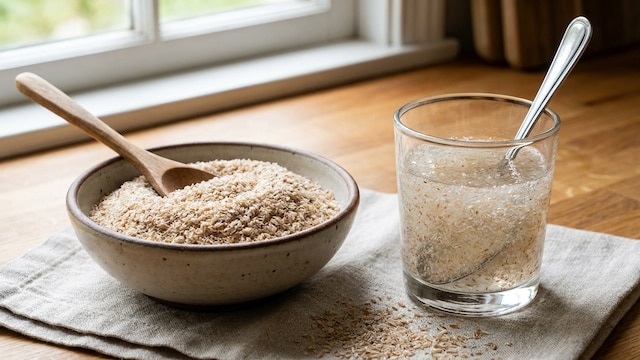
Psyllium husk, commonly known as isabgol in India, is often used as a simple home remedy for constipation. But this fibre-rich ingredient offers more benefits than many people realise. From supporting regular bowel movements to helping manage cholesterol levels and blood sugar, psyllium can play a useful role in gut and overall health. It works by absorbing water and forming a gel-like substance in the digestive tract, which helps improve stool consistency and may slow down the absorption of certain nutrients.
However, how you take psyllium matters just as much as why you take it. Using it incorrectly, especially without enough water, can cause serious problems.
Dr Saurabh Sethi, MD, MPH, a gastroenterologist trained at AIIMS, Harvard, and Stanford University, shares seven things most people don't know about psyllium husk in a post on Instagram. Here's a breakdown of his insights.
1. It Helps With Both Constipation And Diarrhoea
Psyllium absorbs water to form a gel, helping soften hard stools while adding bulk to loose stools. This makes it useful for improving stool consistency in different digestive problems.
2. It Helps With Gluten-Free Baking
Psyllium's gel-like texture helps provide structure and flexibility to gluten-free bread, making it less likely to crumble. It also adds fibre to baked goods.
3. It Helps Lower Bad Cholesterol
Dr Sethi points to a 2025 analysis of 41 randomised trials, which finds that psyllium lowers LDL, or bad cholesterol, by an average of around 8.6 mg/dL. The FDA-authorised heart-health claim is based on consuming 7 g of soluble fibre daily from psyllium husk.
4. It May Reduce Haemorrhoid Bleeding
A Cochrane review finds that fibre reduces the risk of persistent bleeding from haemorrhoids by around 50%. For people whose symptoms are linked to constipation or hard stools, regular fibre intake may help.
5. It May Help Control Blood Sugar After Meals
In a trial involving people with type 2 diabetes, psyllium reduces the rise in blood sugar after meals by up to 20%. Taking it before meals may slow carbohydrate absorption, although individual results can vary.
6. Its Benefits May Continue Into The Next Meal
Dr Sethi also highlights the second-meal effect. In the same trial, people who take psyllium before breakfast experience a 31% lower blood sugar rise after lunch, even without taking another dose at lunchtime.
7. It Needs Plenty Of Water
This is one of the most important points. Psyllium swells quickly when it comes into contact with liquid. Without enough water, it can get stuck in the throat or oesophagus, potentially causing choking or an obstruction. Dr Sethi advises taking it with at least one full 8-ounce glass of water and drinking the mixture promptly.
While psyllium offers several potential benefits, it is important to use it correctly. People with swallowing difficulties or a history of intestinal blockage should seek medical advice before taking it. It can also affect how some medicines are absorbed, so checking with a healthcare professional about timing and dosage is a sensible step.
Disclaimer: This content including advice provides generic information only. It is in no way a substitute for a qualified medical opinion. Always consult a specialist or your own doctor for more information. NDTV does not claim responsibility for this information.