

)
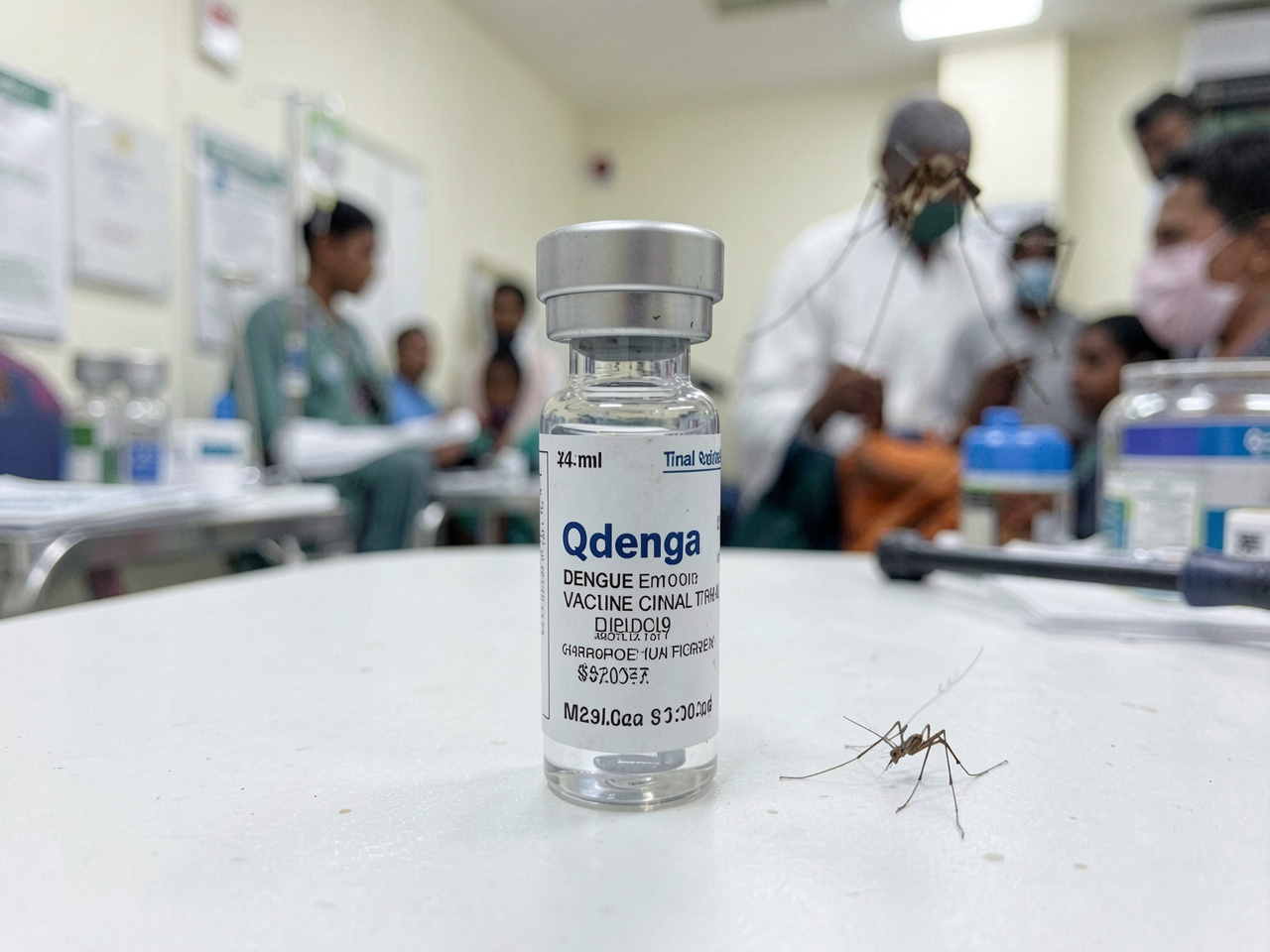
Qdenga, a dengue vaccine, will be potentially rolled out in 2026, and the vaccine is set to get approved via clinical trials and approval from the Central Drug Authority of India (CDSCO) to ensure safety among the varied Indian population amid increasing climate change risks and varied strains of the disease. A Japanese pharmaceutical company named Takeda Pharma is set to make TAK-003 available in India through a manufacturing partnership with Hyderabad-based Biological E (Bio E), in line with the 'Make-in-India' initiative.
Dengue is a mosquito-borne illness whose prevalence is rising throughout the seasons in India. According to the research published in the Bioinformation journal, a 39.4% increase in dengue cases was recorded between 2014 and 2023, and the cluster outbreaks of dengue have been recorded in Tamil Nadu, Karnataka, and Maharashtra. Dengue poses a significant disease burden, as it involves around-the-clock medical care and a personalised approach to achieve complete recovery.
What Is Qdenga?
NDTV spoke to Dr Rashmi Khadapkar, GM of Research and Development and Section Head of Molecular Infectious at Agilus Diagnostics, who explained that "dengue remains hyperendemic in India, with all four virus serotypes circulating and causing recurring outbreaks, especially during the monsoon." This is why the Qdenga vaccine is a needed step to tackle the rising disease burden from dengue outbreaks.
It has already been approved for use in over 40 countries, which include Europe, the United Kingdom, Indonesia, and Brazil.
As India has a large and varied demographic and climate change challenges cause mutations in the mosquito strains that can impact the incidence of dengue cases, a vaccine is the need of the hour.
Qdenga is the most comprehensively studied dengue vaccine, with over 60,000 participants globally. It has already been approved in over 40 countries and has received World Health Organization (WHO) prequalification, signalling global confidence in its safety and efficacy. It was launched in 2023, and 10 million doses have been sold.
NDTV also spoke to Dr. Hari Kishan Boorugu, Consultant Physician and Infectious Disease Specialist, Yashoda Hospitals, Hyderabad, that coveyed about the dengue vaccine in detail. He had this to say, “ unlike earlier vaccines such as Dengvaxia, which had limitations and were recommended only for individuals with prior dengue infection, Qdenga is a live attenuated tetravalent vaccine designed to provide protection against all four dengue virus serotypes—DEN1, DEN2, DEN3, and DEN4. "
Also Read: India Close To Dengue Vaccine: All About The Phase 3 Trials And More
How Qdenga Works
NDTV also spoke to Dr Neha Rastogi, who is a Senior Consultant of Infectious Diseases at Fortis Memorial Research Institute in Gurugram, who explained how Qdenga works: "The vaccine has been specifically designed to be effective even in people who have had a dengue infection previously. It is typically administered in two doses, spaced a few months apart, and is suitable for individuals regardless of prior dengue infection, an important advantage over earlier vaccines."
"Medical experts caution that while the vaccine is promising, it is not a standalone solution. Preventive measures such as controlling mosquito breeding, using repellents, and maintaining hygiene will still play a crucial role. The vaccine should be seen as an additional layer of protection, especially in high-risk and dengue-endemic regions."
The vaccine's administration process was explained by Dr Rashmi Khadapkar, who said that it is "typically injected in two doses, typically spaced three months apart, and is expected to reduce both the risk of infection and severe complications such as hospitalisation.
Clinical data have shown strong protection, particularly against severe dengue outcomes, which is crucial in a country where hospital systems often get overwhelmed during outbreaks."
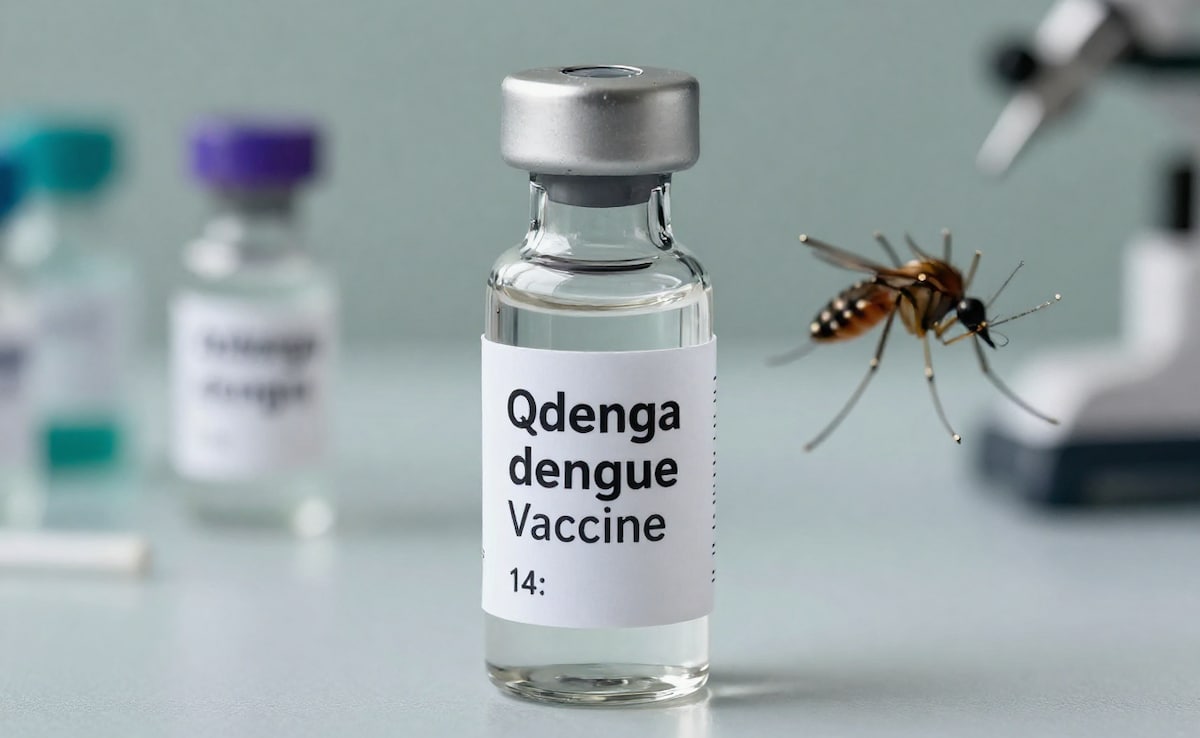
Qdenga vaccine against dengue (image is for representation purposes only)
Photo Credit: A.I generated image
Doctor Explains What This Means For India
Dr Neha Rastogi went into great detail about the vaccine and had this to say about it along with "healthcare professionals also highlight the importance of public awareness. Once introduced, guidelines will specify who should receive the vaccine first likely prioritising vulnerable populations and areas with frequent outbreaks. As with any vaccine, mild side effects such as fever, headache, or soreness at the injection site may occur, but serious adverse reactions are considered rare.
Overall, the arrival of Qdenga in India could mark a significant step forward in public health. If implemented effectively alongside existing prevention strategies, it has the potential to reduce the burden of dengue and save countless lives."
Also Read: India Close To Launching Dengue Vaccine, Final Trials Underway
Who Should Get It?
When it comes to the dengue vaccine, the people who should definitely get it are as follows:
- People who are in high-risk groups, such as children, who are unable to get timely help, as symptoms take a couple of days to manifest.
- The elderly are at risk, as dengue causes severe health complications once it infects the host body.
- Travellers need it to avoid contracting an infection that can ruin their travel plans, as people tend to go outdoors while travelling, as their environment changes.
- People who work in open spaces should get it on priority, along with urban populations, as the dengue mosquito could bite you at any time.
- Guidelines regarding the vaccine are expected from the Indian Council of Medical Research (ICMR) and the Ministry of Health and Family Welfare (MoHFW).
Safety And Side Effects Of The Vaccine
Every vaccine is designed to build immunity against the infectious strain and can react differently in individuals. So, people should be aware of the common side effects that include fever, fatigue, and pain at the injection site, as is the case with most vaccines.
Availability And Rollout Plans Of The Vaccine Rollout
There is generally an established timeline that is decided based on the average time taken for a safe launch and administering processes for a large population.
When it comes to the exact approval and distribution plans, it is expected by the Indian Council of Medical Research (ICMR) and the Ministry of Health and Family Welfare (MoHFW).
The individual state health departments and vaccine centres play a crucial role in vaccine rollout; hence, the pace at which they work once the vaccine is approved for use in India will matter.
Public Health Implications Of The Dengue Vaccine
Currently, dengue is controlled via regular spraying of mosquito-killing chemicals in urban dwellings along with precaustions like appropriate clothes for full skin coverage to avoid mosquito bites, but the approach to control dengue will be modified once the vaccine is rolled out. Once the vaccine can be safely administered, it needs to be integrated with existing mosquito-borne disease programmes for maximum effectiveness.
Qdenga offers hope, but prevention still relies on holistic strategies, as the dengue-causing mosquito needs to be killed at its source to eliminate the risk. Currently, people need to watch for updates from health authorities regarding the vaccine rollout.
Disclaimer: This content, including advice, provides generic information only. It is in no way a substitute for a qualified medical opinion. Always consult a specialist or your own doctor for more information. NDTV does not claim responsibility for this information.