

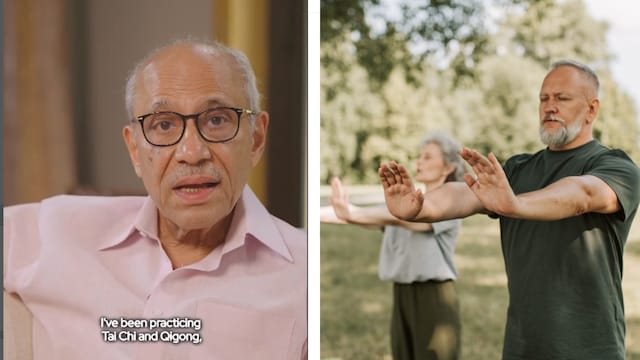
Tai Chi has gained popularity over the past few years for all the right reasons. It offers an impressive combination of gentle physical movements, stretching and mindfulness. For the unversed, Tai Chi is a mind-body practice originating from ancient China that combines slow, deliberate movements, meditation, and deep breathing. It is often referred to as meditation in motion. It consists of a series of continuous, flowing movements. Unlike intense workouts, Tai Chi puts minimal stress on muscles and joints, making it highly accessible for all ages and fitness levels. In an Instagram video, renowned cardiologist Dr. Alok Chopra revealed that he has emptied all his gym equipment. "I found something new. For the last 6 to 8 months, I have been practising Tai Chi and Qigong. And I feel extremely good doing it," he said.
"Tai Chi is an ancient Chinese practice which combines slow, flowing movements with controlled breathing and focus. And don't let those slow movements fool you. Your whole body is working. Your legs, your hips, your ankles are working on strength, stability and balance. Your core and back are supporting your posture," he added.
The core principles of Tai Chi
- Continuous movement: Slow, graceful postures that transition smoothly into one another without pausing.
- Deep breathing: Diaphragmatic breathing synchronised with the movements to calm the nervous system.
- Focused attention: Mindful awareness of bodily sensations, alignment, and the flow of energy
"While your shoulders, arms and spine are constantly moving through controlled ranges of motion. But what I particularly like is that it's not just working on your body. It's working on your mind too," he stated.
READ | Tai Chi Is For Everyone. Why Indians Can Benefit Too?
What are the benefits of Tai Chi?
Muscle strength and flexibility
Even though it looks effortless, Tai Chi builds significant upper and lower body strength. Supporting your full body weight on one alternating leg trains the quadriceps, glutes, and core.
Postural control
It emphasises a straight, elongated spine. This helps undo the physical damage of prolonged sitting and improves overall posture.
Active mindfulness
For individuals who find sitting meditation difficult, Tai Chi offers a physical alternative. The demand for coordinating breath, feet, and hands leaves little room for racing thoughts.
Mood regulation
Regular practice acts as a natural mood stabiliser by promoting the release of endorphins and reducing systemic inflammation linked to psychological distress.
READ | Tai Chi Walking vs Normal Walking: Which One Is More Beneficial To Your Joints?
"I have followed breathwork and breathing exercises for most of my life, and I still do that. Tai Chi brings the same connection between movement, breathing and mental focus. It can help with balance, coordination, mobility and body awareness."
"Regular practise may also help with stiffness, arthritis and certain kinds of chronic pain while helping you feel calmer and more relaxed. And as we grow older, I think this becomes even more important. You don't necessarily need faster, harder, more punishing workouts," the cardiologist explained.
Dr. Chopra concluded that Tai Chi is gentle on the joints but still challenges your body and your brain. "I have been doing this for 6 to 8 months now, and I genuinely enjoy it."
Disclaimer: This content including advice provides generic information only. It is in no way a substitute for a qualified medical opinion. Always consult a specialist or your own doctor for more information. NDTV does not claim responsibility for this information.