

)
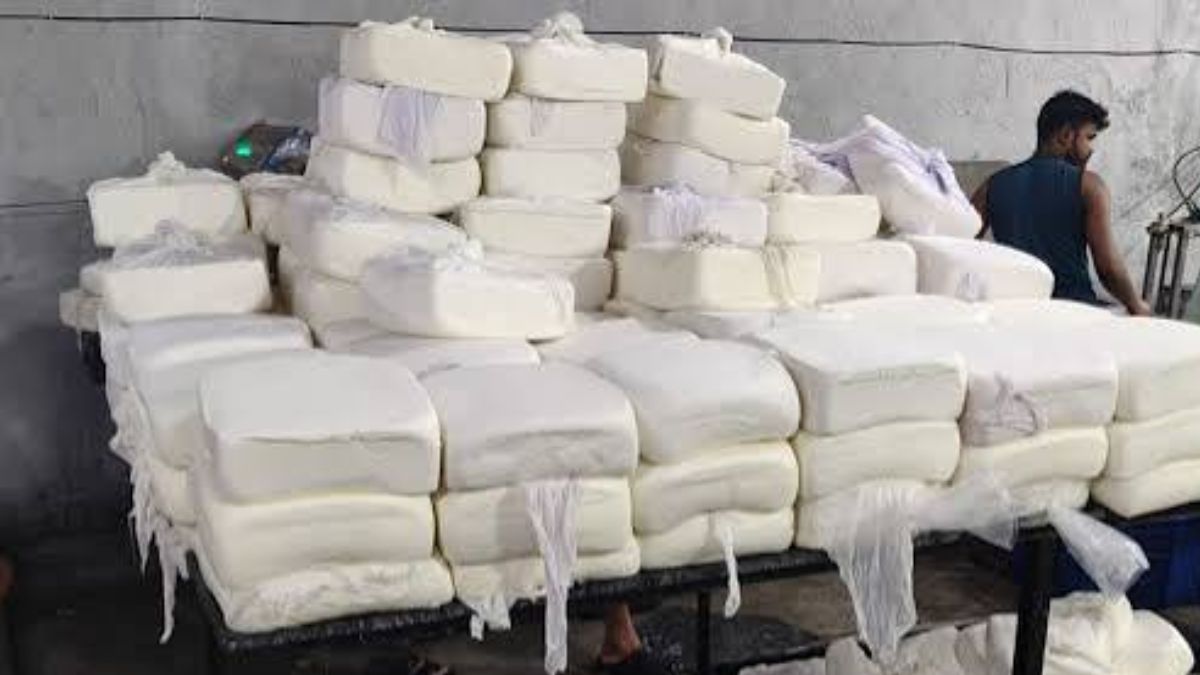
Analogue paneer has become popular as the Food Safety and Standards Authority of India (FSSAI) has recently banned analogue paneer due to mislabelling and health concerns associated with it. This official ban has been adopted in the states of Chhattisgarh, Maharashtra, and Gujarat, as the FSSAI is focusing on making active efforts to crack down on food adulteration in the selling of dairy products. Traditionally, paneer is prepared using 100% dairy, but analogue paneer is prepared using vegetable fats and food additives. Thus, the health concerns arise as it is processed, and the quality of ingredients used to prepare it makes it risky when it comes to long-term consumption practices.
Paneer is eaten by a vast majority of Indians, and if the quality of the food product is substandard, then the effects on health can be concerning. The ingredients that are used to prepare analogue paneer are a major factor that has led the FSSAI to ban the product. Mainly, ingredients such as vegetable fats, hydrogenated fats, and emulsifiers, and the ultra-processed nature of analogue paneer have made it a food product that could cause health issues.
What Is Analogue Paneer?
Analogue paneer is manufactured as the consumption of paneer is higher than the supply. The demand for paneer due to its texture and taste has made the food industry focus on supplying alternatives. The use of milk solids, vegetable oils, emulsifiers, and stabilisers in analogue paneer has made it mimic that of traditional paneer. But the internal effect on your health is vastly different. The paneer substitute has low protein and high processed fats, and the nature of its manufacturing can even make it classified as an ultra-processed food. Even important vitamins and minerals are present in minimal quantities in analogue paneer, making it an unhealthy replacement for fresh paneer.
Analogue Paneer vs Regular Paneer: What's The Difference?
The exact differences between analogue paneer and regular paneer are based on their base ingredients. Fresh paneer is prepared from fresh milk, preferably full-fat cow milk, while analogue paneer uses milk solids, vegetable fats, and other low-cost ingredients.
Protein Content
Fresh paneer contains a higher amount of protein than analogue paneer, as milk proteins are used to prepare it. Fresh cow milk is boiled up to a certain temperature, and after coagulation, the milk proteins, such as whey and casein, are condensed. This process provides all essential amino acids, and mainly vegetarians and those on a plant-based diet consume fresh paneer as their go-to protein source.
On the other hand, analogue paneer is prepared from skim milk powder, vegetable fats, starches, and emulsifiers with varying protein levels. The quality of the ingredients used can make their quality inferior, and the corresponding effects on your health can only be felt after you consume the product for a long time.
Fat Quality
Fresh paneer contains condensed milk fat, saturated fat, phospholipids, and naturally occurring fats necessary for a healthy diet. While analogue panner uses a dangerous ingredient known as palm oil, which is not only proven to cause heart issues. The World Journal of Cardiology has flagged palm oil consumption with a rise in bad cholesterol, and it is even known to be an environmentally destructive food ingredient.
Processing Levels
The processing levels of fresh and analogue paneer differ vastly, as fresh paneer contains minimal ingredients and has limited industrial processing. But analogue paneer is highly processed, as it tries to mimic fresh paneer, but it doesn't.
Taste And Texture
Analogue paneer matches the outside appearance of fresh paneer, but it can't when it comes to its nutritional value.
Nutritional Value Of Analogue Paneer
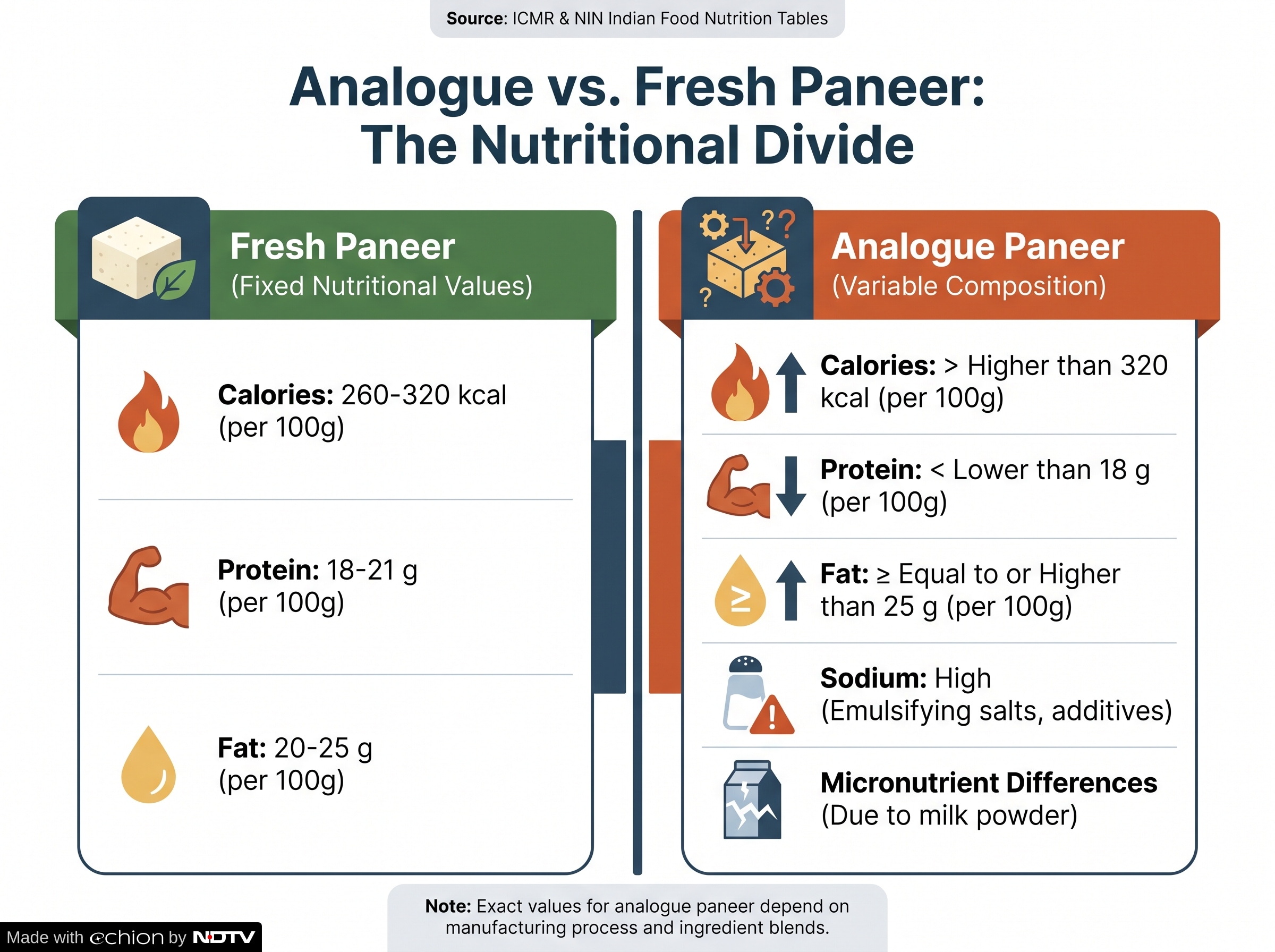
The Indian Food Nutrition Tables published by the Indian Council of Medical Research (ICMR) and National Institute of Nutrition (NIN) suggest that fresh paneer has fixed nutritional values, while analogue paneer doesn't, as the ingredients used to prepare it differ. The exact manufacturing process influences their nutritional composition. But on an approximate scale, here are the nutritional values of analogue paneer:
- Calories: Higher than 260-320 calories per 100 g
- Protein: Lower than 18-21 g per 100 g
- Fat: Equal to or higher than 20-25 g per 100 g
- Saturated fat: Depends on the oil blend and milk type used to prepare it.
- Sodium: High sodium level, as it contains emulsifying salts, additives, and processing ingredients.
- Micronutrient differences as milk powder is used in the preparation process.
How Does Eating Analogue Paneer Impact Your Health?
Analogue paneer has been created to cut costs and increase the shelf life of the product, but the health risks are immense. Due to the highly processed nature of the dairy product, there are concerns associated with the following:
- Vegetable fat quality varies by manufacturer, which makes it unhealthy for regular consumption.
- Possible higher sodium content exposes risks for those who have hypertension and high blood pressure.
- Fewer naturally occurring nutrients than in fresh paneer make it a nutrient-deficient, inferior product.
Is Analogue Paneer An Ultra-Processed Food?
Yes, but the exact classification varies based on the established food standards and regulatory framework. The exact list of ingredients used influences the classification, and if there are too many emulsifiers and additives, then it can also be termed a highly processed food source.
How To Identify Analogue Paneer
You can easily identify analogue paneer from fresh paneer by following this checklist:
- Read ingredient labels to distinguish if the paneer is fresh or not.
- Check for vegetable oils and emulsifiers, as they can decrease the nutritional value of the dairy product.
- Assess texture and melting behaviour, as fresh paneer will break down when pressure is applied, or it is cooked, but analogue paneer will retain its integrity.
- Buy from trusted brands and vendors to avoid adulteration in dairy products.
Who Should Be Careful?
Those who are dealing with pre-existing medical conditions need to be extremely careful of their analogue paneer consumption. They can suffer from worsening internal health and consequently end up with a lifestyle disease.
Here are the people who should not be eating any type of analogue paneer in their diet:
- People with heart disease, as the ingredients in it are proven to be damaging to the heart.
- High cholesterol patients should be especially careful.
- Individuals trying to reduce ultra-processed foods should skip this product altogether.
- Children relying on paneer as a major protein source should only consume fresh paneer.
Tips For Choosing Healthier Paneer Options
If you want to make better dietary choices and choose the healthier paneer option, then you need to follow this checklist:
- Prefer fresh paneer, when possible, as it provides maximum health benefits.
- Compare labels carefully to assess your food choices.
- Watch the sodium and saturated fat content on the food label.
- Balance intake within an overall healthy diet to ensure balance.
Analogue paneer has been rightfully banned in multiple Indian states as it poses health risks. You need to ensure that you are reading the label of your paneer before consuming it to preserve your internal well-being.
Also Read: Fibre Types Explained: How Chia Seeds, Flaxseeds, And Psyllium Husk Affect Your Body Differently
Disclaimer: This content including advice provides generic information only. It is in no way a substitute for a qualified medical opinion. Always consult a specialist or your own doctor for more information. NDTV does not claim responsibility for this information.