

)
The human body goes through several changes at every stage of life. While some health issues are easy to identify, such as a fever or a visibly noticeable change in the body, others can develop slowly and may not be as obvious. A deficiency, for instance, can sometimes cause unusual symptoms that gradually affect your health, leaving you wondering what could be behind them. Health and wellness expert Luke Coutinho recently shared a video on Instagram addressing some of these signs.
He asks, “Has your hair been falling more than usual? Or has your skin started looking dull or paler than usual? Or do you feel tired even after a full night of deep sleep? Do you find it harder to focus than you used to?”
According to Luke, while these symptoms are often blamed on stress, poor sleep or ageing, they could also be linked to low ferritin levels.
Luke says, “Ferritin is your body's iron storage protein. Think of it as your body's iron reserve. Long before your haemoglobin drops, your ferritin levels can be depleted, which means you may start experiencing symptoms even when you are not yet anaemic.”
He adds that iron deficiency is common in India, particularly among women, and can be linked to heavy menstrual bleeding, poor dietary intake, digestive issues or reduced iron absorption.
Rather than only checking whether haemoglobin is normal, Luke says, “What we should be asking is why is my ferritin low?” He adds that understanding the underlying cause helps avoid repeatedly dealing with the same problem, and he recommends iron-rich whole foods alongside medical advice.
Luke also highlights a few nutrients that deserve attention for supporting healthy iron levels. Vitamin C can improve iron absorption from plant-based foods, so he recommends pairing iron-rich meals with foods such as amla, guava, citrus fruits, kiwi, or capsicum. Adequate protein is also important for the body to build and transport iron efficiently. Options include dals, legumes, dairy, eggs, fish, poultry, tofu, and tempeh.
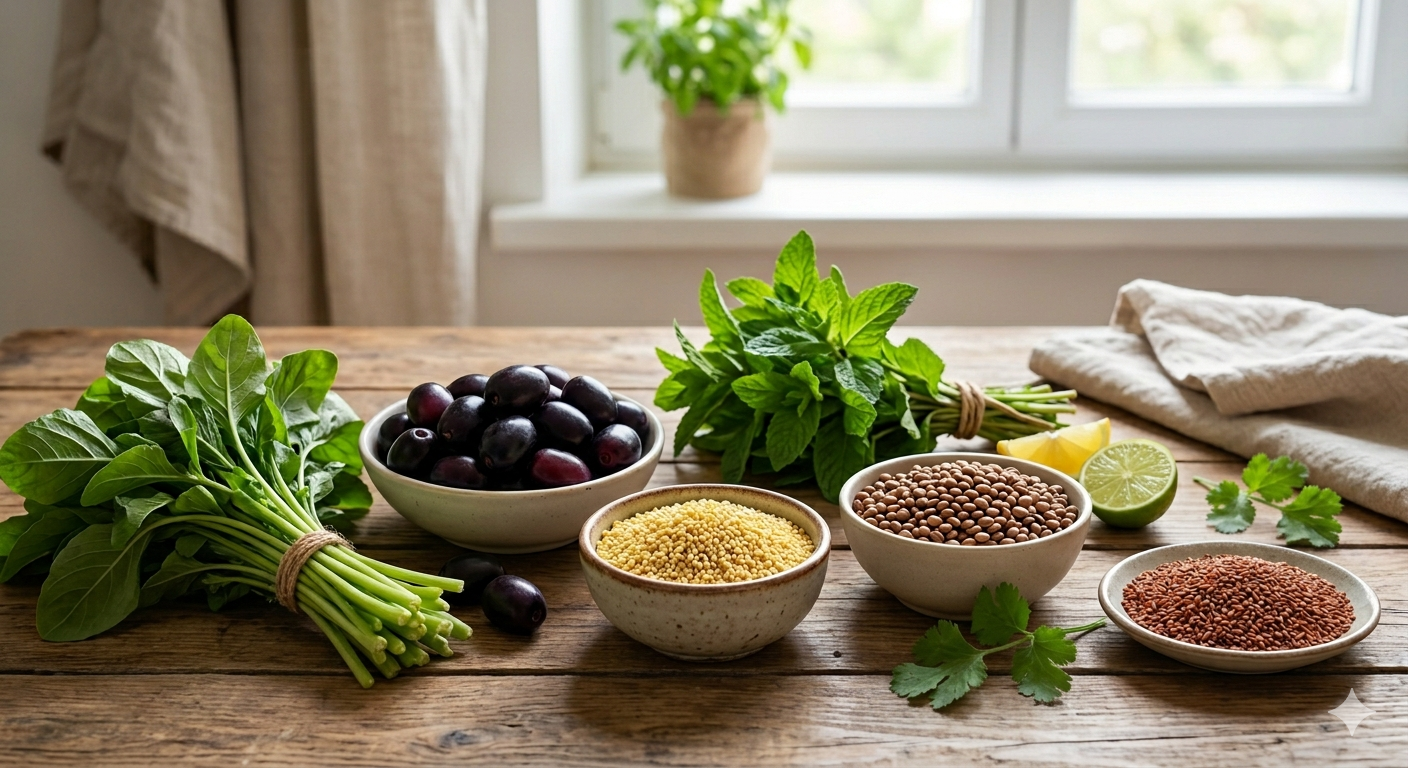
He also points to copper, a lesser-known mineral that plays a role in iron metabolism, which can be obtained from nuts, seeds, cocoa, mushrooms, sesame seeds and lentils. Folate and vitamin B12 are important too, as both support healthy red blood cell production and low levels can contribute to fatigue and low energy. Along with these nutrients, he recommends including iron-rich whole foods such as garden cress seeds (halim), lentils, chickpeas, pumpkin seeds, soy, tofu, tempeh, eggs, fish and poultry rather than relying only on sources like spinach.
Luke also suggests a few simple habits to support healthy iron levels. He recommends pairing iron-rich meals with vitamin C-rich foods to improve absorption and keeping tea and coffee at least an hour away from iron-rich meals. He also suggests using cast-iron cookware for certain dishes, depending on your cooking style. However, he cautions against self-prescribing iron supplements, as too much iron can also be harmful, and advises seeking medical guidance before starting supplementation.
Remember, your gut health, sleep quality, stress levels, movement, and overall dietary pattern all influence how well your body absorbs and utilises iron.
Disclaimer: This content including advice provides generic information only. It is in no way a substitute for a qualified medical opinion. Always consult a specialist or your own doctor for more information. NDTV does not claim responsibility for this information.