&w=1920&q=50)
The arrival of the monsoon brings a collective sigh of relief from the scorching summer heat, but it also signals a sharp, predictable rise in hospital visits. As cities grapple with waterlogging, humidity, and compromised sanitation, a wave of gut infections quietly sweeps across households. Symptoms like sudden vomiting, watery diarrhea, and debilitating stomach cramps leave many assuming they have simply fallen victim to a bad batch of street food. However, what looks like classic food poisoning could very well be infectious gastroenteritis. While the two conditions share an overlapping symptomatic profile, understanding their distinctions is critical for timely medical care and preventing household outbreaks.
What Is Gastroenteritis?
Commonly referred to as "stomach flu", gastroenteritis is an inflammation of the stomach lining and the intestines. It is primarily driven by viral pathogens like norovirus and rotavirus, though bacterial invaders can also be responsible. The defining trait of gastroenteritis is its highly contagious nature. It spreads easily from person to person via the faecal-oral route, contaminated surfaces, or close personal contact, making it a frequent culprit behind multiple sicknesses within a single family or workplace.
What Is Food Poisoning?
Food poisoning is an isolated toxic event occurring directly from the consumption of food or water contaminated with pathogenic bacteria such as E. coli, Salmonella, or Campylobacter, or their pre-formed toxins.
Unlike gastroenteritis, food poisoning is strictly non-contagious; it cannot be passed from one individual to another. Multiple people will only fall ill if they independently consume the exact same contaminated food item or batch.
Gastroenteritis vs Food Poisoning: Key Differences
While the biological battlefield remains the human digestive system, the timeline and transmission mechanics diverge significantly.
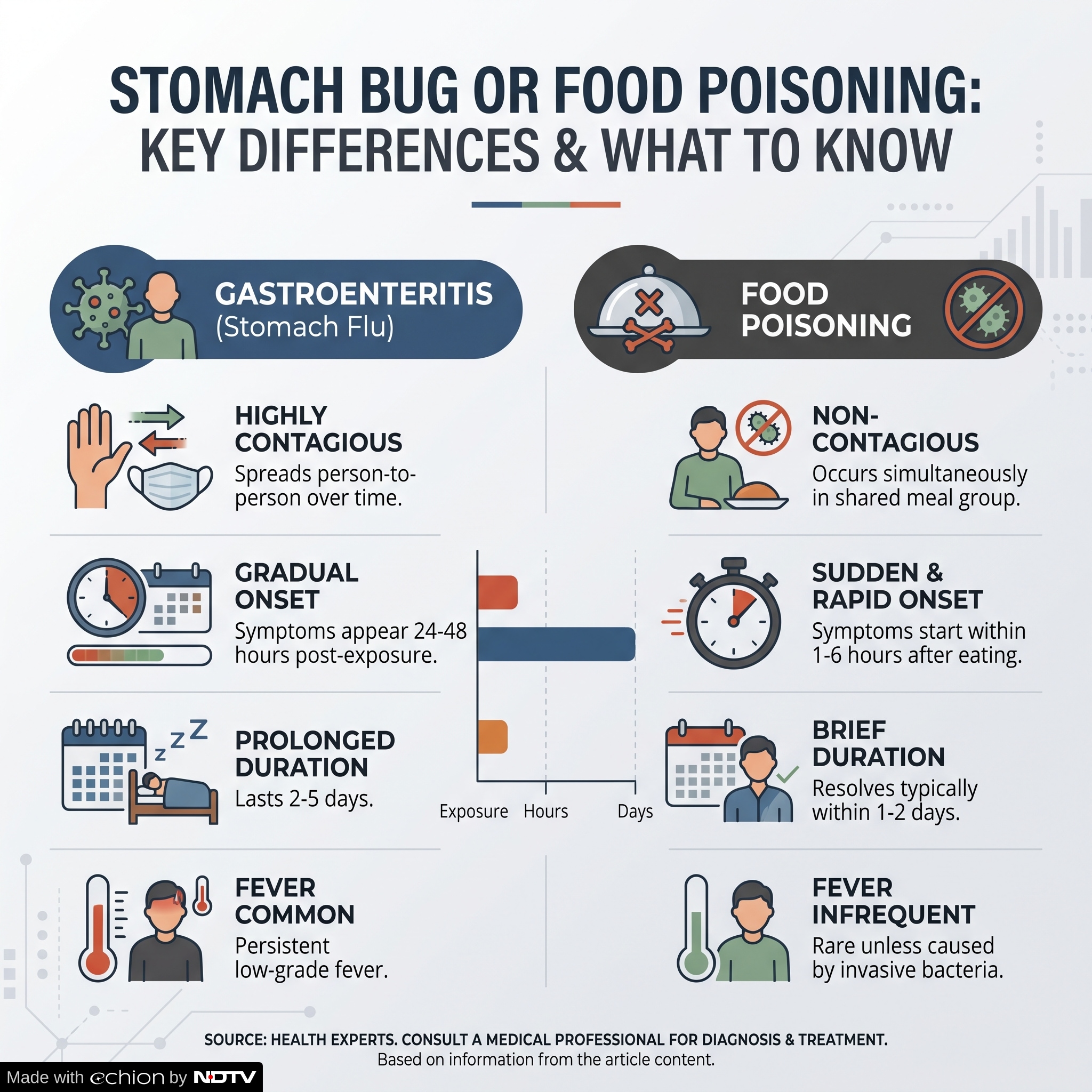
Also Read: Worst And Best Drinks For Gut And Liver Health You Should Know About
Symptoms To Watch For
Distinguishing between the two requires a close evaluation of how symptoms develop and what secondary signs accompany the stomach distress.
1. Common Overlapping Symptoms
Both conditions present with core gastrointestinal distress:
- Frequent watery diarrhea
- Nausea and acute vomiting
- Abdominal pain and localised cramps
2. Gastroenteritis-Specific Signs
Because it is a systemic viral or bacterial infection, gastroenteritis often presents like a flu of the gut, causing:
- A persistent low-grade fever and mild chills
- Generalised body aches and muscle pain
- Deep fatigue and lethargy
- A gradual worsening of symptoms over a 24-hour period
3. Food Poisoning-Specific Signs
Food poisoning acts as a sudden toxic shock to the gut, characterised by:
- Violent, sudden projectile vomiting shortly after eating
- Severe, sharp abdominal spasms
- The potential appearance of blood in the stool (in invasive bacterial cases
- A localised cluster of identical illnesses among individuals who shared the same plate
Why These Conditions Spike In Monsoon
The rainy season creates a perfect ecological storm for digestive pathogens. Flooding and heavy downpours routinely overwhelm old municipal drainage networks, causing sewage to mix into groundwater reserves.
A comprehensive meta-analysis published in the journal PMC Environmental Health validates this environmental pattern, demonstrating that heavy rainfall events systematically flush concentrated pathogen loads into local water supplies, drastically escalating the baseline incidence of diarrhoeal diseases.
Simultaneously, the high humidity and moderate temperatures of the monsoon create an ideal incubation zone for bacteria to multiply rapidly on ambient-temperature foods. This is particularly true for roadside snacks, open condiments, and cold juices that utilise unboiled water or contaminated ice cubes.
Treatment And Recovery
The clinical management of these gut issues relies heavily on standard supportive therapy, though specific interventions vary by severity.
Gastroenteritis Management
Because the vast majority of cases are viral, antibiotics are entirely ineffective. Treatment focuses heavily on absolute rest and aggressive fluid management using Oral Rehydration Solutions (ORS) to replace lost electrolytes. The illness is typically self-limiting and clears as the immune system clears the virus.
Food Poisoning Management
Mild cases require standard oral rehydration and a temporary pause on solid foods until acute vomiting subsides. However, if diagnostic tracking reveals an aggressive bacterial infection such as Salmonella, targeted antibiotics may be prescribed by a medical professional.
Also Read: Doctor Shares 8 Facts About The Gut And Liver That Could Change How You Think About Health
When To See A Doctor
While many cases resolve with home-based hydration, certain red flags require immediate clinical intervention. A study detailed in PMC Public Health Analysis highlights that extreme weather spikes correlate sharply with severe gastrointestinal hospital admissions, particularly among vulnerable groups like young children and the elderly, who can suffer rapid cardiovascular decompensation from severe fluid loss.
Medical attention must be sought immediately if an individual experiences:
- Signs of severe dehydration (dry mouth, dizziness, dark urine, or an inability to urinate)
- Persistent vomiting that prevents the retention of any oral fluids
- Visible blood or deep mucus in the stool
- A high-grade fever exceeding 101 degree F (38.3 degree C)
- Symptoms that fail to improve or actively worsen after 48 to 72 hours
Prevention Tips To Avoid Monsoon Infections
Protecting the gut during the rainy season requires uncompromised vigilance regarding oral intake:
- Boil Your Water: Drink only filtered or actively boiled water. Avoid ice cubes from commercial or unknown sources.
- Eat Fresh and Hot: Consume meals immediately after cooking. Avoid stale leftovers or food left uncovered at room temperature, where bacterial replication peaks.
- Enforce Hand Hygiene: Wash hands vigorously with soap and clean water for at least 20 seconds before preparing food, eating, or using public transit.
- Rethink Street Food: Steer clear of high-risk street foods that rely on raw water, unwashed leafy greens, or uncooked chutneys.
Distinguishing between gastroenteritis and food poisoning comes down to evaluating the onset timeline, the presence of systemic symptoms like fever, and how widely the illness spreads within a household. Early identification ensures that families can implement strict isolation and hygiene protocols for contagious gastroenteritis or rapidly identify a contaminated food source in cases of food poisoning, leading to faster recovery and effective prevention.
Disclaimer: This content including advice provides generic information only. It is in no way a substitute for a qualified medical opinion. Always consult a specialist or your own doctor for more information. NDTV does not claim responsibility for this information.