

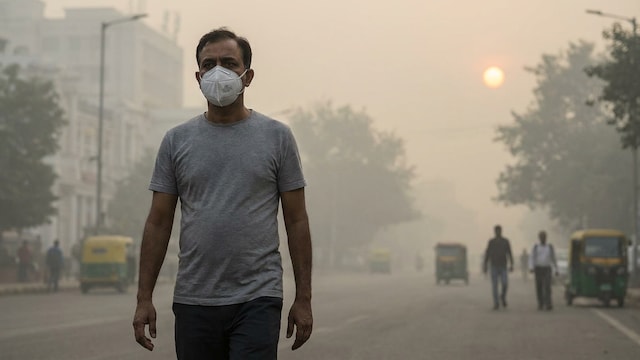
Delhi-NCR is once again struggling with toxic air. On November 10, Delhi's overall AQI was 311 at 6 AM, placing it in the 'very poor' category. Several other monitoring stations were close to the 'severe' mark. Chandni Chowk recorded an AQI of 400, while Pusa recorded 398 and NSUT Jaffarpur 384. Despite such conditions, morning walks remain a regular part of the routine for many people in Delhi-NCR. For some, walking is an easy way to stay active, manage weight and improve heart health, while older adults may rely on it as their main form of exercise.
However, when the air quality becomes very poor or severe, the question is whether the benefits of walking still outweigh the health risks. Experts have specifically advised residents to avoid outdoor walks and exercise when pollution levels are high, particularly during the early morning hours when pollutants can remain trapped close to the ground.
Should You Go For A Morning Walk When AQI Is Severe?
If the AQI is in the severe category, it is better to skip an outdoor morning walk and exercise indoors instead. The National Centre for Disease Control advises the general population to avoid outdoor morning and late-evening walks, runs, jogging and physical exercise on days when the AQI is in the poor to severe category. This is important because walking increases your breathing rate. During a brisk walk, you inhale more air than you would while sitting or doing a light indoor activity. If that air contains high levels of fine particulate matter such as PM2.5, you can inhale more pollutants.
The risk is not limited to people with asthma or other lung diseases. Healthy people can also experience irritation and breathing symptoms after exposure to highly polluted air.
Why Morning Walks Tend To Be Riskier During Pollution
Morning air does not necessarily mean it is cleaner. During winter and post-Diwali pollution episodes, cooler temperatures, weak winds and atmospheric conditions can prevent pollutants from dispersing.
Delhi authorities and health experts have repeatedly warned about early-morning outdoor activity during pollution episodes. Morning walks should be reconsidered during the pollution season because cold, still air can trap pollutants close to the ground, particularly between 6 AM and 9 AM. So, simply going to a park may not solve the problem. A green space can be pleasant for walking, but it does not give you a protective space against polluted air.
What Happens When You Walk In High AQI?
1. You may inhale more pollutants
Walking increases your breathing rate. This means more polluted air can enter the respiratory system. Fine particles such as PM2.5 can travel deep into the lungs. A study analysing pollution exposure from 2019 to 2023 found substantial particulate-matter exposure among people during walking and commuting periods.
2. Your throat and airways can become irritated
High pollution can irritate the nose, throat and airways. Some people may experience coughing, throat irritation, phlegm or a burning sensation while breathing. These symptoms may be more noticeable when you are exercising because you are breathing faster and taking deeper breaths.
3. Asthma symptoms can worsen
For people with asthma or other respiratory conditions, polluted air can trigger or worsen symptoms. This can lead to coughing, wheezing, chest tightness or difficulty breathing. Therefore, people who already have respiratory disease should avoid treating their usual morning walk as something they must complete regardless of the AQI.
4. Impact on the heart
Air pollution is not only a problem for the lungs. Fine particles can lead to inflammation and other changes in the body that may affect the cardiovascular system. Studies have linked air pollution exposure to a higher risk of cardiovascular problems, especially in vulnerable people.
5. Exercise can increase your exposure
The problem is not walking. It is exercising outdoors while breathing polluted air. The harder you exercise, the more air you inhale and this eventually can increase the amount of air pollutants entering your respiratory system.
What Should You Do Instead?
When the AQI is severe, consider replacing your outdoor walk with indoor activity. Walking inside your home, using a treadmill, doing light strength exercises or following an indoor workout routine can help you stay active without unnecessary outdoor exposure.
However, if you absolutely need to step outside, check the AQI for your area rather than relying only on the city-wide figure. Avoid busy roads and areas with heavy traffic, and consider using a N95 or similar mask.
Disclaimer: This content including advice provides generic information only. It is in no way a substitute for a qualified medical opinion. Always consult a specialist or your own doctor for more information. NDTV does not claim responsibility for this information.