

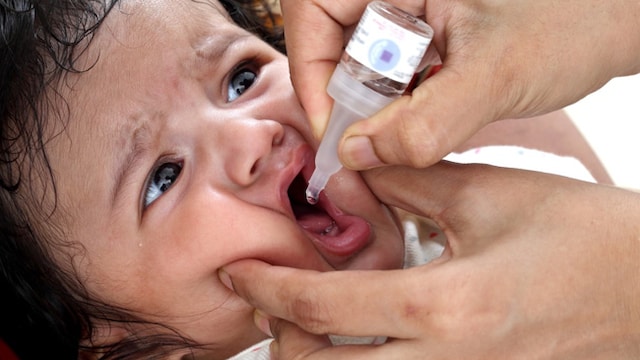
World Polio Day is observed on October 24 every year. This global event aims to raise awareness about the critical importance of vaccination to eradicate poliomyelitis (polio). It also honours the contributions of frontline workers, volunteers, and parents in eliminating the devastating disease. The theme for World Polio Day 2026 is "One Day. One Focus: Ending Polio." Polio is a viral infection that can cause permanent paralysis and, in severe cases, death. The polio vaccine is the only defence against poliomyelitis. There is no cure for polio; vaccination is the only way to protect children and completely eradicate the disease.
Although India has remained free of wild poliovirus cases since 2011, vaccination remains essential because the virus continues to circulate in parts of the world. Maintaining high vaccination coverage is important to protect children and prevent its return. On World Polio Day 2026, here are 5 crucial facts about polio that every parent must know.
5 crucial facts abput polio vaccine
Injectable (IPV) vs Oral (OPV)
The inactivated polio vaccine (IPV) is given by injection and builds antibodies that protect against paralytic disease. The oral polio vaccine (OPV), given as drops, also builds intestinal immunity that helps limit the spread of the virus. Both have an important role in polio prevention.
Does a child still need OPV if IPV is given?
Yes, parents should follow the recommended national immunisation schedule, which includes both IPV and OPV. The vaccines provide complementary protection. During Pulse Polio campaigns, eligible children should receive the additional OPV dose even if routine vaccinations are up to date.
READ | Pulse Polio Campaign: Why Does India Need An Immunisation Drive Despite Being Polio-Free?
Does a child still need OPV if IPV is given
Under India's Universal Immunisation Programme, OPV is given at birth, at 6, 10 and 14 weeks, with a booster at 16 to 24 months. Fractional doses of IPV are scheduled at 6 and 14 weeks. Parents should maintain the child's immunisation record and consult a paediatrician if any dose has been missed.
Can a child get polio if they are vaccinated?
No vaccine provides absolute protection, but completing the recommended doses offers strong protection against paralytic polio. Missed doses and gaps in community vaccination can leave children vulnerable, which is why routine immunisation and campaign doses remain important.
READ | Poliovirus Detected In Ghaziabad Sewage: Is There A Health Risk?
Repeated doses are safe
Extra doses during Pulse Polio campaigns are safe and help strengthen community protection. Polio can cause lifelong disability, and there is no cure once paralysis develops. Vaccination remains the most effective way to prevent the disease and protect every child.
When a high percentage of a community is vaccinated, the virus loses its ability to find new hosts and spread. This indirectly shields newborns and individuals who cannot be vaccinated due to medical reasons.
(Dr. Vineet Kwatra, Senior Consultant Paediatrics, Fortis Hospital Manesar)
Disclaimer: The opinions expressed within this article are the personal opinions of the author. NDTV is not responsible for the accuracy, completeness, suitability, or validity of any information on this article. All information is provided on an as-is basis. The information, facts or opinions appearing in the article do not reflect the views of NDTV and NDTV does not assume any responsibility or liability for the same.