

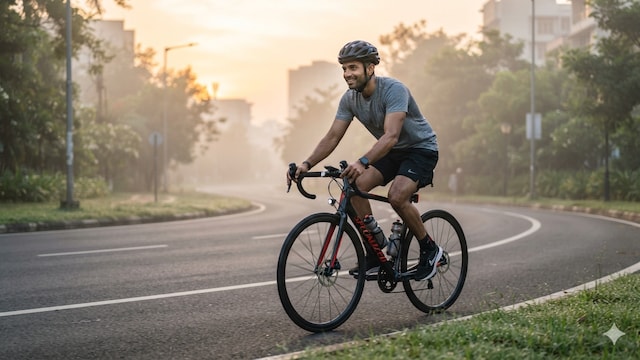
Cycling is an excellent cardio exercise which offers a variety of physical and mental health benefits. It helps strengthen the heart, improve circulation, and can lower the risk of heart disease and high blood pressure. Unlike running or other high-impact exercises, cycling is gentle on the joints, making it suitable for people of all ages and fitness levels. Additionally, cycling helps with weight management, improves muscle strength and enhances coordination and balance. However, to your surprise, cycling can negatively affect male semen quality and quantity.
Does cycling impact male fertility?
Frequent and intensive cycling can negatively affect male semen quality and quantity, though evidence suggests it primarily impacts high-volume riders and does not definitively cause permanent clinical infertility.
"Cycling does not directly cause infertility, and men do not need to stop cycling to protect their fertility. However, long periods of cycling or cycling that is very intense for several hours each time on a normal seat might affect male reproductive health," says Dr. Chirag Bhandari - Andrologist and Male Reproductive Health Specialist.
According to a study published in the journal Fertility and Sterility, while general exercise does not harm sperm, men cycling more than or equal to 5 hours per week faced a nearly twofold increase in the risk of low sperm concentration and low total motile sperm.
"Long hours of cycling can put pressure on the area between the legs. Raise the temperature near the testicles. It can also reduce blood flow to the area temporarily and, over time, cause minor injuries or irritation. These issues might affect the quality of the semen, including the number of sperm, how well they move, and their shape," Dr. Bhandari explains.
Another study published in the Clinical Journal of Sport Medicine revealed that high-volume cycling triggered an increase in seminal inflammatory cytokines and oxidative stress, causing significant drops in sperm motility, morphology, and concentration that persisted even after 30 days of recovery.
"Cycling for fun, like 20 to 30 minutes each day, is usually seen as a low-impact exercise that can support overall health and sexual health. Using a seat that is made to reduce pressure on the area between the legs can also help," Dr. Bhandari adds.
What is the impact on sperm production?
The primary biological mechanisms driving these changes are scrotal hyperthermia- overheating of the testicles due to tight clothing and prolonged sitting, mechanical testicular microtrauma from saddle friction, and prolonged perineal pressure that restricts blood flow.
"Riding for long can cause scrotal hyperthermia. Hard, long workouts can also cause stress in the body and change hormones temporarily. A saddle that is not right can press on the nerves and blood vessels in the leg area. This might stop blood from flowing to the area."
"It is also important to remember that making sperm takes time. It takes two and a half to three months from the start of development until it is released. So changes in the quality of semen from lifestyle choices usually take months to show up, not a few days," explains Dr. Bhandari
What are precautions men should follow?
- Men who ride bicycles for long periods often need to be careful to prevent pressure and heat from building up around the private area. The first thing to do is not to ride for long periods without taking breaks.
- Picking the seat is also important. A seat that fits well should give support and should not push too hard on the area between the legs. Seats that are softer and have a hole or a cut-out in the middle can help take some pressure off that area.
- If riding for a while, men should stop often instead of staying seated all the time. Standing up while riding can also help take pressure off the area between the legs.
"The main thing is to not have much pressure on the area between the legs. Cycling for fun doesn't usually need to be avoided. Men who ride a lot or ride very hard should be careful about the seat they use, how they sit, and taking breaks. These simple steps can help reduce pressure and keep the private area comfortable and healthy."
What are the best exercises for male fertility?
"For fertility and overall sexual health, the focus should be on regular moderate-intensity physical activity rather than extreme training. Around 150-180 minutes of exercise per week can support overall health, which in turn benefits reproductive and sexual well-being.
Excessive or very intense training regularly may place additional physiological stress on the body."
"The goal should therefore be consistency and moderation. A balanced exercise routine, combined with recovery and a healthy lifestyle, is more supportive of male reproductive health than extreme or excessive training," Dr. Bhandari concluded.
(Dr Chirag Bhandari - Andrologist & Male Reproductive Health Specialist ; Founder - IASH Institute of Andrology and Sexual Health)
Disclaimer: This content including advice provides generic information only. It is in no way a substitute for a qualified medical opinion. Always consult a specialist or your own doctor for more information. NDTV does not claim responsibility for this information.