

)
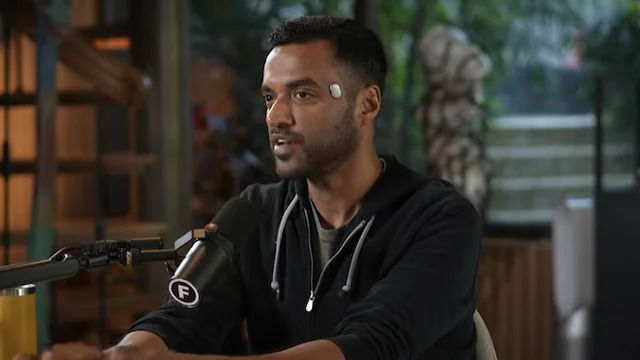
Deepinder Goyal's Temple wearable is getting closer to its commercial launch, and the Zomato and Eternal founder has now revealed more details about how the unusual device is worn and used. Unlike conventional smartwatches and fitness bands that sit on the wrist, Temple is designed to be attached to the side of the head, close to the temple. Goyal recently announced that the launch edition of Temple will be available in six colours: True Gold, Rose Gold, Black Mirror, Real Jade, Deep Blue and Purple Funk. He also said pre-orders could open as early as next week, with people on the early-access waitlist expected to receive priority. In a post on X, Goyal wrote, "Six colors for the launch edition of temple. Pre-orders open soon - hopefully next week; just need certainty on a couple more items. Folks on early access waitlist get priority access." But what exactly does Temple do, and how is it different from a smartwatch? More importantly, should the data from such a device be considered a medical measurement?
Six colors for the launch edition of @temple Pre-orders open soon - hopefully next week; just need certainty on a couple more items. Folks on early access waitlist get priority access. Join the waitlist at https://t.co/XxGR9Hpq58 Can't wait to get this 𝗂̶𝗇̶ ̶𝗒̶𝗈̶𝗎̶𝗋̶ ̶𝗁̶𝖺̶𝗇̶𝖽̶𝗌̶ on your temple 😄
— Deepinder Goyal (@deepigoyal) October 1, 2026
What is Deepinder Goyal's Temple wearable?
Temple is an experimental health wearable designed to monitor changes related to blood flow in the brain. The device uses a system called BrainFlow, which is intended to collect signals from tissue and blood vessels around the temple. Goyal has described the technology as a way of continuously monitoring brain blood flow-related changes in everyday conditions. The idea is to understand how factors such as movement, posture and daily activity may influence these measurements. Temple also tracks a metric called Entropy, which Goyal describes as a real-time measure of the body's "cost of being alive." The score fluctuates based on factors such as sleep, stress, exercise, caffeine intake, and meditation. Updated every second, the metric is measured on a scale from 1 to 250, where 1 represents the deepest state of rest ever recorded and 250 reflects the highest levels of physical output and flow. According to Goyal, the lowest scores have been observed in highly fit, experienced meditators, while the highest have been recorded in elite athletes performing at their peak.
"Deepinder Goyal's Temple wearable has attracted attention because, unlike conventional smartwatches and fitness trackers, it is designed to be worn near the temple and monitor signals related to blood flow in the brain," said Dr Pallav Mishra, Director, Internal Medicine, ShardaCare - Healthcity.
According to him, BrainFlow uses light-based sensing to collect signals from tissues and blood vessels around the temple, with the broader aim of continuously tracking changes associated with cerebral blood flow.
How is Temple worn?
One of the unusual aspects of Temple is its method of attachment. Rather than using a strap, the device is secured to the skin with specially designed adhesive attachments called Grips. Goyal has said the Grips are single-use and are designed to keep Temple in place during normal daily activities. He has also said the device can be worn while exercising, showering, swimming and even during skincare routines. The company recommends replacing a Grip every two to three days for hygiene, although Goyal has said some users may keep one on for around seven days, corresponding to the device's battery life. Once removed, a Grip is not meant to be reused and a fresh one should be applied. For users, this means Temple is intended to function more like an everyday wearable rather than something that needs to be attached only for a particular reading.
Can you exercise or shower while wearing Temple?
According to Goyal, yes. He has said Temple is designed to remain attached while running, jumping, working out, using a sauna, showering and swimming. Scuba diving is the reported exception. The device is also designed with smooth edges so that clothing does not easily catch on it. Goyal has said users can wash their face, apply skincare products and even wear makeup while using Temple. However, these are product-use claims from Goyal and the company, rather than independent clinical recommendations. Users should follow the manufacturer's final instructions once the product is commercially available.
What happens if the skin becomes itchy?
Since Temple remains attached to the skin for extended periods, skin comfort is an obvious concern. Goyal has said that he has not heard of significant itching among users so far and has described the Grips as medical-grade. He has also said that it can take a few minutes for a new user to get accustomed to wearing the device. People with sensitive skin or a history of reactions to adhesives should be particularly attentive to redness, itching, swelling or irritation. If a skin reaction develops, the device should be removed and medical advice sought if the reaction is persistent or severe.
Can Temple diagnose brain disease?
This is where consumers need to be cautious. Brain blood flow is medically relevant and can be studied in several neurological conditions. However, a consumer wearable that records signals around the temple should not automatically be treated as a diagnostic device. "Consumers should not interpret the numbers generated by a wearable as a medical diagnosis," said Dr Mishra. He added that measurements related to brain blood flow can have clinical relevance, but a consumer wearable should not be considered a replacement for a neurological examination or established diagnostic investigations such as MRI or CT scans.
The distinction is important because measuring a physiological signal does not necessarily mean that the measurement can diagnose a disease or predict an individual's future neurological health. Earlier expert discussions around Temple have also raised questions about the extent to which measurements from a single external location can represent blood flow throughout the brain. Established clinical techniques, including CT angiography, MRI angiography and Doppler-based methods, remain important tools for evaluating neurological and vascular conditions.
Why is Temple attracting attention?
Most conventional wearables focus on metrics such as heart rate, sleep, activity, steps and exercise. Temple is attempting to explore a very different area by placing a sensor near the head and focusing on brain blood-flow-related signals. That makes the device interesting from a health-technology perspective, but it also means that consumers should be careful about interpreting what its numbers mean. Goyal's recent research suggests that Temple BrainFlow can detect changes associated with brain blood volume, but questions around clinical utility and independent validation remain important. (India Today)
Temple's six launch colours and pre-orders
The launch edition of Temple will come in True Gold, Rose Gold, Black Mirror, Real Jade, Deep Blue and Purple Funk. Goyal has indicated that pre-orders could begin as early as next week, subject to finalising some remaining details. People who have already joined the early-access waitlist are expected to get priority when bookings open. For now, Temple is best viewed as an emerging health-monitoring technology rather than a replacement for conventional medical testing. "Any persistent neurological symptoms should always be evaluated by a qualified doctor," Dr Mishra said. That distinction matters. A wearable may provide interesting information about physiological changes, but a number on a screen should never be used on its own to diagnose a neurological condition or decide whether someone needs medical treatment.
Disclaimer: This content including advice provides generic information only. It is in no way a substitute for a qualified medical opinion. Always consult a specialist or your own doctor for more information. NDTV does not claim responsibility for this information.