

)
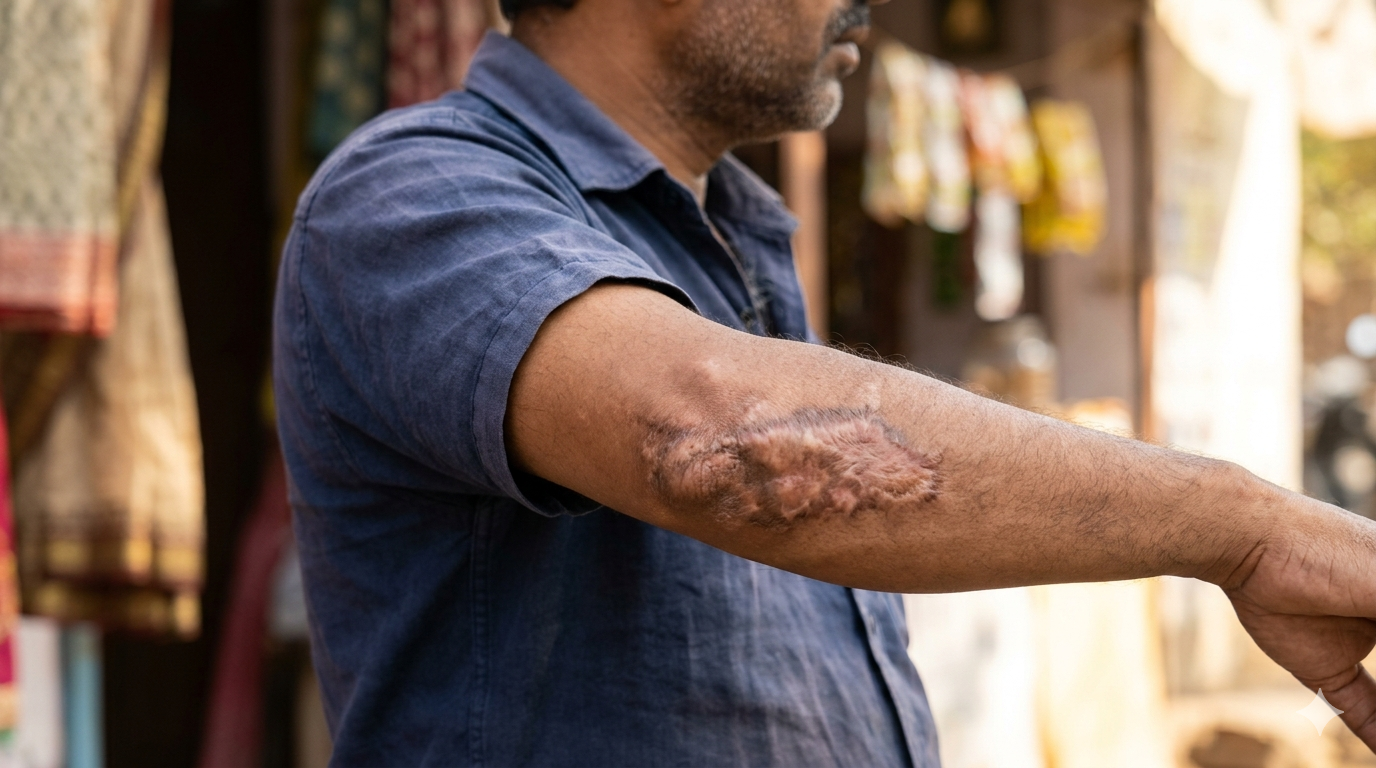
Skin acts as the body's primary shield, but it also possesses a remarkably long memory. For most individuals, burn injury wounds often heal and leave behind only a scar. However, for some, chronic burn scars continue to undergo a malignant transformation over decades, turning a closed chapter into an active medical threat. This silent progression affecting nearly 2% of burn scars is what becomes Marjolin's Ulcer, a specialised form of rare skin cancer that turn's the body's healing process against itself.
A Marjolin's ulcer is a malignancy that develops within chronic wounds or scars that have existed for many years. This cancer usually takes the form of squamous cell carcinoma, a common skin cancer that becomes far more aggressive when it develops in scar tissue. Although this cancer can emerge from various skin injuries like surgical scars and pressure sores, it most frequently originates from old burn scars.
Why Does a Scar Turn Cancerous?
When skin burns, the body repairs the damage by forming scar tissue. However, scar tissues have fewer skin cells, a lower blood supply and a compromised immune activity. Due to this, their protective properties are considerably lower than the normal skin. Long-term wounds that struggle to heal undergo constant cycles of repair and breakdown. This persistent inflammation causes repeated DNA damage in skin cells, eventually leading to mutations that promote uncontrolled growth. Over decades, this sustained cellular chaos creates conditions where cancer can take root. Additionally, burned skin can reduce the natural pigment (melanin) and oil glands that protect healthy skin from environmental damage, making the area more susceptible to secondary triggers like UV radiation.
The development of Marjolin's ulcer depends on various factors including:
- Depth and Severity of the Initial Burn: Surface-level burns rarely transform into cancer as they do not destroy the regenerative layers of the skin. In contrast, third-degree burns carry the highest risk.
- Location of the Wound: Statistics shows that feet are the most common site for developing Marjolin's ulcer. This is because our legs are in a state of motion through most of the day, giving the scar tissue less time to heal and causing it to break down repeatedly. This is followed by the scalp, which is constantly exposed to cumulative damage from UV rays on the burned tissue.
- Immune Suppression: Patients on immunosuppressive medications, such as organ transplant recipients, carry elevated risk.
The Latency Period
What makes this cancer particularly deceptive is its timeline. The development of Marjolin's ulcer highly varies from patient to patient, with some patients showing signs as early as six weeks, while some can take up over 50 years. On average, it appears 30-35 years after the initial burn. That means someone burned in their twenties may not develop cancer until their fifties or sixties, by which point the original injury has been forgotten.
Clinical data suggests an inverse relationship between the age of the patient at the time of the burn and the speed of cancer development. Generally, individuals who sustain burns in childhood experience a longer latency period, while those burned later in life may see a faster progression. This variability is precisely why no burn survivor should assume they are in the clear simply because years have passed.
Warning Signs To Watch
Because these cancers develop in already damaged skin, patients often mistake the early signs for simple scar irritation. Some key symptoms to watch out for include:
- A new ulcer or sore developing on the scar that does not heal within 3-4 weeks.
- A new lump or thickened area within the scar.
- Sudden increase in pain or the development of a burning or itching sensation in a previously silent scar.
- Rapid change in color with areas turning red, brown or black unevenly.
Marjolin's ulcers often begin as a small, non-healing ulcer and gradually enlarge. Over time, they may spread to nearby lymph nodes and distant organs if left untreated.
Is it Curable?
Short answer is yes, however, it highly depends on early detection. Early stage squamous cell carcinoma can be fully removed with a surgery. On the contrary, the outcomes worsen sharply when the diagnosis comes late. Survival rates for burn scar carcinoma are reported at 52%, 34%, and 23% at 5, 10, and 20 years respectively, which proves that early detection plays a huge role.
Prevention And Long-Term Care
Modern medical standards prioritize early skin grafting to close deep wounds quickly. Research confirms that primarily grafted burns rarely develop into cancer compared to wounds that heal "by secondary intention".
Those already living with old scars should try their best to protect the scar from further damage and keep it covered under the sun to avoid UV exposure. Using moisturizer on a daily basis can help keep the skin hydrated and prevent it from cracking.
Conclusion
Most old burns never become cancer. However, large, deep and long-standing scars with additional damage, trauma and sun exposure carry the risk of transforming into Marjolin's ulcer. People often dismiss irritation in old scars, but persistent irritation demands attention.
(By Dr AB Prabhu, Additional Director, Plastic and Reconstructive Surgery, Fortis Hospital Mohali)
Disclaimer: The opinions expressed within this article are the personal opinions of the author. NDTV is not responsible for the accuracy, completeness, suitability, or validity of any information on this article. All information is provided on an as-is basis. The information, facts or opinions appearing in the article do not reflect the views of NDTV and NDTV does not assume any responsibility or liability for the same.