

)
India is projected to have over 15 lakh new cancer cases annually by 2026. This number is according to the National Cancer Registry Programme (NCRP) under the Indian Council of Medical Research (ICMR). While skin cancers form a smaller fraction of this burden compared to the internal load of different types of cancers, they represent a steadily rising proportion of the national health crisis. Skin cancer is often dismissed as a Western health issue due to the protective nature of melanin in Indian skin, but medical bodies warn that shifting lifestyles, rising pollution, and extreme ultraviolet rays from the sun are making skin cancer a growing reality in both urban and rural India.
Skin Cancer And Its Common Types
Skin cancer occurs when skin cells grow uncontrollably, primarily triggered by DNA damage from excessive exposure to ultraviolet (UV) rays from the sun or artificial tanning lights. So, paying attention to your daily sun exposure is vital to mitigate your risk of skin cancer. If you happen to be someone who goes for weekly or monthly tanning sessions at the salon, you may want ot rethink what is it actually doing to your skin and how much damage can occur due to it. To understand, how skin cancer occurs, here are the three most common types of it commonly seen in the Indian population:
- Basal Cell Carcinoma (BCC): The most frequent but slow-growing form.
- Squamous Cell Carcinoma (SCC): It is often associated with chronic scars, burns, or excessive sun exposure.
- Melanoma: The most aggressive form, starting in the melanocytes (pigment-producing cells).
While higher melanin levels provide a natural defence, this can often lead to a false sense of security, resulting in delayed diagnosis, which is a major risk factor identified by Indian medical professionals.
Why Mole Checks Matter
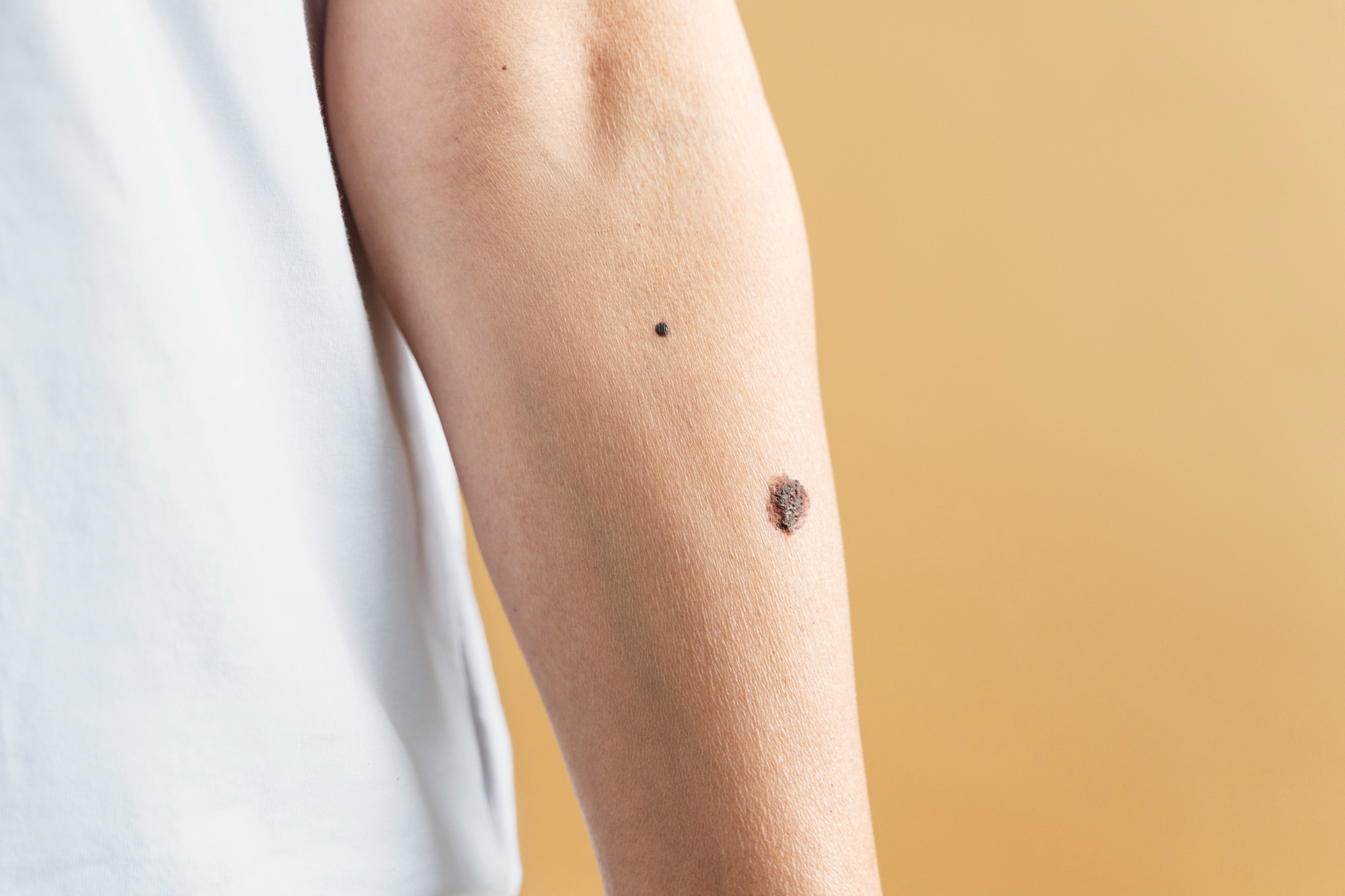
A mole is a pigmented spot that can appear anywhere on the body. While most are benign (harmless), an abnormal mole can be malignant (cancerous). Because early-stage skin cancer often looks like a common mole, regular self-examination is critical. Speaking to NDTV, Dr. Shyam Aggarwal, Chairperson of Medical Oncology at Sir Ganga Ram Hospital, said, "Moles are very common, and usually they are safe. However, suspicion of cancer should arise if there is evolution in the shape, size, or colour."
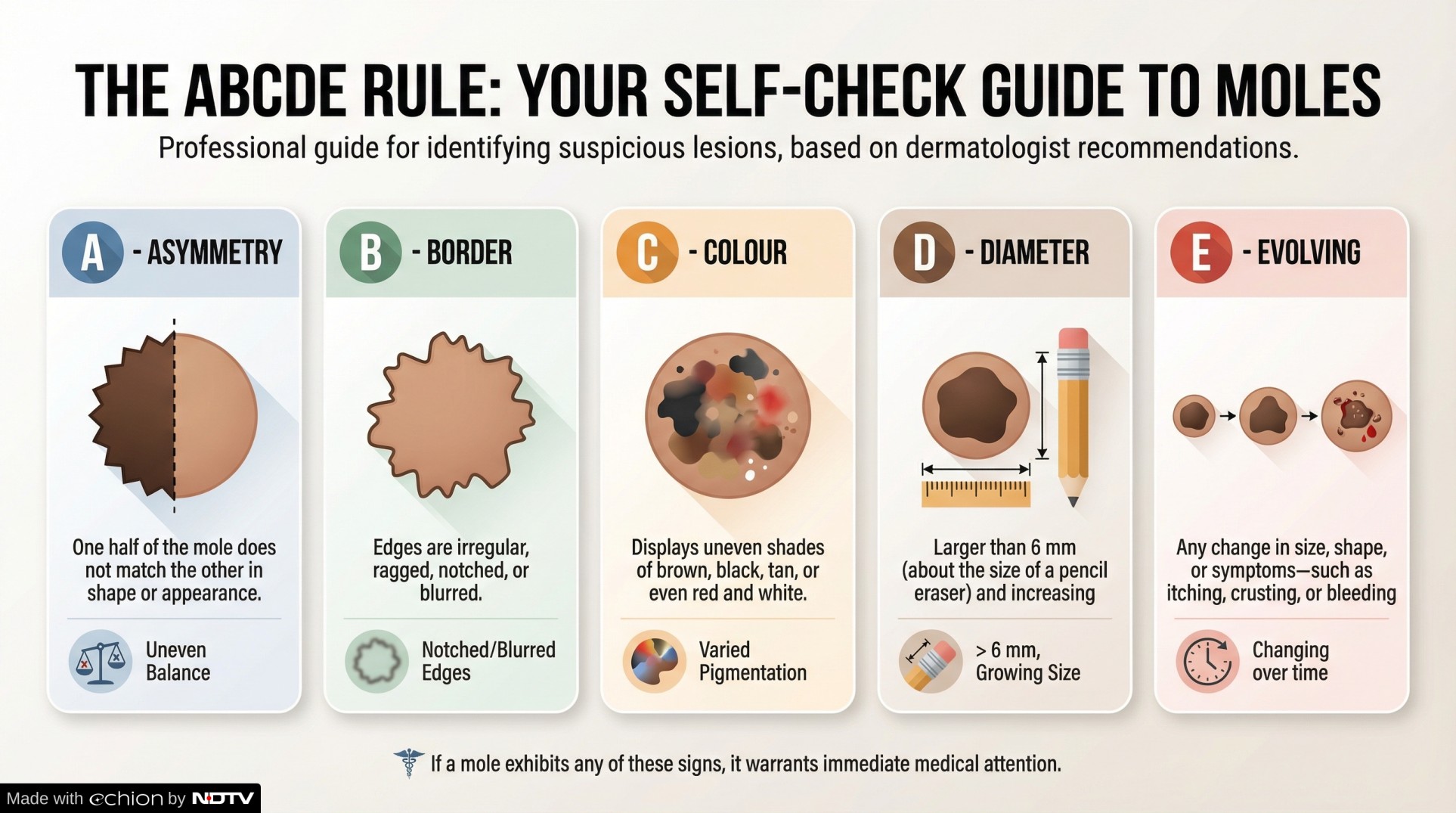
The ABCDE Rule: Your Self-Check Guide To Moles
To simplify detection, dermatologists use the ABCDE acronym to identify suspicious lesions. If a mole exhibits any of the following, it warrants immediate medical attention:
- A - Asymmetry: One half of the mole does not match the other in shape or appearance.
- B - Border: The edges are irregular, ragged, notched, or blurred.
- C - Colour: The mole displays uneven shades of brown, black, tan, or even red and white.
- D - Diameter: The mole is larger than 6 mm (about the size of a pencil eraser) and is increasing in size.
- E - Evolving: Any change in size, shape, or symptoms-such as itching, crusting, or bleeding.
Diagnosis And Treatment Of Moles
Early detection is the pivot upon which survival depends, so acting on time matters. Dr. Aggarwal emphasises that if a mole is suspicious, a dermatologist may advise a biopsy. He goes on to explain that "melanoma is a curable disease if it can be excised in total with clean margins. He further notes that for suitable patients, modern medicine has advanced significantly. Beyond surgery, immunotherapy and immune checkpoint inhibitors are now utilised as maintenance treatments to ensure the cancer does not return, offering a high success rate for early-stage cases.
Also Read: India Faces Sharp Rise In Cancer Burden By 2030: Expert Explains Why
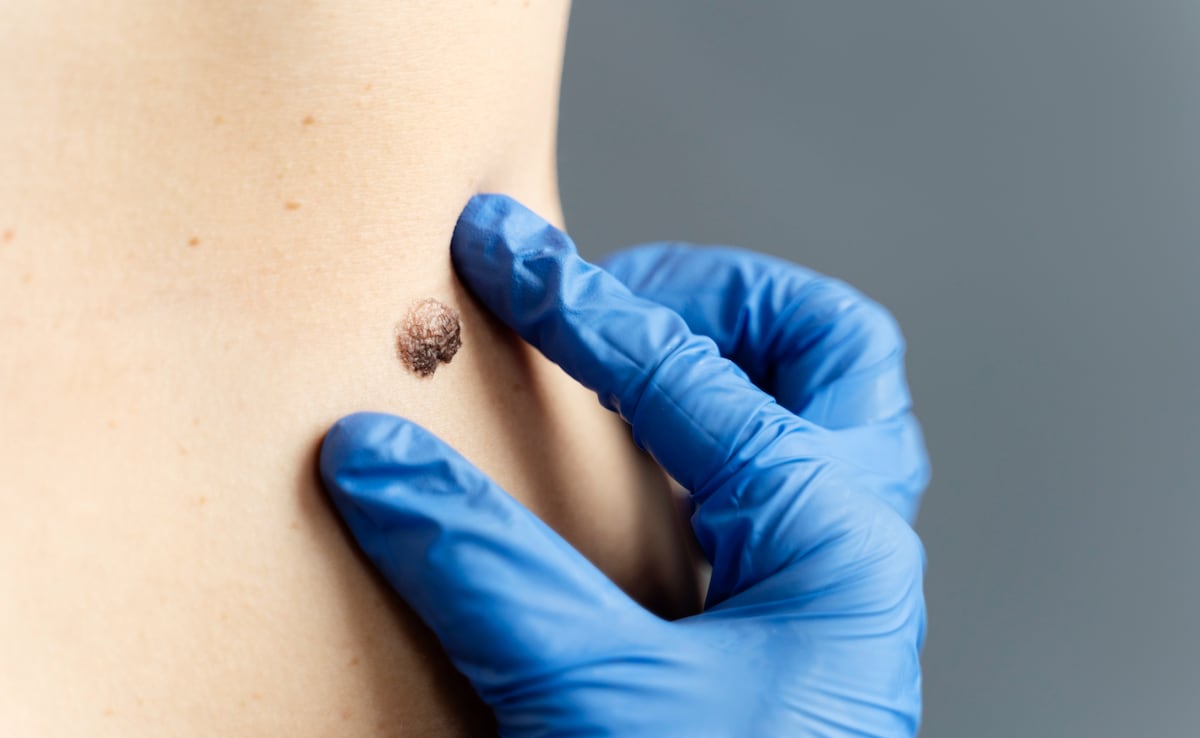
A doctor measuring a skin mole
Photo Credit: Freepik
How To Protect Your Skin
With India's tropical climate and extreme temperatures, using regular UV protection is not a luxury; it is a necessity. To reduce your risk, Dr. Aggarwal suggests the following these tips:
- Use a broad-spectrum sunscreen with SPF 30 or higher, even on cloudy days.
- Avoid direct sun exposure during peak hours, typically between 10 AM and 4 PM.
- Opt for wide-brimmed hats, UV-protective sunglasses, and long sleeves when outdoors.
- Use mirrors to check your entire body, including hard-to-see areas like the scalp and soles of the feet. Look for new moles, especially those appearing after age 20.
The rising incidence of skin cancer in India serves as a wake-up call for proactive health management. While the skin pigment offers some protection, it is not an absolute shield against the cumulative effects of UV radiation and environmental toxins. There is a need to stay vigilant and remember that a simple mole check today could prevent a life-threatening diagnosis tomorrow. If you notice a mole "evolving", seek a consultation with a dermatologist or an oncologist immediately. Early intervention is the most effective cure against possible skin cancer.
Disclaimer: This content, including advice, provides generic information only. It is in no way a substitute for a qualified medical opinion. Always consult a specialist or your own doctor for more information. NDTV does not claim responsibility for this information.