

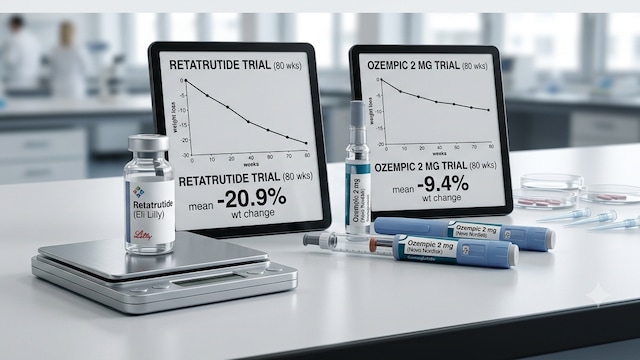
Could a new generation of weight-loss medicines deliver substantially greater results for people living with type 2 diabetes? New Phase 3 trial findings from pharmaceutical company Eli Lilly suggest that retatrutide, an experimental drug, may offer a significant improvement in weight reduction compared with semaglutide, the active ingredient in Ozempic.
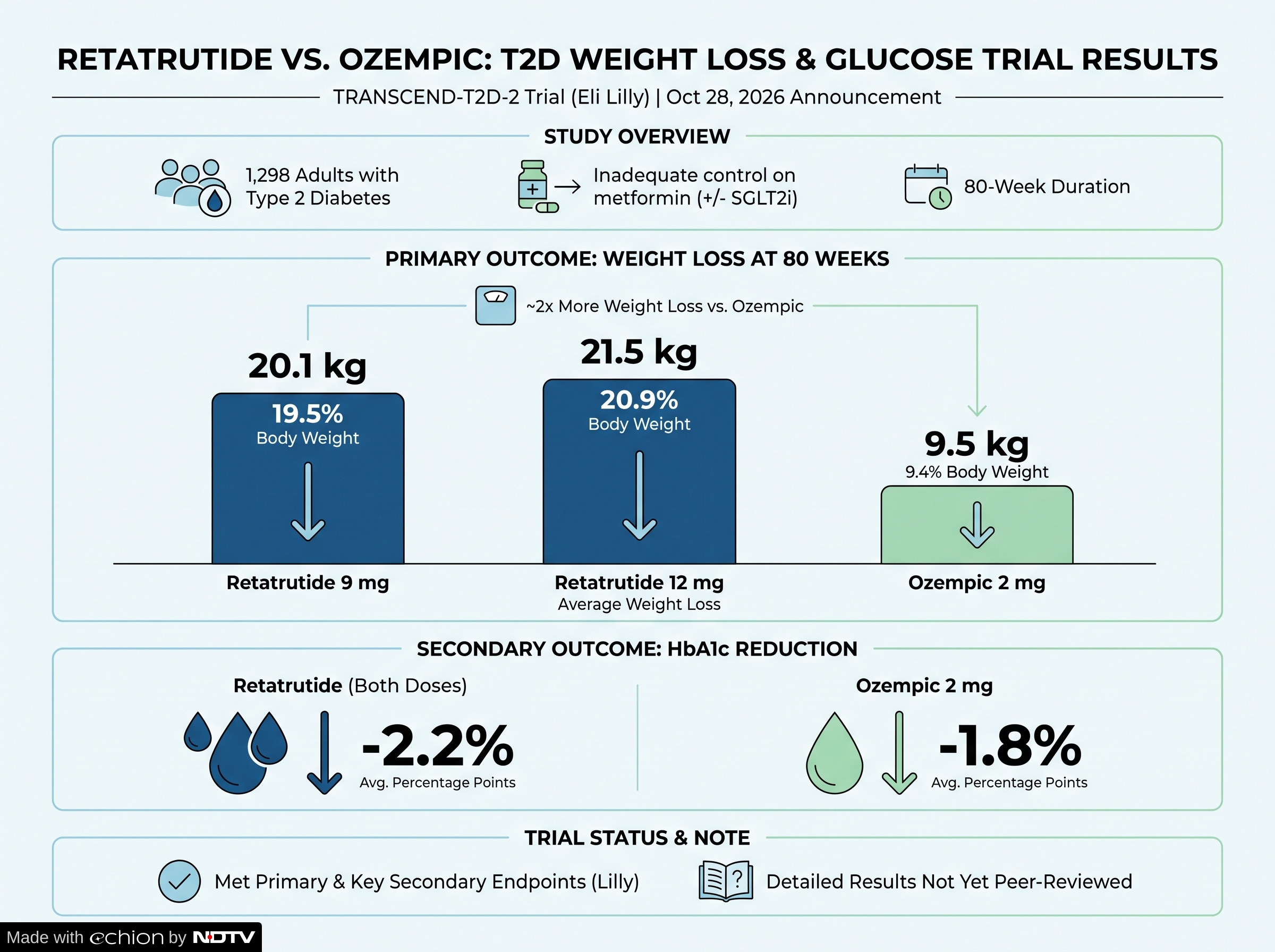
In the TRANSCEND-T2D-2 trial, participants receiving retatrutide lost an average of 19.5% to 20.9% of their body weight over 80 weeks, compared with 9.4% among those receiving Ozempic 2 mg. Retatrutide also achieved a greater reduction in HbA1c, a measure of average blood glucose levels.
The findings could be relevant in India, where the ICMR-INDIAB study estimated that 101 million people were living with diabetes in 2021, alongside 136 million with prediabetes. Obesity and excess body fat are important risk factors for type 2 diabetes and its complications.
However, the results require careful interpretation. The findings are preliminary topline data released by the manufacturer, and retatrutide has not been approved for use in India or anywhere else. Dr Anoop Misra, Chairman of Fortis C-DOC Hospital for Diabetes and Allied Sciences, says the weight-loss results are impressive but cautions against declaring retatrutide superior to all existing treatments before further evidence becomes available.
Retatrutide vs Ozempic: What did the Phase 3 trial find?
According to Eli Lilly's announcement on October 28, 2026, the TRANSCEND-T2D-2 trial compared once-weekly retatrutide at doses of 9 mg and 12 mg with once-weekly injectable Ozempic 2 mg in 1,298 adults with type 2 diabetes.
Participants had inadequate blood glucose control despite treatment with metformin, with or without an SGLT2 inhibitor. Their average starting body weight was 102.4 kg, with a mean body mass index (BMI) of 36.8.
At 80 weeks, the reported results were:
- Retatrutide 9 mg: Average weight loss of 20.1 kg, or 19.5% of body weight.
- Retatrutide 12 mg: Average weight loss of 21.5 kg, or 20.9% of body weight.
- Ozempic 2 mg: Average weight loss of 9.5 kg, or 9.4% of body weight.
- Both retatrutide doses reduced HbA1c by an average of 2.2 percentage points, compared with 1.8 percentage points with Ozempic.
The trial met its primary endpoint and all key secondary endpoints, according to Lilly. However, detailed results have not yet been published in a peer-reviewed journal.
READ | Can Weight Loss Drugs Slow Your Biological Clock? New Studies Suggest Yes
Why are the weight-loss results significant for people with diabetes?
Weight reduction can be more difficult to achieve in people with type 2 diabetes than in people without diabetes, making the reported results noteworthy.
Dr Anoop Misra says, "In this new Phase 3 trial, retatrutide produced an impressive 20-21% weight loss in people with type 2 diabetes, more than double the 9.4% achieved with semaglutide 2 mg (Ozempic), an established and effective diabetes treatment."
He added, "This is remarkable because people with diabetes generally lose less weight with these drugs than people without diabetes."
Excess body fat, particularly abdominal fat, is associated with insulin resistance and can complicate blood glucose management. Meaningful weight loss can improve several metabolic risk factors, although individual responses vary and weight reduction alone does not eliminate the need for diabetes management.
The findings are especially relevant in the Indian context, where diabetes and obesity represent substantial public health challenges. The ICMR-INDIAB study, published in The Lancet Diabetes & Endocrinology in 2023, estimated that 28.6% of Indian adults had generalised obesity and 39.5% had abdominal obesity.
How does retatrutide work, and is it better than Mounjaro?
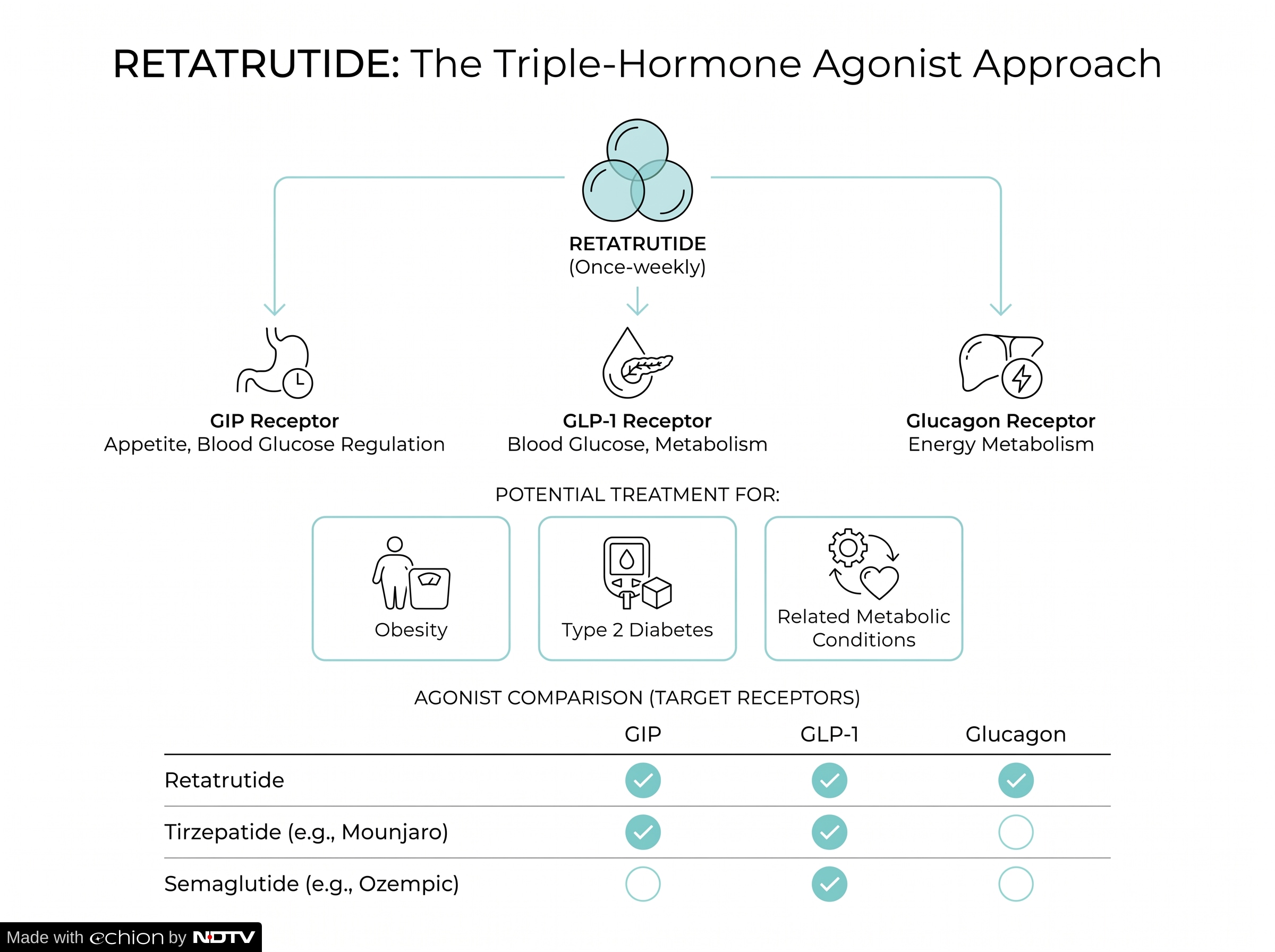
Retatrutide is a once-weekly, triple hormone receptor agonist. It activates receptors for glucose-dependent insulinotropic polypeptide (GIP), glucagon-like peptide-1 (GLP-1) and glucagon.
These pathways influence appetite, blood glucose regulation and energy metabolism. By acting on three receptor systems, retatrutide is being investigated as a potential treatment for obesity, type 2 diabetes and related metabolic conditions.
Semaglutide, the active ingredient in Ozempic, acts on the GLP-1 receptor. Tirzepatide, marketed as Mounjaro, acts on GIP and GLP-1 receptors.
Dr Misra says, "Retatrutide appears to be the most powerful weight-loss drug so far, possibly even better than tirzepatide (Mounjaro). However, the two drugs have not yet been directly compared."
That distinction is important. The latest trial directly compared retatrutide with Ozempic 2 mg, not tirzepatide. Lilly is conducting a separate Phase 3 trial, TRIUMPH-5, to compare retatrutide with tirzepatide in adults with obesity, with or without type 2 diabetes. Until direct comparative results are available, it is premature to declare one medicine the overall winner.
READ | Stopping GLP-1 Medications? It May Increase Your Risk Of Heart Attack, Stroke By 22%
Weight loss was more pronounced than the additional improvement in blood sugar
Although retatrutide produced greater weight loss, its advantage in HbA1c reduction was comparatively modest.
Dr Misra says, "The additional improvement in blood sugar control was relatively modest (HbA1c reduction of 2.2% versus 1.8%). Thus, retatrutide's biggest advantage appears to be its exceptional weight-loss effect."
HbA1c reflects average blood glucose over approximately two to three months. The difference reported in the trial was 0.4 percentage points in favour of retatrutide.
The results also showed greater improvements in certain cardiovascular risk factors, including non-HDL cholesterol, triglycerides and systolic blood pressure, according to Lilly. However, changes in these risk markers should not be interpreted as proof that retatrutide reduces heart attacks, strokes or other cardiovascular events. Those outcomes require appropriate clinical evidence.
What about side effects and long-term safety?
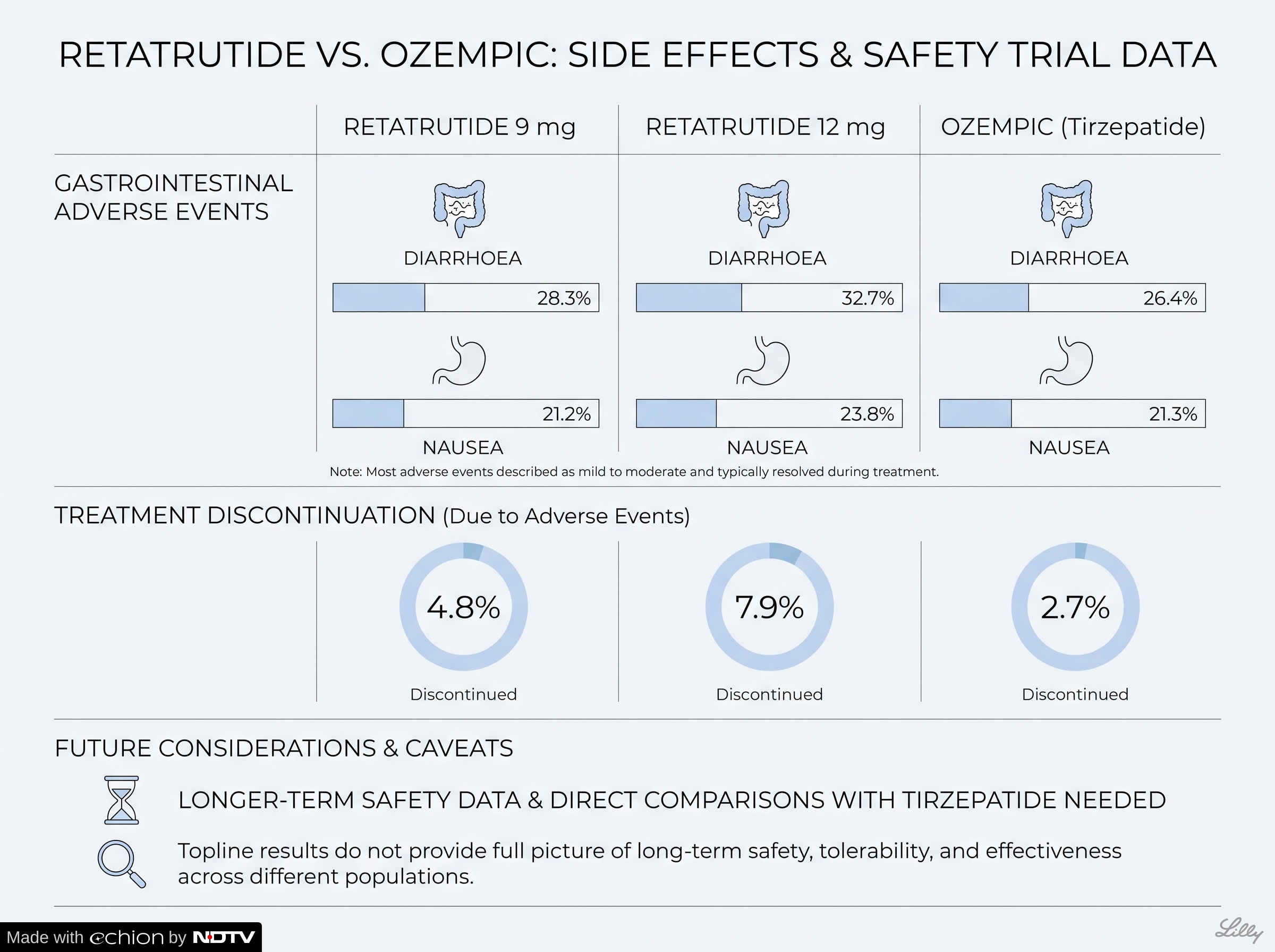
The trial also reported gastrointestinal adverse events, including diarrhoea, nausea, constipation, vomiting and indigestion. Diarrhoea occurred in 28.3% of participants taking retatrutide 9 mg and 32.7% taking 12 mg, compared with 26.4% receiving Ozempic. Nausea occurred in 21.2%, 23.8% and 21.3%, respectively.
Treatment discontinuation because of adverse events was reported in 4.8% of the 9 mg retatrutide group and 7.9% of the 12 mg group, compared with 2.7% of the Ozempic group. Lilly said most adverse events were mild to moderate and typically resolved during treatment.
Dr Misra cautioned, "These results are exciting, but we still need longer-term safety data and direct comparisons with tirzepatide before declaring it the winner."
That caveat is important because topline results cannot provide the full picture of a medicine's long-term safety, tolerability and effectiveness in different patient populations.
READ | Novo Responds To GLP-1 Drug Ozempic Causing Vision Loss Claims: What Semaglutide Data Shows
Can people in India access retatrutide now?
No. Retatrutide remains an investigational medicine and has not been approved by the US Food and Drug Administration or any regulatory authority worldwide, according to Lilly's announcement. It is not approved for use in India and cannot legally be marketed for human use.
Consumers should avoid products advertised online or through informal channels as retatrutide. Unauthorised products may have uncertain composition, quality, dosage and safety.
People with obesity or type 2 diabetes should consult a qualified doctor about established treatment options, rather than attempting to obtain an investigational medicine independently. Prescribed diabetes medication should not be stopped or changed on the basis of preliminary trial findings.
Retatrutide's Phase 3 results mark a significant development in the search for more effective treatments for obesity and type 2 diabetes. In this trial, the experimental medicine delivered more than double the average weight loss seen with Ozempic 2 mg, alongside a greater reduction in HbA1c.
For India, where diabetes and obesity affect millions, such developments could eventually expand treatment options. But the evidence is not yet sufficient to establish retatrutide as superior to all available medicines. Peer-reviewed findings, longer-term safety data, regulatory approval and direct comparisons with tirzepatide will be crucial before its place in clinical practice can be determined.
Disclaimer: This content including advice provides generic information only. It is in no way a substitute for a qualified medical opinion. Always consult a specialist or your own doctor for more information. NDTV does not claim responsibility for this information.