





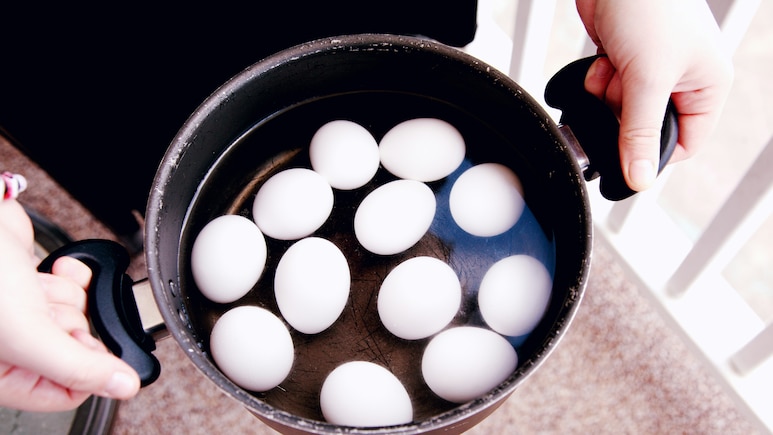
Eggs are a complete food with high nutritional value. It is the only food source that has protein, essential vitamins, healthy fats and amino acids all packed into its simple interior. The versatile egg forms the basis of easy, nutritious breakfasts to elaborate baked goods whose single whiff sends people into an instant hungry mood. According to the World Population Review, people in India consume approximately 4.6 kilograms of eggs per year and about 0.345 g per day. Unlike milk, vegetables or fruits, which can have visible marks of spoilage, eggs can look deceptively ordinary even when they are rotten from the inside.
In recent news, people have been alarmed when nitrofuran, a banned substance, was found in a popular egg brand, Eggoz. To go in depth as to what exactly unfolded, speaking to NDTV, Dr Madhumitha R, Senior Consultant, Infectious Diseases and Infection Control, MGM Healthcare, Chennai, had this to say about whether people should be wary of consuming eggs.
Nitrofuran Found In Eggs: Doctor Explains Health Risks
Dr Madhumitha explains that nitrofuran is basically an antibiotic which is associated with potential cancer risk. She explains that the presence of nitrofuran in eggs "has been primarily observed only in animal studies, where they have shown some carcinogenicity (cancer-causing capabilities). That is why it is banned in animal foods. But if you look at the International Agency for Research on Cancer, they have not classified this substance as carcinogenic to humans, which means that there is inadequate human evidence, and the cancer-causing abilities are limited to some animal studies."
But having said that, Dr Madhumitha explains that one needs to "have a long exposure over a period of months and years. So if you have been eating this contaminated egg for months and years together, yes, your risk of cancer may increase, but just eating it once, which has now been identified." Plus, there are always steps that regulatory agencies take to prevent, like in the case of the recent news about nitrofuran being found in eggs raises public health concerns.
"The contaminated batch has been removed, so it should not be a cause of concern or panic among the general population," Dr Madhumitha explains.
However, the age-old dilemma about egg safety still remains. If you are looking for easy, practical kitchen hacks to test whether your egg has been contaminated or not, here are some easy hacks to test whether you can use the eggs in your carton or should discard them in the dustbin.
Simple Hacks To Test If Your Eggs Are Contaminated
1. The Classic Float Test
The float test is arguably the simplest and most popular hack to check the quality of your egg through its age. This test relies on a scientific principle where if the egg ages, the porous shell allows air to enter, causing a small air pocket or air cell, and this causes the egg to sink.
How To Perform:
- Gently place the egg in a transparent bowl, cup or glass.
- Fill the container with cold water.
What It Means:
- If the egg sinks to the bottom and lies flat on its side, then it is super fresh and ready to be used.Sinks but stands up on its pointy end; then the egg is about one to three weeks old but still safe to eat.
- This egg can be hard-boiled, as older eggs are easier to peel and consume.
- If it floats immediately to the top, then the air pocket is too large, indicating the egg is very old and likely not safe to consume; discard it.
2. Sniff Test
The human nose is a powerful tool for detecting spoilage, and the sniff test is one of the oldest and most reliable methods. Even after passing the float test, whether the egg is fresh or not can be determined through the sniff test.
How To Perform:
- Take a quick sniff of the egg; don't touch your nose on the surface of the egg though.
- It should have a faint, slightly off or mushy smell, an early indicator of freshness, as it is an animal product.
- Cracked egg test: A definitive test to confirm freshness. Crack the egg into a clean container and see if the egg has anything weird in it. If doubtful and the alarm bells start ringing in the head, then discard the eggs immediately.
- If you are someone who considers throwing rotten eggs away as wasteful, you can use the eggs if a foot pack is used topically. Do not use rotten eggs on your face, as they can cause a reaction. Do a small skin patch test before using it on the feet.
What It Means:
- A fresh egg will have no noticeable odour; it will be very faint.
- A rotten egg will give off an unimaginable sulphur-like smell (rotten gas).
- If it smells like this or even slightly pungent, toss it.
Read More: The Boiled Egg Diet For Weight Loss: Is It Even Healthy?
3. Visual Inspection Of The Shell
The porous white shell is the first line of defence for your egg's interior. A quick look can alert you to potential issues. For instance, if the eggs have bird poop stains or feathers on the egg's outer shell, then it indicates that the facilities have poor hygiene.
How To Perform:
Look closely at the white shell of the eggs.
What It Means:
- Cracks: A cracked shell can allow bacteria like salmonella to enter the egg, flouting food safety measures. Do not use cracked eggs.
- Sliminess or Powdery Patches: A slimy feel or a powdery/chalky look might indicate mould or bacterial growth. Discard immediately.
4. The Slosh Shake Test
This hack uses your sense of hearing to judge the consistency of the egg white and yolk inside the shell.
How To Perform: Hold the egg near your ear and give it a gentle shake.
What It Means:
- No sound or very faint sound: The egg yolk and white are still firm and tight. This egg is very fresh.
- A distinct sloshing sound: the eggs have aged, and the internal quality is bad. The sound indicates the egg white has become thinner and runnier.
- It might be safe to eat, but perform other tests to judge whether you should consume these eggs or not.
5. Internal Inspection (Post-Crack Test)
Once you crack the egg onto a flat surface, a plate, and inspect its internal components.
How To Perform: Simply crack the egg onto a flat surface, and make sure the plate has ridges to avoid accidentally spilling the egg on the ground.
What It Means:
- Fresh Egg: The yolk should be round and intact after cracking. The egg white should be thick and cling to the yolk, with a second, thinner ring around it when looked at closely.
- Older Egg: The yolk will be fatter and more easily breakable. The white will spread out thinly and quickly across the plate.
- Bad Egg: Any brownish, pink, green or any other discolouration in the egg white or yolk is a strong signal; throw it in the dustbin.
Read More: How Many Eggs Can You Safely Eat In Day? Expert Reveals The Answer
6. Check The Dates
This is not a foolproof safety check, but the egg carton provided an expiry date or use-by date stamped for consumers.
What It Means:
- Always try to use your eggs before their expiry date. If you have too many eggs, store them in the refrigerator at 4 degrees Celsius or below, which can make them safe to consume for a couple of weeks.
- But do perform the above tests to be absolutely sure of their freshness.
7. The Candling Trick
This is an older technique, once done with a candle, but now a bright smartphone in a dark room can be used.
How To Perform:
- Go into a dimly lit room.
- Hold the egg against the bright light of your phone torch.
What It Means:
- Fresh Egg: The shell will appear opaque, the air pocket will be broader, and the end will look small (less than one eighth of an inch). The yolk should be faintly visible.
- Older Egg: The air cell will appear larger. A very old or spoilt egg might show a murky, undefined interior.
This method is great for checking the size of the air cell without wasting an egg.
Eggs are one of the most nutritious and cost-effective foods available on the market. But it is vital to ensure their quality and safety before they make it onto your plate.
Disclaimer: This content, including advice, provides generic information only. It is in no way a substitute for a qualified medical opinion. Always consult a specialist or your own doctor for more information. NDTV does not claim responsibility for this information.
Track Latest News Live on NDTV.com and get news updates from India and around the world

