





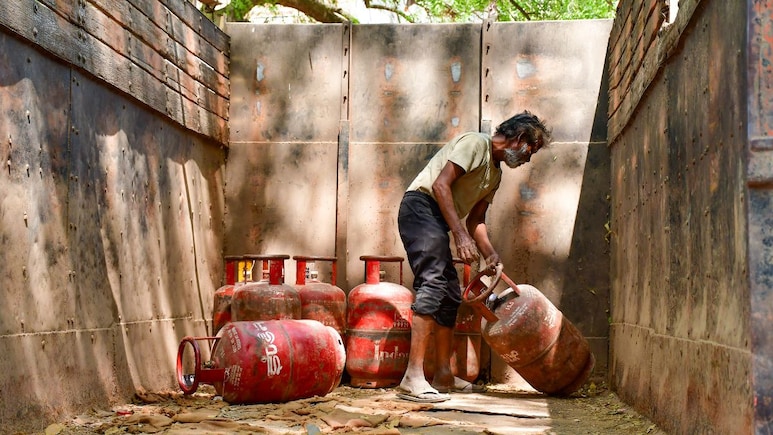
- For many Indians, LPG cylinders have been the most common cooking fuel for years
- PNG is natural gas piped directly to homes and businesses, like water supply lines
- Geopolitical tensions affecting shipping routes in West Asia have made LPG supply chains vulnerable
The situation of India's Liquefied Petroleum Gas (LPG) cylinders is a "matter of concern" at this time in various regions of the country amid a widening West Asia conflict. On the other hand, many households and businesses are finding that the supply of Piped Natural Gas (PNG) remains mostly unaffected. This situation raises an important question: Why is LPG under pressure while PNG users still receive a steady gas supply?
The answer lies in the differences in supply chains, import reliance, and distribution systems for both fuels.
What is PNG and How Is It Different from LPG?
For many Indians, LPG cylinders have been the most common cooking fuel for years. However, PNG or Piped Natural Gas is gradually becoming a popular alternative across the country.
PNG is natural gas piped directly to homes and businesses, like water supply lines. In contrast, LPG is a liquefied fuel stored in cylinders and delivered through gas agencies.
Currently, PNG networks have reached 34 states and union territories in India. According to the Government of India, around 1.59 crore households are connected to PNG. The government plans to expand this to 12.63 crore PNG connections by 2034.
In a recent press briefing, Sujata Sharma, Joint Secretary in the Ministry of Petroleum and Natural Gas, encouraged consumers to consider switching to PNG. She stated, "I urge users to take PNG connections to reduce pressure on LPG supply."
India Produces Half of Its Natural Gas
One of the main reasons for stable PNG supply is domestic production.
India's current natural gas consumption is about 189 MMSCMD (Million Metric Standard Cubic Meters per Day). Approximately 97.5 MMSCMD around 50 percent is produced within the country.
Prashant Vasisht, Senior Vice President at the rating agency ICRA, noted that the domestic production helps maintain supply stability.
He explained that even if global supply disruptions happen, India can rely on its own natural gas production, which lowers the risk of sudden shortages.
"Domestic gas supply provides a cushion. If more users shift to PNG, the system can handle demand more smoothly compared to LPG," he mentioned.
PNG Imports Come From Multiple Countries
Another important factor is the diversity of imports.
Senior officials at GAIL, India's largest natural gas transmission company, revealed that imported natural gas comes from several countries, including the United States, Russia, and Australia.
This approach reduces reliance on any one region. Even if major producers in the Middle East, like the United Arab Emirates or Saudi Arabia, face disruptions due to geopolitical tensions involving Iran, India's natural gas supply chain stays relatively secure.
LPG Supply Is Highly Import-Dependent
The situation for LPG is remarkably different. India imports about 62 percent of its LPG needs, with around 90 percent of those imports going through the strategically important Strait of Hormuz.
Geopolitical tensions affecting shipping routes in this region have made LPG supply chains vulnerable.
To manage the situation, the government has restricted commercial LPG supply and prioritised domestic household consumption.
Commercial businesses, including restaurants and small enterprises, are facing delays in cylinder deliveries, which has contributed to the current shortage.
Emergency Measures and Supply Priorities
The government has also invoked provisions under the Essential Services Maintenance Act (ESMA) to manage energy distribution during this crisis.
Under the current priority system:
1. Domestic PNG users are given top priority.
2. CNG for transportation comes next.
3. Commercial PNG supply has been reduced by about 30 percent.
Experts believe that industries can adapt more easily.
According to Prashant Vasisht, industries using natural gas can switch to alternatives like propane or coal. However, businesses that use LPG have very limited substitutes, making shortages more apparent in restaurants and food-related businesses.
Why PNG Users Are Less Worried
Several structural advantages help PNG remain more resilient during crises:
1. Pipeline Distribution
PNG flows continuously through pipelines, reducing reliance on cylinder logistics.
2. Domestic Production
Half of India's natural gas demand is met through domestic sources.
3. Diversified Imports
Natural gas imports come from a variety of countries instead of just one region.
4. Government Priority
Domestic PNG users are prioritised in the supply system.
But PNG Is Not Fully Immune
Officials warn that PNG is not entirely insulated from global disruptions.
India still imports around 50 percent of its natural gas needs. If geopolitical tensions worsen or LNG supplies are interrupted, authorities may have to continue cutting commercial gas supply to keep domestic availability steady.
"We are not fully self-sufficient in natural gas. Imports will still be necessary to meet future demand," a senior GAIL official stated.
A Long-Term Lesson for India
Experts argue that the current LPG crisis underscores the need for a quicker expansion of PNG infrastructure.
Increasing pipeline networks, boosting domestic gas production, and decreasing reliance on imported LPG could make India's energy system stronger.
"This situation is a reminder that expanding PNG connectivity across the country can lessen pressure on LPG supply and enhance energy security," Vasisht pointed out.

